Civil Rights Act

Search documents
Will bipartisan politics ever make a comeback? | Brad McMillan | TEDxBradley University
TEDx Talks· 2026-03-21 13:31
[Applause] I am the lucky father of Andrew, Sarah, Ryan, and Jack. And as parents, we teach our children to play nice in the sandbox. This generally means to treat others with respect, to share toys, uh to avoid unnecessary conflict, and definitely do not throw sand in the other kids' faces. For the past 18 and a half years, I've taught a bipartisan leadership class here at Bradley University. In fact, I think I may be the only college professor in America that specifically focuses a course on how bipartisa ...


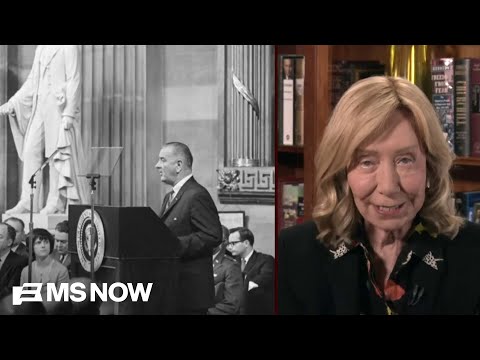
Doris Kearns Goodwin looks at the 61st anniversary of LBJ's voting rights speech
MSNBC· 2026-03-13 16:29
dot com for imprint for certain there is no constitutnal issue here the command of the constitution is plain there there is no moral issue it is wrong deadly wrong to deny any of your fellow Americans the right to vote in this country 61 years ago this Sunday President Lyndon B. Johnson delivered his historic we shall overcome voting rights speech to Congress the address which was delivered after the bloody Sunday violence in Selma Alabama called for comprehensive legislation to guarantee voting rights for ...
X @Elon Musk
Elon Musk· 2026-02-19 09:08
ExactlyArthur MacWaters (@ArthurMacwaters):Irony:The longest talking filibuster ever was in 1964 when Democratic Senators spoke for 60 days continuously to block the passage of the Civil Rights ActDebate was forced. It lasted 60 days. The bill passed.By contrast, if Sen. Thune (majority leader) simply allows https://t.co/66l04hHvCx ...
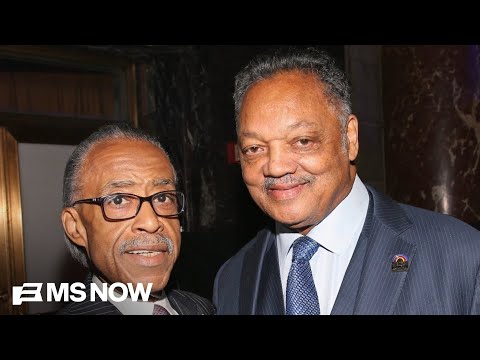
'He meant everything to me': Rev. Sharpton reflects on Rev. Jesse Jackson's legacy
MSNBC· 2026-02-17 21:50
Joining us now, president of the National Action Network and host of MSNOW's Politics The Reverend Al Sharpton and co-host of FAQ NYC and associate professor of political science at Fordham University, Christina Greer. Rev, thanks for being with us today, and I'm so sorry about the loss of your friend. I THINK ANTONIA DID A BEAUTIFUL JOB REMEMBERING THE BROAD STROKES OF HIS CAREER AND WHAT HE MEANT TO THIS COUNTRY.TELL US WHAT HE MEANT TO YOU. WELL, HE MEANT EVERYTHING TO me. I was a boy preacher in Brookly ...
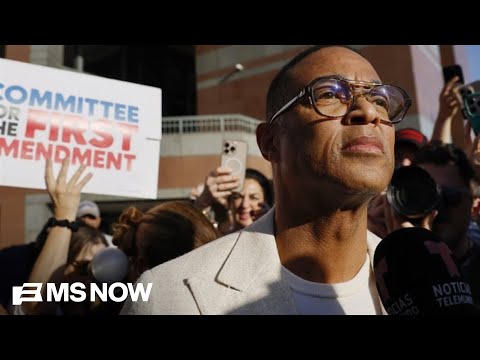
'Could I be next?’: NABJ president warns of ‘chilling effect’ on press freedom after Don Lemon’s arr
MSNBC· 2026-02-14 02:47
New tonight, independent journalists Don Lemo and Georgia Fordave filed a joint motion to obtain the grand jury transcripts from the proceedings that led to their indictment on federal civil rights charges for covering that ICE protest, you guys remember that, at a St. Paul church service last month. This comes just hours after Lemon pleaded not guilty to those charges in court.MS Now has learned that Lemon's phone was seized during his arrest and is still in DHS custody more than two weeks later. Here's Do ...
'Repackaged lies': Marc Elias sounds the alarm on Trump's voter suppression
MSNBC· 2026-02-11 01:36
AND I'M REALLY UPSET ABOUT IT BECAUSE THE FACT IS WE TRUST THE COURTS TO STAND UP AGAINST THE ELECTION DENIERS, POLITICALIZATION OF THE DEPARTMENT OF JUSTICE AND THE VIOLATION OF CIVIL RIGHTS AND IN THIS INSTANCE IN MY VIEW BASED ON THIS AFFIDAVIT THE MAGISTRATE JUDGE JUST FAILED TO DO I MEAN, WHAT THIS AFFIDAVIT THAT SUPPORTS THE SEARCH WARRANT CONTAINS IS FRANKLY JUST REPACKAGED LIES FROM 2020. IT ORIGINATED AS YOU POINTED OUT FROM A REFERRAL FROM FIRM, CURT OLSON, WHO WAS NOT ONLY AN ELECTION DENIER IN 2 ...

Fired immigration judge sues Trump admin: 'They fired me for protected class'
MSNBC· 2025-12-05 21:40
Legal & HR Concerns - Over 100 immigration judges have been fired or pushed out since President Trump took office [1] - Tanya Nemar is suing the administration for wrongful termination, alleging violation of the 1964 Civil Rights Act and the First Amendment [1][2] - Nemar believes she was fired due to her dual citizenship (Lebanon), previous run for office as a Democrat, and gender [2][4] - DOJ's response to the lawsuit argues that Title 7 is unconstitutional and the president can fire any federal employee at will [9] - The lawsuit raises concerns about the potential loss of basic protections against discrimination, retaliation, and abuse for approximately 4 million civil servants [15] Executive Power & Judicial Review - The Supreme Court has previously ruled in favor of executive power in firing cases [10] - The plaintiff's attorney argues that Supreme Court precedent, dating back to the 1880s, establishes Congress's power to protect the civil service [11] - The case is considered precarious because a Supreme Court ruling in favor of the president could significantly broaden executive power [13] Allegations of Discrimination - Nemar claims she was not given a reason for her termination despite asking multiple supervisors [3][4] - Nemar was repeatedly asked by the DOJ if she would denounce her Lebanese citizenship [5] - Nemar believes the administration may have been concerned about how she might rule on immigration cases, potentially hindering deportation efforts [7]

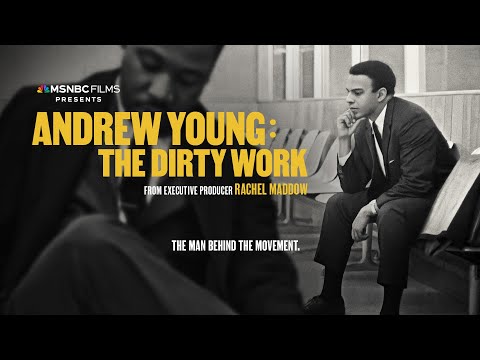
Andrew Young: The Dirty Work | Official Trailer
MSNBC· 2025-09-29 23:01
Civil Rights Movement & Leadership - The documentary highlights Andrew Young's dedication and leadership within the Civil Rights Movement, initially serving as an assistant to Martin Luther King Jr, undertaking challenging tasks [1][3] - The movement faced significant opposition and violence, requiring resilience and strategic negotiation [2] - The transition of the movement into politics is emphasized, with Andrew Young emerging as a prominent figure [3] Social & Political Context - The documentary portrays the Civil Rights Movement as a "revolution that won't fire a shot," emphasizing non-violent resistance [3] - The era was marked by conflict and the need for negotiation to resolve issues [2] - The documentary suggests the importance of legislative action, such as the Civil Rights Act, even in the face of adversity [4]
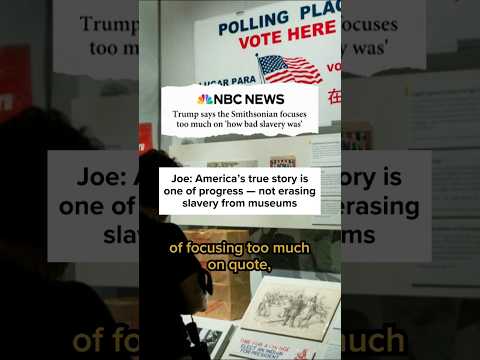
Joe: America's true story is one of progress -- not erasing slavery from museums
MSNBC· 2025-08-20 17:20
Government & Policy - President Trump orders review of Smithsonian museums, alleging excessive focus on the negative aspects of slavery [1] - The review process mirrors those conducted at universities facing federal funding cuts due to DEI and anti-semitism concerns [1] - The discussion extends beyond the President to his supporters, influencing the broader narrative [2] Historical & Social Commentary - The American story is portrayed as an extraordinary arc of progress [2] - The narrative emphasizes figures who overcame adversity to advance civil rights, such as a person who rose from poverty to become a state legislator and champion emancipation [3] - Figures like Frederick Douglas are highlighted for their complex relationship, sometimes opposing, sometimes allying, in the fight for equality [4] - The story of LBJ's transformation from opposing the 1957 Civil Rights Act to passing landmark legislation in 1964 and 1965 is presented as a key example [4] - The overall narrative aims to inspire future generations by showcasing the country's continuous movement towards a more perfect union, despite setbacks [4][5] - The importance of telling this story to inspire future generations to strive for improvement and progress is emphasized [5]