
Clinical AI

Search documents
RadNet (NasdaqGM:RDNT) FY Conference Transcript
2026-03-03 20:17
RadNet FY Conference Summary Company Overview - **Company**: RadNet (NasdaqGM:RDNT) - **Industry**: Medical Imaging and Digital Health Key Points Financial Performance and Guidance - **2026 Revenue Growth**: Anticipated growth of 16% to 18% in imaging centers and over 50% in digital health [6][12] - **EBITDA Growth**: Expected to grow faster than revenue on the imaging center side, indicating margin expansion opportunities [6][12] - **Acquisition Impact**: Two imaging center acquisitions announced, contributing mid to high single digits to EBITDA [13][14] Market Trends and Growth Drivers - **Advanced Imaging Growth**: Historic growth in advanced imaging modalities (MRI, CT, PET CT) with double-digit growth in PET CT [12][39] - **Same Center Procedure Volume**: Mid to high single-digit growth in advanced imaging, with PET CT expected to show double-digit growth [12][26] - **Technological Advancements**: Improvements in imaging technology and equipment are driving demand for advanced imaging [39][40] Operational Challenges - **Labor Costs**: Built-in guidance for a 4% increase in same center labor costs, estimated around $30 million [21][22] - **Weather Impact**: Anticipated $7 million to $9 million revenue impact from bad weather in the Northeast [89][90] Digital Health and AI Integration - **DeepHealth Platform**: Integration of workflow solutions and clinical AI to enhance productivity and accuracy for radiologists [50][56] - **Gleamer Acquisition**: AI-assisted reads for X-ray expected to improve efficiency and reduce costs in high-volume, low-reimbursement X-ray procedures [62][74] Future Opportunities - **New Center Openings**: Plans to build 11 to 13 new de novo centers in 2026, contributing to revenue growth [19][20] - **FDA Approvals**: Four FDA approvals expected in the coming quarters, including AI products for lung and prostate imaging [130][134] Competitive Landscape - **Market Position**: RadNet aims to lead the industry in integrating AI solutions into imaging workflows, addressing labor shortages and operational inefficiencies [60][61] - **Peer Comparison**: Discussion on differing strategies with competitors regarding technology adoption and investment in systems [56][57] Miscellaneous Insights - **Call Center Costs**: $60 million spent on human call centers, with potential for 10% savings through automation [83][84] - **Acquisition Strategy**: Recent acquisition of Radiology Regional for $65 million, with expectations for accelerated margin normalization [108][109] This summary encapsulates the key insights from RadNet's FY conference, highlighting the company's growth strategies, operational challenges, and future opportunities in the medical imaging and digital health sectors.

RadNet, Inc. Q4 2025 Earnings Call Summary
Yahoo Finance· 2026-03-02 21:33
Core Insights - The article highlights RadNet's record Q4 performance driven by a 14.1% increase in advanced imaging volumes, which now account for over 60% of total revenue and serve as the primary margin catalyst [1] - Management attributes this volume growth to a structural shift in procedural care from expensive hospital settings to RadNet's lower-cost ambulatory freestanding centers [1] - The acquisition of Paris-based Gleamer positions RadNet as the world's largest radiology clinical AI provider, adding 700 customer contracts across 44 countries to the DeepHealth portfolio [1] - Operational efficiency is being enhanced through 'agentic AI' and automated draft reporting to address global shortages of radiologists and technologists [1] - The strategic focus on 'routine imaging' (X-ray, ultrasound, mammography) aims to capture high-volume workflows that represent approximately 25% of RadNet's total imaging volume [1] - The company maintained a disciplined capital structure, ending 2025 with a net debt to adjusted EBITDA leverage ratio of approximately 1.0 despite significant acquisition activity [1]
Philips unveils BlueSeal Horizon, industry’s first helium-free 3.0T MRI platform
Globenewswire· 2025-11-30 16:40
Core Insights - Royal Philips has introduced the BlueSeal Horizon, the first helium-free 3.0T MRI platform, marking a significant advancement in MRI technology [1][11][12] - The new platform aims to enhance diagnostic capabilities while reducing reliance on helium, a resource that is becoming increasingly scarce [3][4] Company Overview - Royal Philips is a global leader in health technology, focusing on improving health and well-being through innovation [9][10] - The company generated sales of EUR 18 billion in 2024 and employs approximately 67,000 people across more than 100 countries [10] Technological Advancements - The BlueSeal Horizon platform eliminates the need for helium refills and vent pipes, simplifying installation and reducing lifecycle risks [2][4] - Key features of the platform include SmartPlanning, which automates planning steps for cardiac imaging, and Real-time Scan Preview, which allows radiologists to adjust image quality in real time [4][5] - SmartSpeed Precise technology enables scans to be up to three times faster and images to be up to 80% sharper, enhancing diagnostic efficiency [6][8] Environmental Impact - Philips has saved over 6 million liters of liquid helium by implementing helium-free technology in its 1.5T BlueSeal MRI systems, and aims to extend these benefits to the 3.0T MRI systems [2][8]


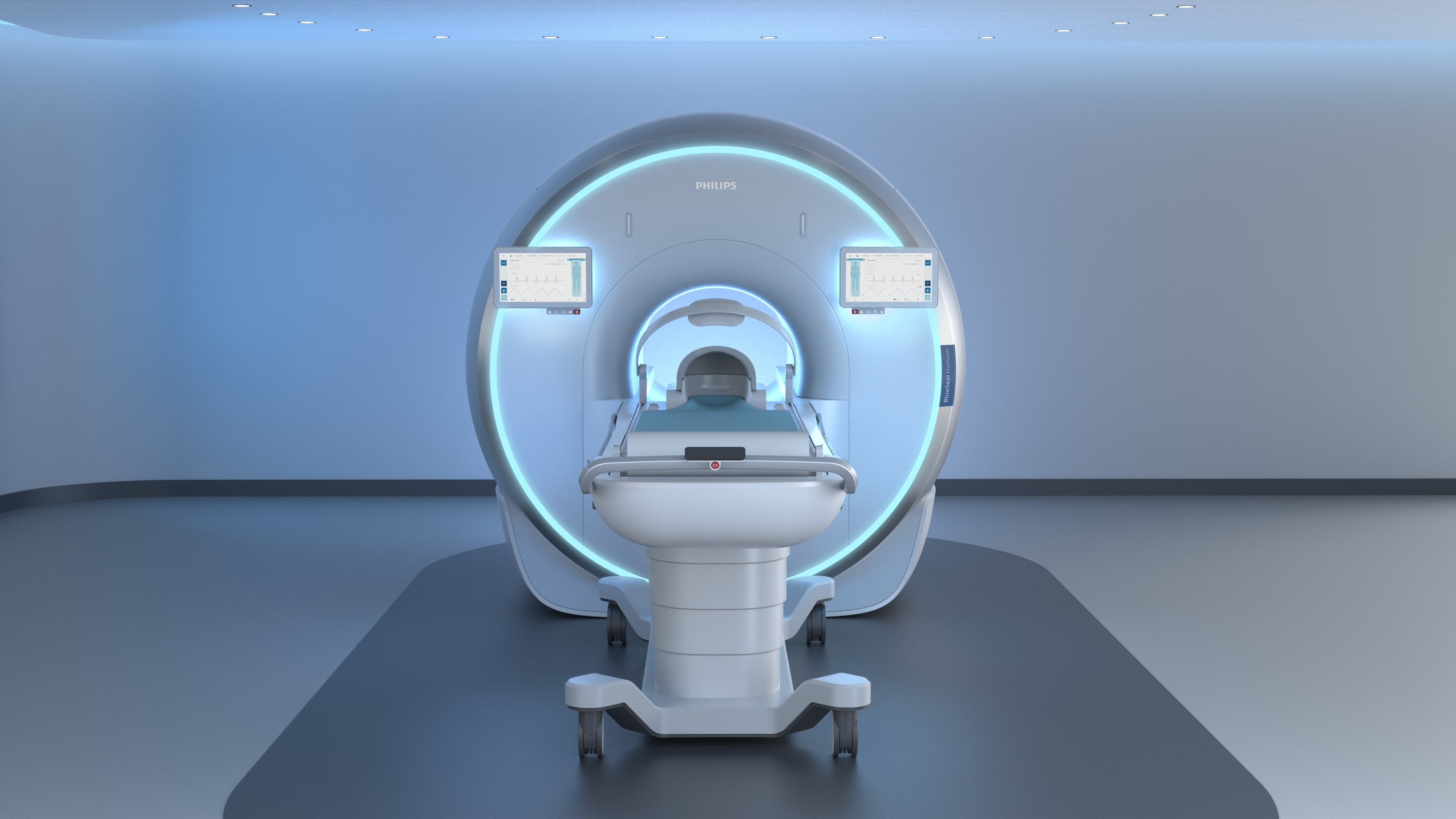
Philips unveils BlueSeal Horizon, industry's first helium-free 3.0T MRI platform
Globenewswire· 2025-11-30 16:40
Core Insights - Royal Philips has launched the BlueSeal Horizon, a new 3.0T MRI platform featuring the first helium-free 3.0T magnet, marking a significant advancement in MRI technology [1][2][3] Group 1: Technological Advancements - The BlueSeal Horizon platform eliminates the need for helium refills and vent pipes, reducing installation complexity and lifecycle risks [2] - The platform integrates advanced AI capabilities to enhance diagnostic precision and streamline workflows, allowing for faster and more efficient imaging processes [4][5][6] Group 2: AI Innovations - Key AI features include SmartPlanning, which automates planning steps for cardiac imaging, completing tasks in as little as 30 seconds [4] - Real-time Scan Preview enables faster 3D image reconstruction and allows radiologists to adjust image quality in real time [5] - SmartSpeed Precise technology allows scans to be up to three times faster and images to be up to 80% sharper, improving detail capture [6] Group 3: Market Impact - The introduction of the BlueSeal Horizon aims to expand access to advanced imaging technologies, particularly for underserved populations [3][7] - Philips has already installed over 2,000 of its 1.5T BlueSeal MRI systems globally, saving more than 6 million liters of liquid helium [2][8]

RadNet(RDNT) - 2024 Q4 - Earnings Call Transcript
2025-02-28 16:30
Financial Data and Key Metrics Changes - Total company revenue increased by 13.5% to $477.1 million, and adjusted EBITDA increased by 14% to $75 million in Q4 2024 compared to the same quarter last year [7][17] - Adjusted earnings per share grew to $0.22 from $0.15 in the previous year's fourth quarter [18] Business Line Data and Key Metrics Changes - Digital Health revenues increased by 28.1% to $18.9 million, with adjusted EBITDA growing by 61.6% to $4.5 million from last year's fourth quarter [8][17] - Imaging center revenue growth was driven by an 8% aggregate and 4% same-center procedural volume growth [9][18] Market Data and Key Metrics Changes - Advanced Imaging represented 26.8% of RadNet's procedural volume, an increase of 137 basis points from the same quarter last year [9][18] - The company opened nine new facilities in 2024 to address patient backlogs and increase capacity [10] Company Strategy and Development Direction - RadNet aims to lead the transition of diagnostic imaging into a tech-enabled specialty, focusing on digital health solutions to enhance operational efficiency and patient care [26] - The company plans to invest approximately $20 million in digital health infrastructure in 2025 to support external growth [12][25] Management's Comments on Operating Environment and Future Outlook - Management expressed confidence in recovering from the impacts of severe winter weather and wildfires, expecting to meet or exceed budget projections for the remainder of the year [21][33] - The company anticipates a 30% revenue growth in the Digital Health segment for 2025, driven by clinical AI solutions and new technology offerings [24][25] Other Important Information - RadNet's cash balance at year-end 2024 was $740 million, with a net debt to adjusted EBITDA leverage ratio below one [13][19] - The company is actively evaluating acquisition opportunities to enhance its product offerings and customer base [28][80] Q&A Session Summary Question: Impact of weather on scheduling and recovery timeline - Management confirmed that they expect to return to normal scheduling by March, following the disruptions caused by winter storms and wildfires [31][33] Question: Early learnings from the OS rollout - Management indicated it is early to assess the OS rollout but noted enthusiasm among staff for the operational changes [34][35] Question: Pipeline and deal sizes - Management stated they are actively working on several opportunities in both digital health and imaging services, focusing on strategic acquisitions [80] Question: Labor market trends and inflation - Management noted that labor shortages have been a challenge since COVID, with salary growth in the low single digits for RadNet compared to higher rates in hospitals [88][90] Question: Digital health revenue components for 2025 - Management expects total digital health revenue to be between $80 million and $90 million, with AI revenue projected at $25 million to $30 million [65][66]