Constitutional Law

Search documents
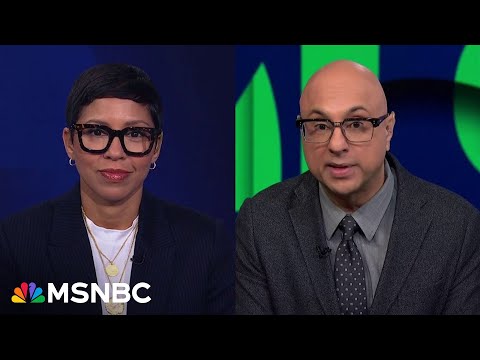
The shadow docket ruling Melissa Murray says brings us ‘dangerously close’ to ‘real tyranny’
MSNBC· 2025-09-13 19:45
Legal Analysis of Immigration Enforcement - The court's shadow docket decision allows the federal government to use criteria like speaking Spanish or working a low-wage job as reasonable suspicion for unlawful presence [5] - Justice Kavanaugh's concurrence questions whether challengers have standing to bring the case, requiring proof of injury from the defendant's actions [6] - Challenging the use of these criteria in court requires showing unlawful detention, making justice "after the fact" and difficult for low-wage workers [8][9][10] - The decision licenses the use of these criteria and makes it harder for individuals to challenge it [10] Constitutional Rights and Government Power - The Constitution aims to diffuse government power to prevent tyranny and protect individual rights [20] - Requiring individuals to carry passports resembles practices in Europe before World War II, raising concerns about government overreach [21] - The government's interest in law enforcement should not outweigh individual rights to personal security and dignity [27] - It is better for many guilty individuals to go free than for one innocent person to be unjustly punished [28] Judicial Scrutiny and Efficiency - The Supreme Court has historically prioritized individual rights over efficiency or expediency [15] - Lower court judges are carefully ruling, but the Supreme Court's decisions without explanation feed the idea of rogue judges [17]

X @The Economist
The Economist· 2025-08-05 09:00
Legal & Constitutional Matters - Public employees in Germany are legally protected and swear to uphold the constitution [1] - The report raises the question of what happens when public employee behavior violates the constitution [1]
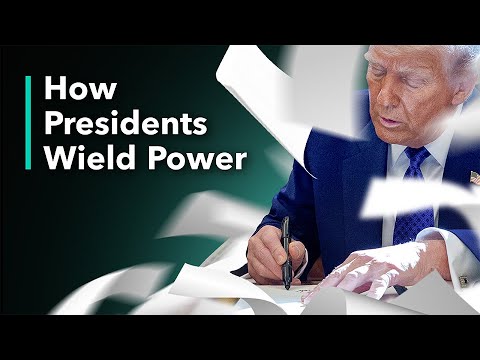
Trump's Executive Orders: How Much Legal Authority Do They Have?
Bloomberg Television· 2025-07-23 14:54
Executive Orders & Presidential Power - The report analyzes President Trump's use of executive orders to reshape government and society, exceeding the scope of previous presidents [2][3] - Executive orders are written orders from the President directing action, but their legality is subject to judicial review, particularly by the Supreme Court [4][12][13] - While the Constitution doesn't explicitly grant the power to issue executive orders, presidents base their authority on Article Two powers, such as organizing the executive branch [5][6] - Executive orders are not laws and rank below the Constitution and federal statutes in the hierarchy of legal authority [10] - Presidents often cite constitutional provisions or legislation to justify their executive orders [11][12] Checks and Balances - Congress can pass legislation to limit the President's authority and clarify its own purview [13] - Elections serve as an ultimate check, as a new president can overturn existing executive orders [14] Historical Context - Presidents have used executive orders for various purposes, from organizing government agencies to implementing significant policy changes [6][7][8] - Examples include FDR's order leading to Japanese-American internment and Truman's desegregation of the military [7][8] Trump Administration - The Trump administration's executive orders have been described as more complex and powerful, targeting perceived enemies and pushing the boundaries of executive authority [9][10]