Critical Mineral Supply Chains

Search documents
化工板块_锂与稀土_再探行业结构性动态-Chemicals Sector_ Lithium and Rare Earth_ Revisiting Structural Dynamics
2026-04-13 06:13
Summary of Key Points from the Conference Call Industry Overview - The conference call focuses on the **Lithium and Rare Earth** sectors, highlighting the ongoing efforts in the US and allied nations to rebuild critical mineral supply chains, which are progressing unevenly [1][18]. Core Insights and Arguments Rare Earths Supply and Demand - Planned US NdFeB magnet capacity is projected to reach approximately **50,000 tons per year by 2030** across seven projects, primarily targeting lower-grade industrial magnets, leaving high-grade magnets for automotive and wind applications largely unaddressed [2]. - The physical output of rare earths is lagging behind investment, indicating the early-stage rebuilding of a supply chain with minimal Western participation for over a decade [2]. MP Materials Dynamics - Historically, **60-70%** of Mountain Pass concentrate was shipped to Shenghe in China for processing. Due to export restrictions, Shenghe can no longer process this concentrate, prompting MP Materials to perform in-house separation, producing NdPr oxide and heavy rare earth byproducts [3]. - Significant inventories are being stockpiled at Mountain Pass, with discussions around government-backed stockpiling or pricing support mechanisms [3]. Pricing and Market Dynamics - A "rest-of-world" rare earth price is being formed to detach from Chinese pricing, but caution is advised regarding EU Rotterdam quotes, which can trade at significant premiums compared to China [4]. - The pricing of **~99.98% yttrium oxide** is around **$10/kg**, while residual volumes can command premiums of approximately **7,000%** [4]. Coal Ash Recovery Skepticism - Coal ash rare earth recovery is viewed skeptically due to low grades and poor recoveries, with potential viability only when paired with mandatory environmental remediation [5]. Government Capital Allocation - The selection of USA Rare Earths for government capital allocation surprised industry participants due to challenges in grade and processing. However, the acquisition of Less Common Metals and planned expansions are seen as positives [6]. Policy Framework - The US approach to rare earths contrasts with China's consolidation strategy, focusing on building competition from a near-zero base and accepting failure risk [8]. - A Western pricing and stockpiling framework is anticipated to involve the US, EU, Japan, and Korea, with true market-based liquidity expected to take years to develop [9]. Heavy Rare Earths Supply Bottleneck - Western supply chains have focused on NdPr, leaving heavy rare earths structurally undersupplied. Separation requires significant capital expenditure, and the most advanced pathways are expected to yield production by late-decade [10]. Lithium Market Insights Price Fluctuations - Lithium prices have fluctuated from a mid-cycle low of **$8,000/ton LCE** to around **$25,000/ton**, driven by various factors including demand growth and supply disruptions [11]. - Prices have since eased to approximately **$20-21,000/ton**, reflecting weaker EV sales in China [11]. Battery Demand Outlook - Battery demand is expected to dominate the lithium outlook, with carbonate favored until around 2030, after which hydroxide is anticipated to regain market share [12]. - Supply expansions of roughly **350 kt LCE** are planned across Australia and Africa, while many Chinese mines may not restart operations [13]. EV Growth Projections - Global EV growth is estimated at **20% year-on-year** in 2025, with significant energy storage installations expected to reach **~300 GWh** by 2025 [14]. Company Valuation and Risks - MP Materials has a 12-month price target of **$90**, equating to **33x 2027E EBITDA**. Key risks include delays in ramp-up, rising prices for processing chemicals, and fluctuations in REO demand [19]. Conclusion - The conference call highlights the complexities and challenges within the lithium and rare earth sectors, emphasizing the need for strategic investments and policy support to navigate the evolving landscape. The focus on rebuilding supply chains and addressing pricing dynamics will be critical for future growth and stability in these industries.

HUB Cyber Security Ltd. (Nasdaq: HUBC) Highlights Tivani Expansion Into Defense-Grade Strategic Minerals
Globenewswire· 2026-03-04 14:15
Core Viewpoint - The inclusion of antimony in the Tivani Tier-1 Critical Minerals Project enhances its role in critical mineral supply chains, particularly for defense and industrial applications [1][2][3]. Group 1: Company Developments - HUB Cyber Security Ltd. announced the expansion of the Tivani project to include antimony, alongside existing minerals like titanium, iron, and vanadium [1]. - Ferrox Critical Minerals Ltd. aims to position Tivani as a multi-commodity platform, enhancing its relevance in defense, aerospace, and advanced manufacturing sectors [3][4]. - The CEO of Ferrox emphasized the goal of becoming a globally relevant critical minerals producer rather than just a single-commodity developer [4]. Group 2: Strategic Importance - Antimony is recognized as a defense-grade strategic material, essential for various technologies including aerospace systems and military applications [2]. - The global supply of antimony is highly concentrated, leading Western governments to view it as a critical vulnerability in secure industrial supply chains [2]. - The addition of antimony to the Tivani project underscores its strategic relevance in national security and industrial policy [7]. Group 3: Infrastructure and Trust - HUBC is embedding trust infrastructure across verification, governance, and digital asset integrity workflows related to the Tivani platform [5][6]. - The company believes that validation and trust infrastructure will be foundational for transparency and governance in next-generation critical mineral supply chains [7].



First Phosphate Receives Conditional Approval for up to $16.7 Million Non-Repayable Contribution from the Government of Canada
TMX Newsfile· 2026-03-02 19:03
Core Viewpoint - First Phosphate Corp. has received conditional approval for a non-repayable contribution agreement of up to C$16.7 million from the Government of Canada to support the development of a phosphate concentrate for the lithium iron phosphate battery market [1][2]. Group 1: Financial Contribution and Project Scope - The financial contribution will be used to assess technical and engineering parameters necessary for producing a phosphate concentrate that meets lithium iron phosphate battery market standards [2]. - The funding is part of a broader initiative to enhance industrial collaboration and integrate Canadian projects into international supply chains for battery materials, covering eligible activities planned through 2028 [5]. Group 2: Economic and Strategic Impact - The project aims to develop a scalable Canadian process for producing battery-grade phosphate concentrate, which will reduce reliance on foreign supply chains and create skilled jobs [4]. - The development work is expected to strengthen Canada's strategic position within the lithium iron phosphate battery value chain by establishing domestic capacity to process apatite into high-purity phosphoric acid for battery applications [3][4]. Group 3: Company Overview and Market Focus - First Phosphate Corp. is focused on building a vertically integrated mine-to-market supply chain for the production of lithium iron phosphate batteries in North America, targeting markets such as energy storage, data centers, and national security [9]. - The company's flagship property, Bégin-Lamarche, is noted for its high-purity phosphate resource with low impurity levels, which is critical for battery applications [10].

Giant Mining Corp. Engages Big Sky Exploration for Up to 10,000 Feet of Multi-Phase 2026 Drilling at Majuba Hill, Nevada
Thenewswire· 2026-02-27 23:55
Core Viewpoint - Giant Mining Corp. has engaged Big Sky Exploration for its 2026 Maiden Core diamond drilling program at the Majuba Hill Copper Deposit in Nevada, aiming to advance systematic exploration of the project [1][3]. Company Overview - Giant Mining Corp. focuses on identifying, acquiring, and advancing late-stage copper and copper/silver/gold projects to meet the growing global demand for critical metals driven by initiatives like the Green New Deal [14][15]. - The flagship asset, Majuba Hill, is located 156 miles (251 km) from Reno, Nevada, and benefits from a mining-friendly regulatory environment and strong local infrastructure [15][16]. Drilling Program Details - The 2026 drilling program is planned to include up to 10,000 feet (3,048 meters) of drilling, divided into two phases [3][10]. - Phase 1 consists of up to 5,000 feet (1,524 meters) of core drilling, along with underground mapping and sampling [5][10]. - The program will be guided by over 100 previous drill holes totaling more than 89,000 feet of drilling, which have identified numerous mineralized breccia bodies [6][10]. Geological and Mineralization Insights - Historical drilling results indicate elevated copper and silver values, with intervals of anomalous gold, associated with hydrothermal-magmatic tourmaline matrix breccias [6][13]. - The project shows indications of a potentially large Cu – Ag +/- Au mineralized body, but further drilling is required to determine the extent and grade of mineralization [13][15]. Strategic Alignment - Majuba Hill is aligned with U.S. critical-mineral priorities, supporting domestic supply chain initiatives [7][14]. - The project is positioned to benefit from existing infrastructure, which provides significant cost savings compared to more remote projects [13]. Funding and Execution - The company has secured funding for the next phase of drilling at Majuba Hill, indicating a commitment to advancing the project through systematic drilling and technical evaluation [13][16].

Op-Ed: Antidumping duties can blunt China’s playbook
MINING.COM· 2026-02-23 18:37
Core Viewpoint - The West can protect its critical mineral producers from China's predatory pricing through existing antidumping laws, which can neutralize supply flooding that threatens domestic investment [1]. Group 1: China's Market Strategy - China employs a dual strategy of restricting exports to inflate prices and then flooding the market to undermine Western competitors once they mobilize capital [3]. - The historical example of Molycorp illustrates how China's export restrictions led to a temporary price surge, attracting significant investment, only for prices to collapse when China restored supply, resulting in Molycorp's bankruptcy [6]. Group 2: Antidumping Laws as a Solution - The antidumping duties under the Tariff Act of 1930 can effectively counteract China's pricing strategies by imposing levies that increase as export prices fall, making predatory pricing less advantageous for China [9]. - This approach can extend the protective benefits seen in the MP Materials floor-price agreement across the domestic sector without requiring the government to become a permanent buyer or take equity stakes in projects [10]. Group 3: Legal and Strategic Framework - The legal basis for implementing antidumping duties is strong, as they are explicitly authorized by Congress and align with international trade agreements, providing a robust framework for action against China's practices [11]. - The U.S. can also coordinate with allies to initiate parallel antidumping proceedings against Chinese imports, establishing effective price floors across multiple Western markets [13]. Group 4: Need for Structural Protection - While independent pricing benchmarks and strategic stockpiles are beneficial, they do not eliminate China's ability to manipulate the market; systematic use of antidumping duties is necessary for long-term supply chain stability [14].
Nexus Uranium Joins Better in Our Backyard Coalition
TMX Newsfile· 2026-01-05 11:00
Core Viewpoint - Nexus Uranium Corp. has joined the Better In Our Back Yard (BIOBY) coalition, emphasizing its commitment to responsible industrial development and community engagement in the U.S. uranium sector [1][2]. Group 1: Company Initiatives - The membership in BIOBY supports Nexus's focus on responsible mineral development, particularly as it advances its U.S. uranium portfolio, including the Chord Project in South Dakota [2]. - Nexus is pursuing inclusion in the FAST-41 program, which aims to streamline environmental reviews and permitting for infrastructure projects, potentially benefiting uranium projects that enhance U.S. energy security [3]. Group 2: Advocacy and Community Engagement - BIOBY advocates for projects that demonstrate environmental responsibility, economic value, and community collaboration, aligning with Nexus's approach to developing domestic uranium resources [2][4]. - The coalition aims to create a thriving economy while protecting the environment, recognizing the interdependence of mining, manufacturing, and local businesses [5]. Group 3: Company Overview - Nexus Uranium is a Canadian exploration company focused on uranium projects in North America, holding several projects in South Dakota and Wyoming, as well as in Saskatchewan, Canada [6].

Consolidated Lithium Metals Inc. Signs Definitive Agreement with SOQUEM to Earn up to 80% Undivided Interest in the Kwyjibo Rare Earth Project, Québec
Globenewswire· 2025-11-18 12:30
Core Viewpoint - Consolidated Lithium Metals Inc. has entered into a binding definitive agreement with SOQUEM Inc. to acquire an option for up to 80% interest in the Kwyjibo Rare Earth Project, which is strategically located in Québec, Canada [1][10]. Transaction Summary - Phase I involves CLM acquiring a 60% undivided interest in the Project, with total payments and share issuances amounting to C$23.15 million over five years [2]. - Phase II allows CLM to earn an additional 20% interest, bringing the total to 80%, with an additional C$22.00 million in payments and share issuances over three years [4]. Financial Breakdown - In Phase I, the financial commitments include C$5.65 million in cash, C$5.50 million in common shares, and C$12.00 million for project development [5]. - In Phase II, the commitments consist of C$4.50 million in cash, C$4.50 million in common shares, and C$13.00 million for advancing project milestones [6]. Project Details - The Kwyjibo Rare Earth Project hosts an Iron Oxide Copper Gold (IOCG)-style mineral system with significant rare earth elements, particularly neodymium, praseodymium, dysprosium, terbium, and yttrium [8]. - The Project is well-positioned near existing infrastructure, including the QNS&L rail line and the Port of Sept-Îles, and is expected to benefit from access to Québec's hydroelectric power grid [8]. Management Commentary - The CEO of CLM emphasized the strategic partnership with SOQUEM, highlighting the rising global demand for rare earth elements and the potential for the Project to become a stable supplier for various supply chains [10]. Regulatory and Community Engagement - The agreement includes provisions for consultations with the Innu of Takuaikan Uashat mak Mani-utenam and aims to leverage Québec's established permitting framework to facilitate project development [11].

Wall Street Says This 1 Little-Known Stock Could Be a Rare Earth ‘Winner’
Yahoo Finance· 2025-10-23 15:28
Core Viewpoint - Ramaco Resources has seen a significant stock price increase of 283% year-to-date, driven by its strategic expansion into rare earth elements (REE) and critical minerals following the discovery of substantial deposits at its Brook Mine in Wyoming [1][4]. Company Overview - Ramaco Resources has a market capitalization of $2.48 billion and focuses on the development, operation, and sale of metallurgical coal, emphasizing high-quality, low-cost production [2]. - The company operates several mining complexes across southern West Virginia, southwestern Virginia, and southwestern Pennsylvania, and is developing the Brook Mine in northeastern Wyoming, which spans approximately 16,000 acres [2]. - The Brook Mine is expected to produce REEs such as neodymium and praseodymium without generating radioactive waste, aligning with U.S. efforts to enhance critical mineral supply chains [2]. Market Context - The U.S.-China trade war has heightened the importance of rare earth minerals, which are essential for advanced technologies like electric vehicles and wind turbines [5]. - As China tightens its control over REE exports, the U.S. government is prioritizing the development of secure domestic supply chains [5]. Analyst Coverage - Baird initiated coverage of Ramaco Resources with a "Buy" rating and a price target of $63, the highest on Wall Street, indicating strong potential for the company in the U.S. rare earth economy [3][6]. - Analyst Ben Kallo highlighted the Brook Mine project as a significant opportunity for Ramaco and the U.S. rare earth sector [8]. Financial Performance - In Q2 of fiscal 2025, Ramaco reported a revenue decline of 1.5% year-over-year to $153 million, exceeding Wall Street estimates by $21.45 million [11]. - The company achieved an 18% year-over-year increase in tons sold, reaching over 1 million tons, driven by growth in both North American and export markets [11]. - The non-GAAP cash cost per ton sold was $103, positioning Ramaco within the first quartile of the U.S. cash cost curve [12]. Future Outlook - Ramaco's Brook Mine is fully permitted for an initial production capacity of 1,200 tons of REEs and 2 million tons of coal, with plans to increase output to 3,400 tons of REEs and 5 million tons of coal [8]. - Analysts expect the company to face a net loss of $0.97 per share in fiscal 2025, with full-year revenue projected to drop 12.72% year-over-year to $581.57 million, although investor focus remains on the Brook project [18].

Orion's Lewnowski on Critical Mineral Supply Chains
Yahoo Finance· 2025-10-07 16:05
Core Insights - Orion Resource Partners is strategically positioning itself in the evolving commodities market [1] Group 1: Company Positioning - The firm is actively adapting to changes in the commodities market [1] - Oskar Lewnowski, the Founder & Group CEO, emphasizes the importance of agility in investment strategies [1] Group 2: Market Context - The discussion took place at the 2025 Bloomberg Canadian Finance Conference, highlighting the significance of the event in the financial landscape [1] - The commodities market is experiencing rapid changes, necessitating a proactive approach from investment firms [1]
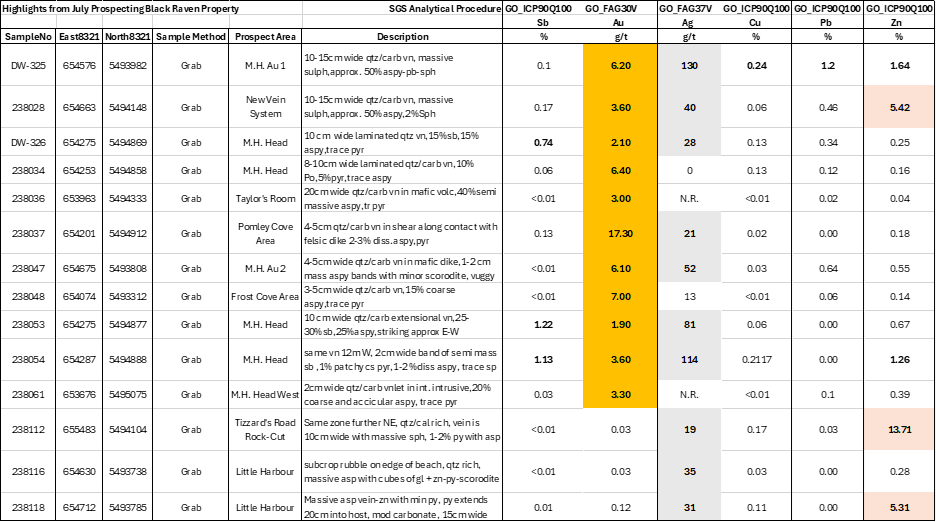
Churchill Reports More High-Grade Gold and Silver Vein Results near Past-Producing Frost Cove Antimony Mine, Including 17.3 g/t Au and 130 g/t Ag
Globenewswire· 2025-09-15 11:38
Core Insights - Churchill Resources Inc. has reported high-grade mineral samples from its Black Raven property, indicating promising exploration results in areas away from historical mines [1][2][4] - The company is advancing its drilling and trenching program, with a drill contractor mobilizing to the Frost Cove site [1] - The Black Raven property is strategically significant due to its historical production of antimony and gold, with previous grades reaching 35.1% for antimony and 14.4 g/t for gold [4] Company Overview - Churchill Resources Inc. is focused on exploring strategic critical minerals in Canada, particularly at its Black Raven, Taylor Brook, and Florence Lake properties in Newfoundland & Labrador [9] - The management team has extensive experience in mineral exploration and the establishment of successful publicly listed mining companies [9] Mineral Exploration Details - The recent sampling program included antimony, gold, silver, lead, zinc, copper, and molybdenum, with samples processed by SGS Canada Inc. [6] - The Black Raven property consists of nine map-staked licenses covering a total area of 3,125 hectares [7] Market Context - Antimony is identified as a critical mineral with high demand, essential for national security and modern technology, with over 90% of global production controlled by non-Western jurisdictions [5] - The importance of domestic North American sources of critical minerals is emphasized for economic and national security [5]