Do-it-yourself healthcare

Search documents
Social Media Influence in the Exam Room: National Survey About Medical Testing Reveals Changing Patient Expectations
Globenewswire· 2026-01-07 12:30
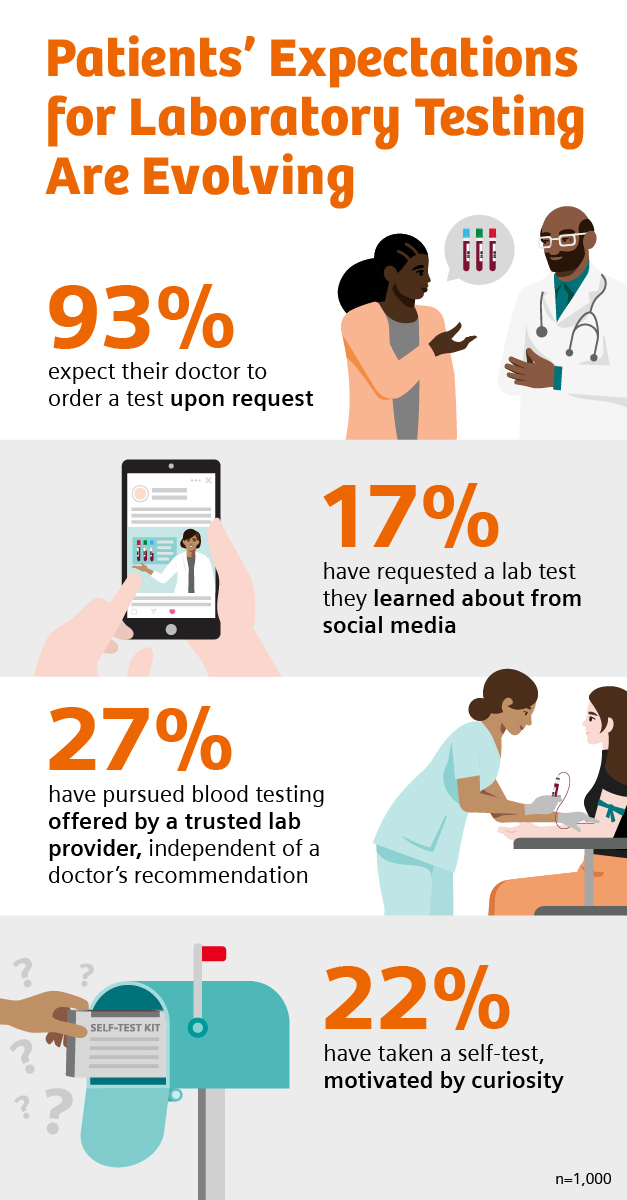
Core Insights - A national survey indicates a significant shift in U.S. patients' expectations towards greater control over diagnostic testing, moving away from traditional evidence-based medicine [1][8] Patient Expectations - 93% of patients expect their doctor to order a lab test upon request, with 37% having requested tests based on personal research and 17% influenced by social media [2][12][13] - High interest in predictive health insights is noted, with 89% of respondents expressing interest in lab tests that can predict health risks [3] Testing Behavior - 27% of patients pursued blood testing independently of a doctor's recommendation, driven by curiosity [3][12] - Nearly half (49%) of those who engaged in self-prescribed testing do not share results with healthcare providers, indicating a trend towards privacy in health information [5] Trust in Healthcare Providers - While 95% of patients trust their providers to order appropriate tests, only 87% trust their guidance against requested tests, highlighting a changing dynamic in patient-provider relationships [4] Financial Aspects - A significant portion of patients face financial barriers, with 52% of those with unpaid medical bills indicating that their debt includes unpaid lab testing fees [6] - Patients are more likely to delay imaging (22%) than bloodwork (5%) when cost is a concern [7] Impact of Reimbursement Cuts - Upcoming payment cuts of up to 15% for around 800 laboratory tests threaten to widen the gap between patient expectations and what testing providers can deliver [8] - The RESULTS Act is gaining support as a potential solution to stabilize payments for laboratory tests and maintain access to quality services [8] Industry Perspective - Siemens Healthineers emphasizes the need for sustained investment in laboratory services to advance personalized care and fulfill the demand for predictive health insights [9]