Economic risks

Search documents
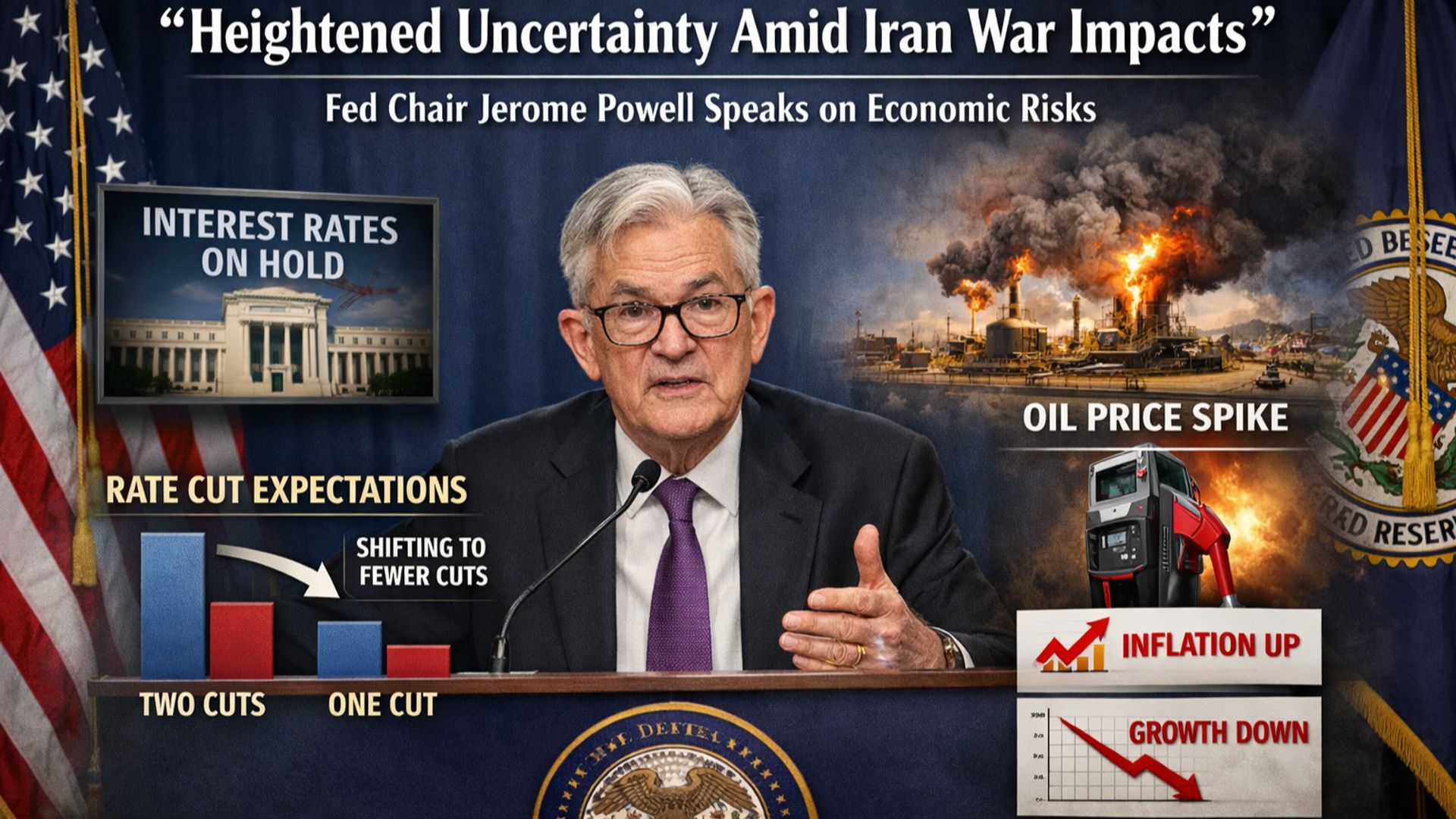
‘If we were ever to skip an SEP, this is a good one' – Fed Chair Powell sees heightened uncertainty amid Iran war impacts
KITCO· 2026-03-18 21:02
Group 1 - The article discusses heightened uncertainty in the economic landscape due to the impacts of the Iran war, which has led to fluctuations in oil prices and altered rate cut expectations [1][2] - Fed Chair Jerome Powell has addressed the economic risks associated with the current geopolitical tensions, indicating potential shifts in monetary policy [1][2] - There is an expectation of one to two rate cuts in the near future as economic growth is projected to decline and inflation is on the rise [2]

能源与黄金市场展望:当黑天鹅成为现实-Energy and gold market outlook – when a wildcard becomes the reality
2026-03-10 10:17
Summary of Key Points from the Conference Call Industry Overview - The conference call primarily discusses the **energy and gold markets**, focusing on the impact of geopolitical tensions, particularly the US/Israel-Iran conflict, on oil supply and prices [7][28]. Core Insights and Arguments Oil Market Dynamics - The crude oil market is experiencing a significant supply loss of approximately **11-16 million barrels per day (mb/d)** due to disruptions in the **Strait of Hormuz**, which is critical for oil transportation [7][28]. - Current Brent crude prices are projected to remain between **$80-90 per barrel** for the next 1-2 weeks, reflecting the ongoing supply disruptions [7][28]. - The **International Energy Agency (IEA)** is expected to release strategic oil inventories to mitigate the impact of supply losses, particularly in the oil products market [22][28]. - Total global oil and product inventories are estimated at **10.7 billion barrels**, providing a buffer against short-term supply shocks [19][28]. Price Forecasts - **Brent Crude**: Current spot price is **$84/bbl**, with a forecast of **$85/bbl** for the next 0-3 months, but expected to drop to **$65/bbl** in 6-12 months [5]. - **Gold**: Current price is around **$5,166/oz**, with expectations of a decline to **$4,500/oz** in the second half of 2026 due to reduced geopolitical risks [36][45]. Geopolitical Risks - The ongoing conflict in the Middle East poses elevated risks to energy infrastructure, with potential supply losses of **10 mb/d** for an extended period [7][28]. - The likelihood of military actions or peace deals could significantly influence energy prices, with a potential sharp decline if the situation stabilizes [7][28]. Gas Market Implications - Gas markets are particularly vulnerable to disruptions in the Strait of Hormuz, with European prices expected to rise if the situation persists beyond the short term [7][28]. Additional Important Insights - The **3-2-1 crack spread** for oil products is at recent highs, indicating increased refining margins and potential for higher retail prices in the US [9][12]. - Current US gasoline prices are projected to rise to **$3.5-3.6/gallon**, up from **$2.8/gallon** at the beginning of the year, reflecting the impact of rising crude prices [12][13]. - The **gold market** is experiencing volatility, with a significant increase in above-ground gold stocks valued at approximately **$20 trillion** over the past three years [37][54]. Conclusion - The energy and gold markets are currently influenced by geopolitical tensions, supply disruptions, and changing demand dynamics. Investors should closely monitor these developments as they could lead to significant price fluctuations and investment opportunities in the near future [7][28].
Gold and silver prices poised for further gains amid mounting economic risks - Sprott's McIntyre
KITCO· 2025-07-02 21:44
Core Insights - The article discusses the author's extensive experience in journalism and the financial sector, highlighting a focus on economic reporting and analysis [3][4]. Group 1 - The author has over a decade of reporting experience, particularly in covering politics and financial news [3]. - Since 2007, the author has worked exclusively within the financial sector, starting with the Canadian Economic Press [3]. - The author's background includes a diploma in journalism from Lethbridge College [3].