
Energy Profits Levy

Search documents
Jersey Oil & Gas finds clarity and momentum as UK fiscal reset reshapes the Buchan investment case
Proactiveinvestors NA· 2026-01-17 09:08
Core Viewpoint - The recent reset of the UK fiscal framework significantly enhances the prospects for Jersey Oil and Gas PLC's Buchan redevelopment project, transitioning it from planning to execution [1] Company Overview - Jersey Oil and Gas has narrowed its focus to advanced projects, distinguishing itself from many AIM-listed explorers [1] - The Buchan field is a previously producing North Sea asset with well-defined reservoirs, making it a low-risk development opportunity [2] Fiscal Environment - The introduction of the Energy Profits Levy created uncertainty regarding the tax regime, which hindered funding discussions for offshore projects [3][4] - The new fiscal rules provide substantial tax offsets of 84.25% for capital invested before March 2030, lowering the after-tax cost of development significantly [5] Development Strategy - Jersey aims to maximize spending during the high relief period before 2030, with production expected to commence afterward under a stable 40% tax rate [6][7] - This strategy positions costs during the maximum relief phase and revenues in a more predictable tax environment, enhancing the project's fiscal profile [7] Financial Position - Jersey has reduced its annual cash costs to approximately £1.5 million and had £11 million in cash at the end of 2025, allowing for project progression without immediate fundraising pressure [8] - Upon final development plan approval, Jersey is set to receive an additional £15 million ($20 million) from joint venture partners [9] Joint Venture Dynamics - The company retains a 20% carried interest in the Buchan project, enabling it to reach production without significant equity dilution [10] - Jersey holds over £100 million in UK tax losses, which can be utilized effectively once the tax rate stabilizes at 40% post-2030, further improving project economics [10] Operational Progress - Ongoing operational work includes updating the environmental impact assessment and value engineering to reduce capital intensity while maintaining recovery rates [11] - The joint venture partners, NEO Energy and Serica, have expanded their UK North Sea portfolios, indicating strong commitment to the Buchan project [12] Investment Clarity - The shift in fiscal policy has clarified the investment proposition, focusing on whether Jersey, as a financially disciplined company with committed partners, can deliver a sanctioned development [13][14] - This clarity may prove to be a significant asset for Jersey Oil and Gas moving forward [14]


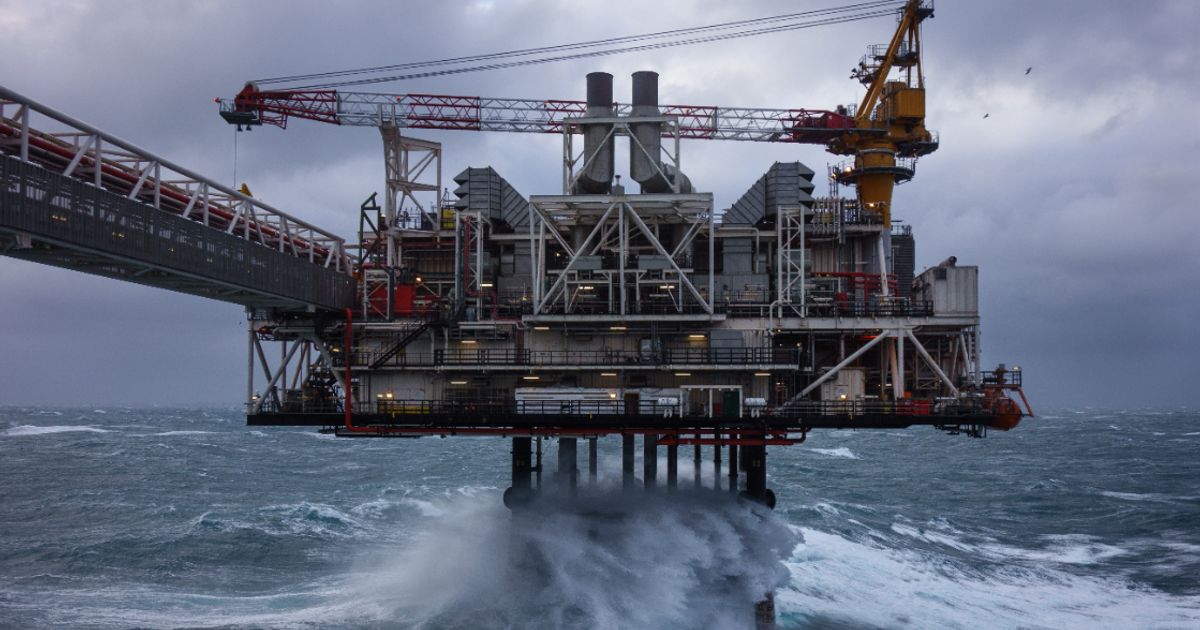
UK North Sea Oil Merges Its Way Through Decline
Yahoo Finance· 2025-12-16 17:00
Core Insights - The UK's offshore sector is undergoing significant consolidation driven by a stringent fiscal regime, particularly the Energy Profits Levy (EPL), which has raised the marginal tax rate on upstream revenues to 78% [1][3] Group 1: Consolidation Trends - Mergers and acquisitions have become prevalent in the UK offshore sector, with Harbour Energy planning to acquire Waldorf Petroleum, and TotalEnergies merging its North Sea assets with Neo Next [2] - The consolidation has resulted in the concentration of over 500,000 barrels of oil equivalent per day (boe/d) production into fewer operators, as companies respond to high tax rates and declining output [2][9] - The UK North Sea's production has decreased from 1.1 million b/d in 2020 to approximately 474,000 b/d by September 2025, with no new field approvals granted for two consecutive years [2][8] Group 2: Fiscal Impact - The EPL initially raised around £7 billion in the 2022-23 fiscal year, but revenues have since dropped to an estimated £2-2.5 billion by the fiscal year 2024-25 due to reduced activity [3] - The consolidation of oil companies is seen as a strategy to offset the high tax burden against accumulated losses, attracting political scrutiny regarding potential tax liabilities [3] Group 3: Investment Environment - Investment in new supply has stalled, with the UK North Sea's production declining faster than expected and no new field developments approved in 2024 or 2025 [4] - The government's North Sea Future Plan aims to manage existing fields while halting the issuance of new exploration licenses, contrasting with investment encouragement seen in other countries [4][7] Group 4: Employment Concerns - Job losses in the oil and gas sector could reach a rate of 1,000 per month by 2030, with the offshore workforce contracting by about one third since 2014 [5] Group 5: Future Outlook - The consolidation strategy in the UK is primarily defensive, aimed at managing regulatory risks and tax liabilities rather than fostering growth [10] - Lower oil and gas prices could provide a narrow window for relief from the EPL, but the conditions for replacing it with the Oil and Gas Price Mechanism (OGPM) are challenging to meet [11]