Environmental Education

Search documents
New Jersey American Water Announces Launch of 2026 American Water Charitable Foundation Water and Environment Grant Program
Prnewswire· 2026-02-16 21:30
Core Points - New Jersey American Water has launched the 2026 American Water Charitable Foundation Water and Environment Grant Program, inviting community partners to apply for grants focused on clean water, conservation, environmental education, climate variability, and water-based recreation projects [1] - In 2025, the Foundation awarded a total of $1.7 million in grants to 80 organizations across 12 states, including nine organizations based in New Jersey [1] - The American Water Charitable Foundation has invested over $25 million in funding since 2012, supporting eligible organizations in communities served by American Water [1] Company Overview - American Water is the largest regulated water and wastewater utility company in the United States, providing services to over 14 million people across 14 states and 18 military installations [1] - New Jersey American Water, a subsidiary of American Water, serves approximately 2.9 million people in New Jersey [1] Philanthropic Efforts - The Foundation focuses on three pillars of giving: Water, People, and Communities, and is funded by American Water shareholders without impacting customer rates [1] - Applications for the grant program will be accepted until March 6, 2026 [1]



Coral, Curiosity, and the Courage to Act | Andrei Steyn | TEDxMiami Country Day School
TEDx Talks· 2026-02-10 17:08
No, not today, said the surirly armed French police officer standing just outside of the United Nations Oceans Conference in Nice. The opening plenary session was kicking off just 10 tantalizing feet away from me. I begged, I pleaded, I asked for him to just let me squeeze through, but he remained firm.Instead, he pointed a mile long circuitous route across the dock, a 30-minute detour. As I began walking, still frustrated and jetlagged from my 8-hour flight from Miami, I remember thinking, "This is ridicul ...

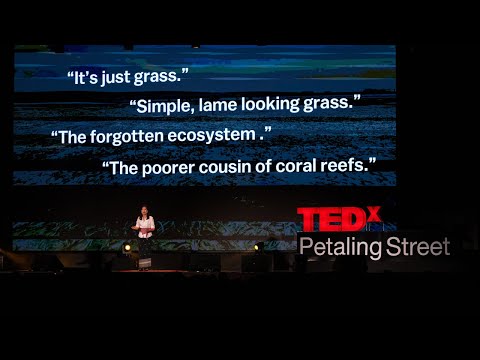
海底的秘密花园: 食物、家园与希望的海草故事 Seagrass Stories of Food, Home & Hope | 黄莲心 Jillian Ooi | TEDxPetalingStreet
TEDx Talks· 2026-02-06 15:56
The first time I saw seaggrass was 20 years ago in the Joho River estuary. When I stepped out of the boat and looked around, I felt like I had stepped into a magical world. Creatures everywhere, hiding, hunting, eating.To me, this was like a secret garden in the sea. Hello everyone. I'm Jillian Ouie.I'm a marine scientist at the University of Malaya. Back then, I was a master student studying plants in the sea. And I remember thinking why is it that I had never learned about seaggrass when I was in school.I ...
Green Impact Beyond Vulnerability | Varnessa Kayen Varlyngton | TEDxPortHarcourt
TEDx Talks· 2026-02-03 17:23
Did you know children of the Niger Delta are the most vulnerable to climate change in the region. Not because we want to, but we were forced to. Even before exploring what life felt like, hydrocarbons were already found in our systems.Person heat waves had affected many of us, subjecting us to scars and painful medications. Even my sister fell victim. It was a period of severe heat waves here in River State.It became a major topic of discussion on radio, TV stations, and lots more. And lots of children, not ...

拝啓「ごみ」様 | Misuzu Asari | TEDxKyotoUniversity
TEDx Talks· 2025-12-04 17:41
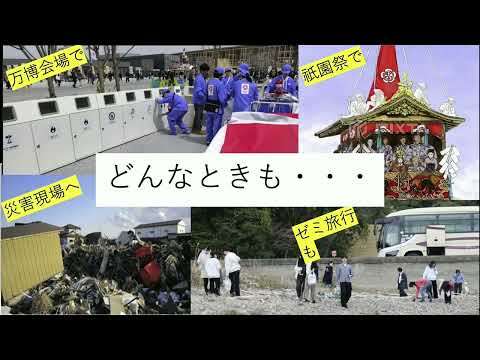
Environmental Awareness and Waste Management - The speaker founded a "Garbage Club" (兄弟ゴミ部) aiming to create a society where people wouldn't have to pick up trash [1] - The speaker was criticized for using katakana (ゴミ) instead of hiragana (ごみ) to write "garbage," as it was seen as a form of discrimination [1] - The speaker emphasizes the importance of discussing environmental issues with friends and family, noting that in Japan, a significant portion of people (indicated by the "yellow part" of a survey result) do not discuss these issues even once a month [2] - The speaker advocates for carrying reusable items like water bottles, bags, and chopsticks as a simple eco-friendly action and conversation starter [2] - The speaker points out the hypocrisy of carrying reusable items but still accepting disposable items, highlighting the convenience-driven habits of society [3] Waste Composition and Societal Changes - The speaker mentions a study that began in 1980, categorizing household waste in Kyoto into approximately 400 types, and has continued for 45 years [2] - Disposable diapers became popular in Japan after the introduction of American-made diapers in 1975 and Japanese tape-style diapers in 1981, leading to mass production, consumption, and disposal [1][2] - While the use of children's disposable diapers is decreasing due to the declining birth rate, the use of adult and pet diapers/sheets is increasing [2] - The speaker acknowledges the essential use of disposable diapers for caregiving, despite advocating for waste reduction [2] Personal Reflection and Values - The speaker's encounter with garbage has changed their perspective, allowing them to see society from a different angle and appreciate those who are marginalized or in need [3]
Ecology Of Small Things | Ankit Ranjan Pathak | TEDxYouth@TheModernSchool
TEDx Talks· 2025-11-24 17:11
Biodiversity and Conservation - Globally, over 20,000 butterfly species have been identified, highlighting the extensive biodiversity [1] - In India, more than 1,500 butterfly species are found, showcasing the country's rich natural heritage [1] - Even in the tough conditions of Rajasthan, 80 butterfly species have been recorded, demonstrating the adaptability of these insects [1] - The conservation of butterflies is crucial as they are an important part of the ecosystem, supporting its overall health [1] - Protecting butterflies also aids in the conservation of birds, as butterfly caterpillars are a vital source of high protein for young birds [1] Habitat and Environment - Wild plants and shrubs are essential habitats for butterflies and other insects, often overlooked in favor of trees [2] - The natural growth of wild plants is crucial for maintaining a healthy ecosystem, supporting various insects and animals [2] - The industry should prioritize preserving naturally grown plants and avoid unnecessary removal during development projects [4] - Integrating nature and culture, such as creating gardens based on Vedic traditions, can help connect people with the environment [4] Initiatives and Projects - A butterfly park was established in Patna in 2016, marking a significant step towards insect conservation [1] - The Flying Colors of Patna Zoo book documented 102 butterfly species within the zoo, supported by the Forest Department and the Chief Minister of Bihar [1] - An eco-system was developed in Muzzafarpur, Bihar, preserving existing wild plants and creating natural spaces for children to learn [2][3]

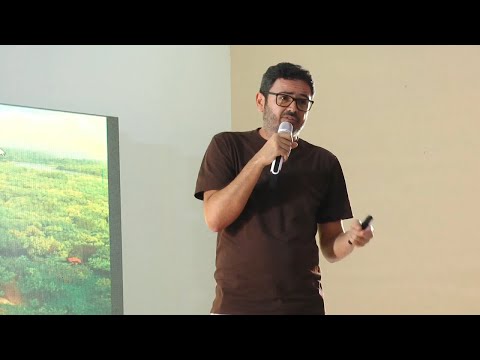
Cultural Preservation and Environmental Education | Jefferson Bob | TEDxVárzea Alegre
TEDx Talks· 2025-07-02 15:18
Business Transformation & Growth - The speaker transformed a bird-watching hobby into a profession, starting as a volunteer at Projeto Soldadinho do Araripe and later becoming a bird-watching tour guide [1] - In 2014, the speaker formalized the work by opening a tourism agency, initially named Arariping and later changed to Estigmatura Expedições [1] - In 2017, the speaker adapted the family home into a guesthouse with three suites to accommodate clients, using crowdfunding to finance the renovation [1][3] - Sítio Pau Preto has become a reference point for birdwatching tourism in Ceará, attracting both Brazilian and international visitors [5][6] - The site has expanded to six rooms and is recognized as an international hotspot for birdwatching [8][9] Community & Cultural Impact - The speaker integrates cultural elements into the birdwatching tours, showcasing the local culture of the Cariri region [19] - The speaker collaborates with artisans and cultural groups in the Sertão region, promoting local crafts and traditions [23] - Sítio Pau Preto was recognized as an Organic Museum, Casa dos Pássaros do Sertão, in 2019, integrating it into a network of organic museums [24] Environmental Conservation - The speaker stopped deforestation on the property, allowing the native vegetation to regenerate and attract bird species [15] - The site has recorded approximately 230 bird species, making it one of the most surveyed locations in Ceará [11][13] - The speaker plants vegetation, such as *cansaçao* (nettle), to attract specific bird species like the Beijaflor Vermelho (Red hummingbird) [27] Tourism & Destination Development - The speaker is developing a comprehensive route to attract a broader audience interested in experiencing the region's culture and nature [21] - The speaker is expanding routes beyond Sítio Pau Preto and the Cariri region to include Serra da Capivara in Piauí and Canudos in Bahia [19][21] - The speaker collaborates with local guides and museums to enhance the tourism experience in the Chapada do Araripe region [21]