Environmental History

Search documents
拝啓「ごみ」様 | Misuzu Asari | TEDxKyotoUniversity
TEDx Talks· 2025-12-04 17:41
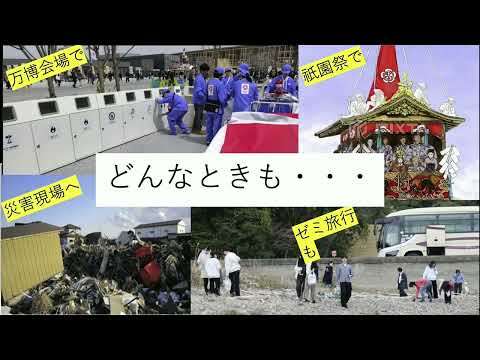
Environmental Awareness and Waste Management - The speaker founded a "Garbage Club" (兄弟ゴミ部) aiming to create a society where people wouldn't have to pick up trash [1] - The speaker was criticized for using katakana (ゴミ) instead of hiragana (ごみ) to write "garbage," as it was seen as a form of discrimination [1] - The speaker emphasizes the importance of discussing environmental issues with friends and family, noting that in Japan, a significant portion of people (indicated by the "yellow part" of a survey result) do not discuss these issues even once a month [2] - The speaker advocates for carrying reusable items like water bottles, bags, and chopsticks as a simple eco-friendly action and conversation starter [2] - The speaker points out the hypocrisy of carrying reusable items but still accepting disposable items, highlighting the convenience-driven habits of society [3] Waste Composition and Societal Changes - The speaker mentions a study that began in 1980, categorizing household waste in Kyoto into approximately 400 types, and has continued for 45 years [2] - Disposable diapers became popular in Japan after the introduction of American-made diapers in 1975 and Japanese tape-style diapers in 1981, leading to mass production, consumption, and disposal [1][2] - While the use of children's disposable diapers is decreasing due to the declining birth rate, the use of adult and pet diapers/sheets is increasing [2] - The speaker acknowledges the essential use of disposable diapers for caregiving, despite advocating for waste reduction [2] Personal Reflection and Values - The speaker's encounter with garbage has changed their perspective, allowing them to see society from a different angle and appreciate those who are marginalized or in need [3]

Ecology Of Small Things | Ankit Ranjan Pathak | TEDxYouth@TheModernSchool
TEDx Talks· 2025-11-24 17:11
Biodiversity and Conservation - Globally, over 20,000 butterfly species have been identified, highlighting the extensive biodiversity [1] - In India, more than 1,500 butterfly species are found, showcasing the country's rich natural heritage [1] - Even in the tough conditions of Rajasthan, 80 butterfly species have been recorded, demonstrating the adaptability of these insects [1] - The conservation of butterflies is crucial as they are an important part of the ecosystem, supporting its overall health [1] - Protecting butterflies also aids in the conservation of birds, as butterfly caterpillars are a vital source of high protein for young birds [1] Habitat and Environment - Wild plants and shrubs are essential habitats for butterflies and other insects, often overlooked in favor of trees [2] - The natural growth of wild plants is crucial for maintaining a healthy ecosystem, supporting various insects and animals [2] - The industry should prioritize preserving naturally grown plants and avoid unnecessary removal during development projects [4] - Integrating nature and culture, such as creating gardens based on Vedic traditions, can help connect people with the environment [4] Initiatives and Projects - A butterfly park was established in Patna in 2016, marking a significant step towards insect conservation [1] - The Flying Colors of Patna Zoo book documented 102 butterfly species within the zoo, supported by the Forest Department and the Chief Minister of Bihar [1] - An eco-system was developed in Muzzafarpur, Bihar, preserving existing wild plants and creating natural spaces for children to learn [2][3]

History and hope along the Chicago River | Dr. Shawn Bailey | TEDxYouth@IMSA
TEDx Talks· 2025-08-26 15:29
Environmental History & Challenges - Chicago's industrialization in the 19th century led to severe pollution of the Chicago River with industrial waste, meat packing byproducts, and raw sewage, threatening the city's drinking water source, Lake Michigan [5][6] - In the 1890s, Chicago reversed the flow of the Chicago River by constructing the Chicago Sanitary and Ship Canal, diverting water westward towards the Mississippi River [7][8] - Chicago constructed a wastewater treatment system, considered one of the seven wonders of American engineering in 1955, but initially, the treated water was still unsuitable for most indigenous fish species [9][10] Ecological Redemption & Urban Development - By the mid-20th century, only 10 fish species survived in the Chicago River [11] - Mayor Richard J Daly aimed to enhance Chicago's reputation and envisioned a wild, sustainable salmon population in the Chicago River, even suggesting businessmen could fish during lunch breaks [12][18] - The Clean Water Act of 1972 led to improved water quality, and by 1982, Chicago stopped using chlorine in wastewater treatment, resulting in the return of fish species [23][24] Biodiversity & Future Outlook - Currently, 58 fish species inhabit the Chicago River, and other animals like river otters, beavers, deer, foxes, coyotes, and even bald eagles have returned to the area [24][25][26] - The industry emphasizes the importance of remembering past environmental mistakes while continuing to make conscious decisions to improve the ecological health of the environment for all species [27][28]