Environmental Innovation

Search documents
Gorilla Technology Honoured with 2025 Nobel Sustainability Trust Nomination for Leadership in Implementation
Newsfile· 2025-12-05 14:00
Core Insights - Gorilla Technology Group Inc. has been nominated for the 2025 Nobel Sustainability Trust "Sustainability Award" in the category of "Leadership in Implementation" [1][2] - The nomination highlights the company's contributions to sustainable smart city transformation and long-term environmental innovation [2][3] Company Overview - Gorilla Technology Group Inc. is a global solution provider specializing in Security Intelligence, Network Intelligence, Business Intelligence, and IoT technology [4] - The company offers a wide range of solutions across various sectors, including Government & Public Services, Manufacturing, Telecom, Retail, Transportation & Logistics, Healthcare, and Education, utilizing AI and Deep Learning Technologies [4] Commitment to Sustainability - The company emphasizes its commitment to responsible innovation and the protection of natural ecosystems, exemplified by its involvement in the O.N.E. Amazon Impact Fund, which aims to turn biome conservation into a market-driven investment opportunity [3][4] - The nomination serves as a motivation for the company to continue advancing sustainability-driven technology [4] Technological Expertise - Gorilla Technology Group focuses on revolutionizing urban operations, enhancing security, and improving resilience through AI-driven products [5] - The company specializes in intelligent video surveillance, facial recognition, license plate recognition, edge computing, post-event analytics, and advanced cybersecurity technologies [5]



拝啓「ごみ」様 | Misuzu Asari | TEDxKyotoUniversity
TEDx Talks· 2025-12-04 17:41
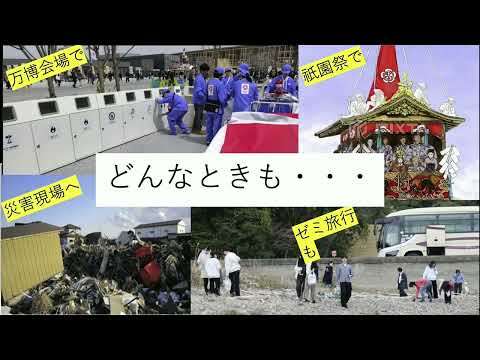
Environmental Awareness and Waste Management - The speaker founded a "Garbage Club" (兄弟ゴミ部) aiming to create a society where people wouldn't have to pick up trash [1] - The speaker was criticized for using katakana (ゴミ) instead of hiragana (ごみ) to write "garbage," as it was seen as a form of discrimination [1] - The speaker emphasizes the importance of discussing environmental issues with friends and family, noting that in Japan, a significant portion of people (indicated by the "yellow part" of a survey result) do not discuss these issues even once a month [2] - The speaker advocates for carrying reusable items like water bottles, bags, and chopsticks as a simple eco-friendly action and conversation starter [2] - The speaker points out the hypocrisy of carrying reusable items but still accepting disposable items, highlighting the convenience-driven habits of society [3] Waste Composition and Societal Changes - The speaker mentions a study that began in 1980, categorizing household waste in Kyoto into approximately 400 types, and has continued for 45 years [2] - Disposable diapers became popular in Japan after the introduction of American-made diapers in 1975 and Japanese tape-style diapers in 1981, leading to mass production, consumption, and disposal [1][2] - While the use of children's disposable diapers is decreasing due to the declining birth rate, the use of adult and pet diapers/sheets is increasing [2] - The speaker acknowledges the essential use of disposable diapers for caregiving, despite advocating for waste reduction [2] Personal Reflection and Values - The speaker's encounter with garbage has changed their perspective, allowing them to see society from a different angle and appreciate those who are marginalized or in need [3]