Environmental Security

Search documents
Veolia Posts Strong Yearly Results, Advancing Environmental Security in the U.S.
Businesswire· 2026-03-09 18:20
Core Insights - Veolia reported strong financial results for 2025, with global revenue reaching $50.11 billion, a 2.8% increase, and EBITDA rising 6.3% to $8.0 billion, driven by growth in North America and the successful execution of its GreenUp program [1][2] Financial Performance - North America achieved a 3.6% organic revenue growth, totaling $3.6 billion, primarily from the Hazardous Waste and Regulated Water divisions, with combined revenue including Water Technologies reaching $5.3 billion [1][2] - The GreenUp program exceeded financial targets, setting a strong foundation for 2026 goals and expanding growth areas such as hazardous waste capacity and PFAS management [1][2] Strategic Acquisitions - In 2025, Veolia made four acquisitions in the hazardous waste sector, including a significant deal to create a national platform, enhancing its service capabilities for industrial expansion in the U.S. [1] - The planned acquisition of Clean Earth in 2026 is expected to double Veolia's hazardous waste footprint, providing a nationwide operational platform and advanced technical capabilities [2] Market Positioning - Veolia's growth strategy is aligned with increasing demand for environmental services, focusing on critical needs such as clean water, waste management, and pollution control [1][2] - The company is positioned as a key partner for businesses facing complex environmental challenges, leveraging its comprehensive capabilities and nationwide reach [1][2] Future Outlook - The company expresses confidence in its growth potential for 2026 and beyond, supported by strategic investments and acquisitions that enhance its market position in North America [1][2]

拝啓「ごみ」様 | Misuzu Asari | TEDxKyotoUniversity
TEDx Talks· 2025-12-04 17:41
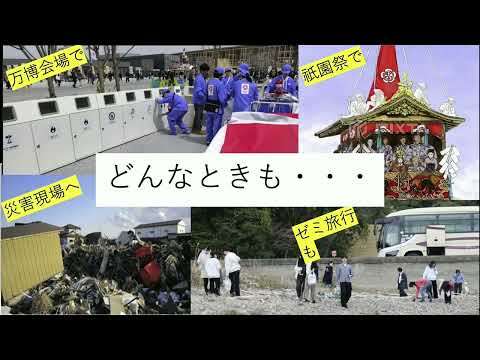
Environmental Awareness and Waste Management - The speaker founded a "Garbage Club" (兄弟ゴミ部) aiming to create a society where people wouldn't have to pick up trash [1] - The speaker was criticized for using katakana (ゴミ) instead of hiragana (ごみ) to write "garbage," as it was seen as a form of discrimination [1] - The speaker emphasizes the importance of discussing environmental issues with friends and family, noting that in Japan, a significant portion of people (indicated by the "yellow part" of a survey result) do not discuss these issues even once a month [2] - The speaker advocates for carrying reusable items like water bottles, bags, and chopsticks as a simple eco-friendly action and conversation starter [2] - The speaker points out the hypocrisy of carrying reusable items but still accepting disposable items, highlighting the convenience-driven habits of society [3] Waste Composition and Societal Changes - The speaker mentions a study that began in 1980, categorizing household waste in Kyoto into approximately 400 types, and has continued for 45 years [2] - Disposable diapers became popular in Japan after the introduction of American-made diapers in 1975 and Japanese tape-style diapers in 1981, leading to mass production, consumption, and disposal [1][2] - While the use of children's disposable diapers is decreasing due to the declining birth rate, the use of adult and pet diapers/sheets is increasing [2] - The speaker acknowledges the essential use of disposable diapers for caregiving, despite advocating for waste reduction [2] Personal Reflection and Values - The speaker's encounter with garbage has changed their perspective, allowing them to see society from a different angle and appreciate those who are marginalized or in need [3]