Environmental issues

Search documents
Three Generations, One Green Vision | Sharada Phadke, Mohini Acharya & Vaman Acharya | TEDxABBS
TEDx Talks· 2025-11-11 16:30
Waste Management Challenges in India - India faces a significant garbage problem, with litter on roads, plastic in rivers, and trash in parks, indicating a hidden and growing issue [2] - Composting, while seemingly simple, requires dedicated effort, proper space, and maintenance at both household and industrial scales [9][10] - Industrial-scale composting faces challenges such as land requirements, scientific processing to avoid greenhouse gas emissions, and ensuring the compost is nutritious and economically viable [10][11] - Waste management should be viewed as a responsibility rather than a source of wealth, requiring understanding from citizens and policymakers [12] Government's Role in Waste Management - The government needs a clear policy for waste management, covering collection, sweeping, segregation, transportation, and disposal, while avoiding monopolies [14] - Clear laws are needed for composting, landfills, bricketting, recycling, biogas, and BSF (Black Soldier Fly) processes [15] - Officers handling waste management should possess good knowledge of environmental issues and the consequences involved [16][17] - Processors in waste management should be supported with proper lands and laws that environmentally aware people can handle [17] Community and Individual Responsibility - Individuals can contribute by not littering, separating wet and dry waste, and reducing unnecessary consumption [5][6] - Segregating wet and dry waste is crucial for effective composting and recycling [5] - Reducing consumption is essential before considering recycling or reuse [6] - Collective effort and conversations about waste management can contribute to a garbage-free India [18]


The 60% Rule | Radha Adhar | TEDxCaledonian Intl School Youth
TEDx Talks· 2025-10-17 15:47
Core Idea - The speaker introduces the "60% rule," suggesting that exceeding expectations by a small margin (like 10% more effort) can lead to significant breakthroughs in both professional and personal life [5] - The "60% rule" is applicable when facing challenges where previous attempts have fallen short or when the moment holds significant importance for oneself or others [16] Application in Public Sector - The speaker's experience at the EPA demonstrates the application of the "60% rule" by proactively addressing concerns from both public health advocates and industry representatives [6][7] - By being more accommodating and open-minded, the EPA achieved lower levels of congressional oversight and faster, bipartisan confirmation of regulations [10][11] - The Justice 40 initiative at the White House exemplifies a 60% approach by actively removing barriers between under-resourced communities and programs designed to assist them [12][13] Key Takeaway - Success requires collaboration, and individuals should strive to exceed expectations in critical moments to achieve significant outcomes [1][15]

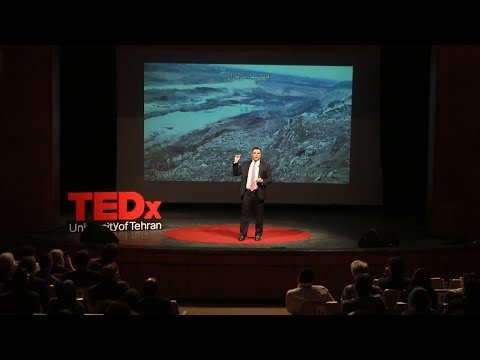
Soil: A Lagacy to Preserve for the Future | Rouzbeh Salehabadi | TEDxUniversityofTehran
TEDx Talks· 2025-07-16 15:37
Environmental Issues in Iran - Iran accounts for 8% of global soil erosion, despite comprising only 1% of the Earth's land area [2] - The country experiences an annual soil erosion rate of 165 tons per hectare, approximately 7 times the global average [2] - The average land subsidence rate in Iran is 15 centimeters per year, which is 5 times the global average [2] - 49% of the Iranian population is currently affected by land subsidence [2] - Iran produces 58,000 tons of waste daily, with 48,000 tons originating from urban areas [2] Waste Management Practices - Only 3% of waste in Iran is incinerated, 5% is recycled, and 147% is used for compost production, while 80% is landfilled [2] - Iran ranks 120th globally in sustainable waste management, managing only 198% of its waste according to global standards [3] - 70% of household waste in Iran is organic, compared to 10% in the United States [3] Potential Solutions and Perspectives - The industry should shift its perspective on soil from a problem to be solved to a question to be lived with [4] - Proper landfill site selection and engineering design are essential, including leachate management and gas capture for energy production [3] - Viewing inaction as a choice, emphasizing the need for awareness and responsibility in environmental decisions [4]