Exploração espacial

Search documents
A nova corrida espacial brasileira | Edward Montenegro | TEDxGreat Intl School
TEDx Talks· 2025-09-10 15:57
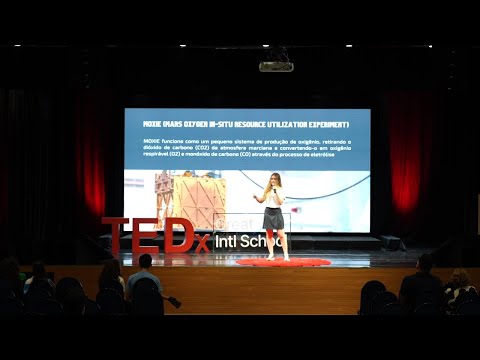
Brazilian Space Program & Youth Engagement - The Brazilian Space Program is experiencing a resurgence, likened to a new space race, with a focus on engaging young people in satellite development [1][3] - The Brazilian Space Olympiad (OBSA) provides opportunities for students to develop engineering, mathematics, computer science, and teamwork skills through practical experiments and satellite projects [3][6] - Unlike traditional competitions, OBSA requires participants to develop theoretical reports, functional physical projects, and adhere to satellite project regulations, including operating in extreme temperatures like -80° [6] Educational Impact & Practical Application - A significant percentage, around 80%, of Brazilian high school students lack practical laboratory experience, which OBSA addresses by providing hands-on experimentation opportunities [7][8] - Each satellite project involves an average of 11 sensors, measuring parameters like temperature, pressure, humidity, CO2, luminosity, and magnetic field, offering extensive testing and soldering experience [8] - Projects require thinking "inside the box," with components like batteries and thermal isolation needing to fit within a limited space, such as a cylinder 10 cm high and 6 cm in diameter, weighing no more than 350 g [13][14] Regional Success & Project Development - The state of Piauí has consistently excelled in the Space Olympiad, demonstrating significant achievement in satellite development [9] - Successful satellite projects require substantial time and effort, often spanning multiple years, emphasizing perseverance and dedication [18][19] Investment & Future Potential - Global investment in nanosatellites is projected to reach $18 trillion (1.8 trillion USD) in the next 10 years, indicating significant market potential for aerospace engineers [29] - Developing rocket technology is the next logical step after mastering satellite development, enabling independent satellite deployment capabilities [32] - Investing in satellites provides access to information, a valuable asset, and is essential for technologies like cell phones, internet, television, and GPS [26][28]

Cultivação Espacial em outros planetas | Yandra Liz | TEDxGreat Intl School
TEDx Talks· 2025-09-10 15:56
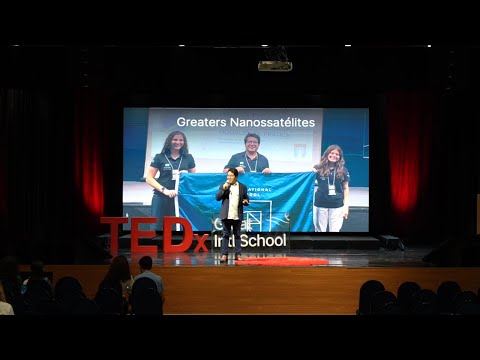
Space Exploration & Colonization - Humanity aims to become an interplanetary society to mitigate risks associated with being confined to a single planet [2] - Mars is a primary target for space exploration and cultivation due to the presence of water (albeit in ice form and toxic) [3] - Martian day length (24 hours 40 minutes) is similar to Earth's, easing astronaut adaptation [4] - Martian temperatures range from 20ºC to -153ºC, comparable to Earth's [5] - Mars has a rotational axis of 2519º, similar to Earth's 235º, suggesting the possibility of seasons [6] - Evidence suggests the past existence of rivers on Mars [7][8] - NASA's MOXIE experiment demonstrates the feasibility of generating oxygen from Martian atmospheric carbon dioxide via electrolysis [10] Terrestrial Benefits of Space Investment - Space program investments indirectly benefit Earth by yielding technologies applicable to terrestrial problems [12] - Apollo program led to emergency blankets and thermal packaging [13] - Mars rovers spurred the development of smaller, more precise cell phone cameras [13] - LandSAT satellites enabled agricultural monitoring, crop forecasting, water resource management, and deforestation detection [14] Potential Applications of Martian Cultivation - Martian cultivation could enable longer space missions by providing astronauts with resources and reducing reliance on Earth [15] - Cultivation in extreme environments like Mars can inform the development of agriculture in Earth's deserts and infertile regions [20] - Hydroponics, crucial for Martian cultivation, could make terrestrial agriculture more sustainable [21] - Space-related cultivation could spur new industries in bioengineering, controlled agriculture, and space equipment [21]