
Federal Reserve dual mandate

Search documents
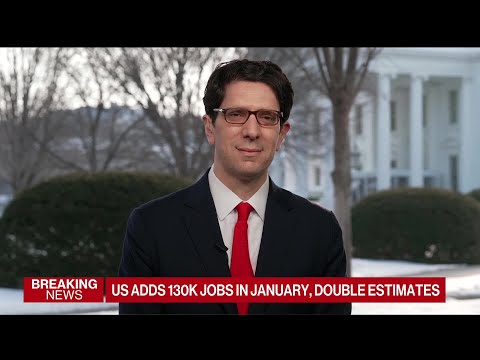
Yared Praises 'Blowout' Jobs Report, Says Fed Has to Balance Mandate
Bloomberg Television· 2026-02-11 14:58
Pierre Yared, acting chair of the White House Council of Economic Advisors, reacts to what he sees as a "blowout" employment report for January. Yared says job growth far exceeded expectations despite demographic shifts and reduced immigration and adds that the Federal Reserve should focus on productivity while balancing its dual mandate. He speaks on "Bloomberg Open Interest." -------- More on Bloomberg Television and Markets Like this video? Subscribe and turn on notifications so you don't miss any videos ...

Fed Confronts Dual Mandate Test | Presented by CME Group
Youtube· 2025-10-28 18:47
Group 1 - The Federal Reserve is facing a dual mandate dilemma with headline inflation rising to 3% year-over-year in September, the highest since January, while the unemployment rate is at 4.3% [1] - Job gains have slowed, with revised data indicating 911,000 fewer positions created from April 2024 through March 2025 than previously thought, suggesting a slightly softer labor market [1] - Despite persistent inflation, the Fed has signaled a pivot by cutting rates at the September FOMC meeting, with a 96.7% chance of another quarter point trim at the upcoming October meeting [2] Group 2 - The Fed fund's target rate is expected to drop to 3.75% to 4%, even as core CBI remains at 3.1%, indicating a focus on supporting employment [2] - The decision to prioritize employment over inflation concerns reflects the Fed's balanced approach to prevent deeper economic problems in the future [2]

The Fed's dual mandate is under new pressure in D.C.
Yahoo Finance· 2025-09-18 15:33
Core Viewpoint - The Federal Reserve's dual mandate of maintaining stable prices and maximizing employment is facing increasing scrutiny, with a new bill introduced to shift focus solely to controlling inflation [1][2]. Group 1: Legislative Changes - House Financial Services Committee Chairman French Hill introduced a bill to amend the 1913 Federal Reserve Act, replacing the dual mandate with a single focus on price stability, similar to the European Central Bank [2]. - The proposed legislation aims to enhance the Fed's effectiveness by eliminating competing objectives and returning to its core responsibility of price stability [2]. Group 2: Economic Context - The introduction of the bill coincided with the Fed's decision to cut rates for the first time in 2025, primarily due to weaknesses in the job market, despite persistent inflation [4]. - Fed Chairman Jerome Powell indicated that the balance of risks is shifting away from inflation as the labor market continues to slow [4]. Group 3: Perspectives on Mandate - Former Kansas City Fed president Esther George noted that economic literature does not show significant differences in outcomes between central banks with single versus dual mandates, suggesting that dual mandates may allow for more discretion in responding to economic conditions [3]. - Stephen Miran, a new addition to the Fed board, raised questions about the Fed's mandate, highlighting a third function to promote moderate long-term interest rates alongside maximum employment and stable prices [6].