
Financial Anxiety

Search documents
Financial Anxiety Hits Markets | ETF IQ 3/23/2026
Youtube· 2026-03-23 21:33
Group 1 - The S&P 500 is experiencing a relief rally after a significant selloff, with some gains being given back due to geopolitical tensions involving Iran [2][4][55] - BlackRock maintains an overweight position in equities, indicating confidence in the stock market despite recent volatility [8][10][18] - The firm has $220 billion on its model platform and is undergoing a significant rebalancing, focusing on risk management and adjusting equity allocations [9][10][15] Group 2 - There is a notable trend of money flowing into certain ETFs like IVV and VOO, suggesting strong investor interest despite market fluctuations [4][5] - Conversely, outflows are observed in high-yield and gold ETFs, indicating a shift in investor sentiment towards perceived safe havens [5][19] - The discussion around the performance of gold and Bitcoin highlights their roles as stores of value, with recent trends showing a reversal in investor preferences [5][6][19] Group 3 - Dimensional has launched the industry's first actively managed share class ETF, aiming to provide diversification and tax efficiency for investors [3][38][39] - The firm plans to introduce more ETF share classes for its mutual funds, responding to investor demand for greater flexibility and cost efficiency [41][42] - The ETF market is expected to grow, with significant potential for assets to shift from mutual funds to ETF share classes, enhancing liquidity and reducing costs [20][44][48] Group 4 - Betterment's self-directed investors are showing a preference for diversified ETFs, with a notable interest in Bitcoin and VOO as top holdings [24][25][28] - The firm observes that self-directed investors are generally net buyers, indicating a proactive approach to managing their portfolios [28][29] - The trend of younger investors gravitating towards index funds reflects a shift in investment strategies, moving away from high-risk trading behaviors [30][32]


'I'm Worth $7.3 Million,' Physician Says — Yet A $3 Drink For His Kids Gives Him Pause As 'Ramsey Show' Host Urges Him To 'Loosen The Purse Strings'
Yahoo Finance· 2026-02-16 16:02
Core Insights - The individual, Mark, has accumulated significant wealth of $7.3 million and earns approximately $390,000 annually as a physician, yet he experiences anxiety over small expenditures [1][6] - Mark's financial anxiety stems from his childhood experiences with financial instability, which has shaped his current attitudes towards money [3][4] - Despite having a stable income and assets, including rental properties valued at $2 million generating $8,000 monthly, Mark feels compelled to maintain a tight control over his finances [5][6] Financial Situation - Mark owns rental properties worth around $2 million, fully paid off, which provide a net income of approximately $8,000 per month [5] - His annual income from his medical practice is about $390,000, but he is considering reducing his work schedule to three days a week, which would lower his income to $220,000 [9] - The high state taxes in Hawaii contribute to Mark's hesitation about reducing his work hours [9] Psychological Factors - Mark's upbringing in a financially unstable environment has led to a cautious approach to spending, even when financially secure [3][4] - Financial experts on "The Ramsey Show" suggest that Mark's anxiety is linked to his profession as a physician, where he deals with uncertainty, leading him to control his finances tightly [7] - The hosts encourage Mark to ease his financial concerns and consider part-time work to spend more time with family [7]
Experts warn telling kids ‘we can’t afford it’ may fuel lifelong money stress. A wording change helps
Yahoo Finance· 2026-01-04 20:00
Core Insights - The phrase "Sorry, we can't afford it" can negatively impact children's financial beliefs and attitudes towards money [3][4] - Financial psychologists suggest that this language can lead to financial anxiety and unhealthy money behaviors in adulthood [3][6] Group 1: Impact on Children's Financial Beliefs - Children form core beliefs about money before the age of seven, and negative phrases can frame money as scarce and stressful [3] - Repeated exposure to restrictive language may contribute to feelings of financial anxiety and shame around spending later in life [3][6] Group 2: Alternative Approaches - Instead of saying "we can't afford it," parents are encouraged to explain their spending choices to foster a healthier understanding of money [4] - This approach helps children develop a values-based perspective on financial decisions, potentially preventing overspending in adulthood [4][5]
Nearly half of US workers say they’ll need $1M or more to retire, spurring stress
Yahoo Finance· 2025-12-22 16:12
Core Insights - 48% of U.S. workers believe they need at least $1 million in savings for a comfortable retirement, an increase from 37% in 2024, while only 27% expect to achieve this goal [1] - There is a record-high anxiety among workers regarding the gap between retirement expectations and actual savings, yet 71% still feel somewhat confident about retiring comfortably [2] - Financial anxiety has risen from 71% in 2022 to 90% in 2025, with inflation (65%), credit card debt (40%), and housing costs (31%) being the top stressors [3] Worker Sentiment - 54% of workers have considered delaying retirement, with a higher percentage of women (58%) compared to men (48%) [4] - Generation Z shows the most confidence about retirement (88%) but has significant anxiety about day-to-day finances (73%), while Gen X has the least confidence (61%) [5] - Despite over three-quarters of employers believing their employees are prepared for retirement, less than half of workers share this belief [6] Financial Preparedness - Most workers across generations feel they could work until retirement and still not have enough savings to meet their needs, expressing concerns about debt, major life events, emergency savings, and retirement [7]
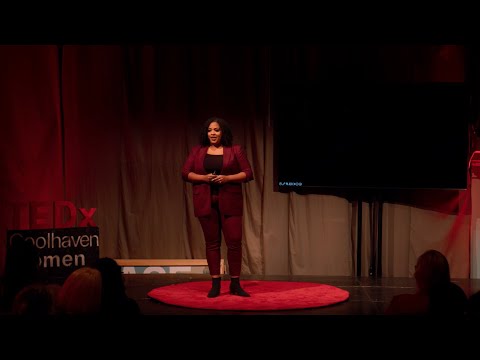
3 ways people relate to money | Alejandra Rojas | TEDxCoolhaven Women
TEDx Talks· 2025-10-27 16:58
Financial Behavior & Psychology - Individuals typically relate to money in three ways: avoidance, micromanagement, or invitation [8][12] - A significant number of women experience financial anxiety even with substantial income increases [9] - Financial balance involves emotional awareness and financial literacy [15] - Managing money from experience rather than fear is crucial [13] Overcoming Financial Trauma - Addressing shame, guilt, fear, and financial trauma is essential for a healthy relationship with money [11][14] - Rewriting one's money story involves firing the "button-up old man" (negative financial influences) [7][18] Financial Planning & Education - Financial education should focus on feeling and experience, not just managing [16] - Integrating emotional awareness into financial planning leads to better preparedness during financial challenges [16]
X @The Wall Street Journal
The Wall Street Journal· 2025-08-02 20:02
Financial Anxiety - A millennial planned and saved diligently to purchase her first home, yet experiences intense financial anxiety [1] Homeownership - The report highlights the paradox of achieving a significant financial goal like homeownership while still facing financial anxiety [1]
X @The Wall Street Journal
The Wall Street Journal· 2025-08-01 17:14
Financial Anxiety - A millennial planned and saved diligently to purchase her first home [1] - Despite achieving this financial goal, the individual experiences intense financial anxiety [1] Homeownership - The report focuses on the emotional and psychological aspects of homeownership, specifically financial anxiety [1]