Financial Crashes

Search documents
The History of Financial Crashes & Why People NEVER Learn.
Coin Bureau· 2026-07-28 14:00
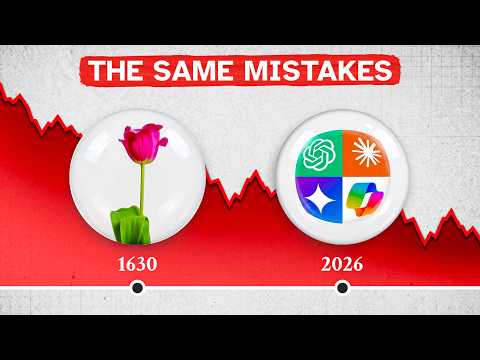
Historical Market Bubbles and Speculative Cycles - Tulip Mania in the 17th century demonstrated that limited supply and growing demand for luxury items can drive extreme speculation on underground bulb contracts without underlying utility[4][5] - The South Sea Company and Mississippi Company in 1720 relied on political backing and grand overseas promises to inflate share prices before confidence collapsed under unviable valuations[8][9][10] - The 19th-century British railway boom experienced massive overbuilding based on optimistic projections, leading to abandoned lines and weaker company failures by 1847 despite establishing a lasting transport network[13][15][16] - The US stock market crash of Black Thursday on October 24, 1929, was exacerbated by margin borrowing and broker leverage, ultimately triggering the Great Depression across banks and businesses[20][22][24][25] - Japan's asset price bubble in the 1980s saw the Nikkei climb from below 7,000 at the beginning of the decade to nearly 39,000 by the end of 1989 before tight monetary policy triggered a prolonged balance sheet repair lasting until 2024[28][29][31] - The Dot-Com bubble of the late 1990s and 2000 peaked on the NASDAQ in March 2000 as startups prioritized website visits and user numbers over profits, culminating in the AOL and Time Warner merger before collapsing[32][33][36][37] - The 2008 housing crisis involved banks bundling subprime mortgages into complex securities, heavily leveraging debt, and causing a global banking collapse when home prices fell[42][43][44] Modern Financial Trends and Analogies - Cryptocurrencies and meme coins mirror tulip mania and the South Sea Company through token speculation lacking fundamental revenue or cash flow, alongside automated 24-hour margin liquidations resembling 1929 leverage and Tokyo's collateral loops[46][47][49][50][51] - Artificial intelligence and decentralized finance (DeFi) parallel the Dot-com boom and the 2008 financial crisis, respectively, by attracting speculative capital based on addressable markets rather than profits and layering complex yield products[52][53]