Flood Risk

Search documents
X @Bloomberg
Bloomberg· 2025-12-01 19:05
The world's biggest cities keep drawing new people — and greater risk from devastating floods, @davidfickling writes (via @opinion) https://t.co/YNndY3cx06 ...
Thinking About Moving? Remember To Consider This Climate Threat, Which Is Driving Thousands Out of These Major US Metros
Investopedia· 2025-11-11 01:00
Core Insights - A significant trend has emerged where more Americans are relocating away from high flood-risk areas, with nearly 30,000 people moving to safer locations in the past year, marking the first net outflow since 2019 [2][3] - Low-risk flood counties have seen a net influx of just under 36,000 residents, indicating a shift in domestic migration patterns towards safer environments [2][3] Migration Trends - Redfin's analysis highlights that counties with the highest flood risk, where 23.7% to 99% of homes are at risk, are experiencing more residents leaving than moving in [3][7] - The largest population losses were recorded in Miami-Dade County, Florida, with over 67,000 residents leaving, followed by Harris County, Texas, and Kings County, New York, each losing around 30,000 residents [4][8] Economic Implications - Homeowners in flood-prone areas face rising insurance premiums and potential declines in property values, which can deter buyers and affect resale demand [5][7] - A Miami-area real estate agent reported that homeowners insurance and flood insurance costs have surged significantly, from $2,000 and $400 to $6,700 and $1,250 respectively, contributing to the outflow of residents [9] Demographic Shifts - The counties with the largest domestic exoduses are located in states such as Florida, Texas, New York, New Jersey, Louisiana, Virginia, and Alaska, reflecting a broader trend influenced by climate risks and economic factors [4][8] - Hudson County, New Jersey, experienced a loss of 12,735 residents, while other counties around New Orleans and along the Texas-Mexico border also reported significant outflows [8][9] Public Sentiment - Surveys indicate that 80% of Americans consider climate risks when house hunting, although fewer actively seek homes in lower-risk areas, suggesting a complex relationship between awareness and decision-making [11]


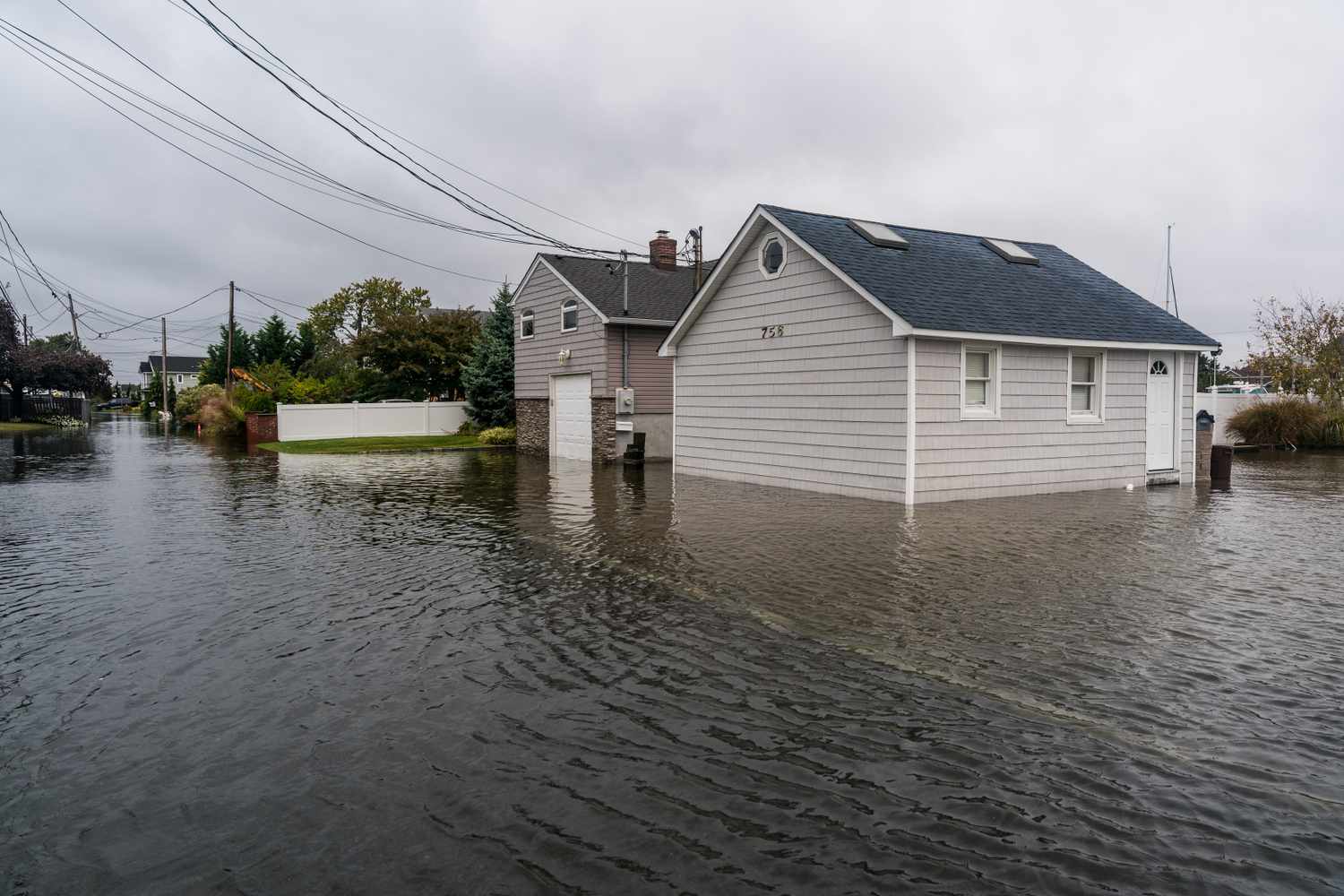
Flood-Prone America Is Seeing More People Move Out Than In for the First Time Since 2019
Businesswire· 2025-11-06 13:30
Core Insights - Flood-prone areas in the U.S. are experiencing a net outflow of residents for the first time since 2019, with high-flood-risk counties losing 29,027 more residents than they gained last year [1][2][4] Migration Trends - Major cities in coastal Florida, Texas, New York, and Louisiana are significant contributors to the national net outflow, with Miami-Dade County seeing the largest net outflow of 67,418 residents [2][3] - Harris County, TX (Houston) and Kings County, NY (Brooklyn) follow with net outflows of 31,165 and 28,158 respectively [2] - The trend of outflows has accelerated in some counties, notably Miami, which saw its net outflow increase from 50,637 in 2023 to 67,418 in 2024 [3] Factors Influencing Migration - High housing costs, climate risks, rising insurance premiums, and political factors are driving residents away from flood-prone areas [5][6] - In Miami, insurance premiums have surged, with homeowner's insurance rising from less than $2,000 to $6,700 in two years, and flood insurance increasing from around $400 to $1,250 [6] Local Impacts - Pinellas County, FL, experienced its first net outflow in many years, exacerbated by Hurricane Helene, which caused an estimated $93 million in damage [7][8] - Harris County faces multiple climate risks, including extreme heat, with 100% of homes at risk, contributing to the outflow of residents [9][10] Population Dynamics - Despite domestic outflows, many flood-prone areas continue to see overall population growth due to immigration, with Miami-Dade County's population increasing by 2.3% in 2024 [15][16] - The influx of immigrants has been affected by stricter immigration enforcement, which may impact future population trends in these areas [16] Comparative Analysis - Among the 310 high-flood-risk counties analyzed, 132 saw more people move out than in, while 178 experienced net inflows, particularly in Texas and Florida [12] - St. Johns County, FL, and Fort Bend County, TX, reported the largest net inflows of 11,661 and 10,467 respectively, indicating that affordability may play a role in migration patterns [13][14]


X @The Wall Street Journal
The Wall Street Journal· 2025-10-19 11:50
Regulatory Landscape & Risk - Livingston, Montana successfully overturned a FEMA flood map, removing restrictions [1] - The town experienced a disaster after the flood map was overturned [1] Disaster Management - The event highlights potential risks associated with altering FEMA flood maps [1]
‘These are danger zones:’ Understanding flood risk after disaster in Texas
MSNBC· 2025-07-13 19:38
Weather Event and Impact - Flash floods are the second most deadly extreme weather event, only surpassed by extreme heat [4] - From 2015 to 2024, floods have caused more deaths than hurricanes and tornadoes [4][5] - At least 129 people are confirmed dead from the floods along the Guadalupe River, and 166 people are still missing [2] Flash Flood Characteristics - Flash floods typically form in about 6 hours or less, often within 3 hours [5] - The Guadalupe River rose 26 feet (approximately 7.9 meters) in just 45 minutes on July 4th [6] - Deaths associated with floods often occur at night or when people are trapped in their cars [7] Factors Contributing to Flash Flooding - Rainfall intensity, location and distribution of rainfall, land topography, vegetation, and soil type all influence flash flood occurrence [7] - Mountainous streams and rivers can quickly become raging torrents [8] - Urban areas with concrete and hardened surfaces have limited water absorption [8] - Areas recently burned by wildfire are at greater risk due to a soil layer that repels water [8][9] Texas Hill Country Specifics - The geography of the Texas Hill Country makes it one of the deadliest places in the United States for flash flooding [10] - Some areas experienced 10 inches (approximately 254 mm) of rain, causing water to sheet off hillsides into creeks [10] - A rainfall rate of 4 inches (approximately 101.6 mm) per hour is considered an incredible rate in the Hill Country [20] Flood Plane and Regulation - There is a general disregard for flood planes, with people living and recreating in susceptible areas [15][16] - Texas has historically shown hesitation and bitterness towards flood plane regulation [17] - Local governments may handle flood plane regulation reluctantly and inefficiently [18]