Greater Bay Area development

Search documents
世界级机场群要来了
中国基金报· 2025-12-05 07:35
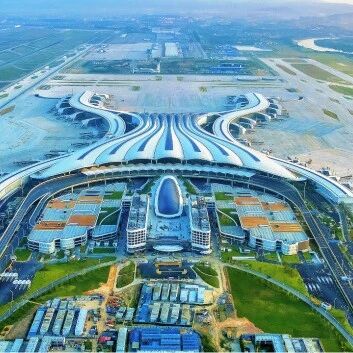
Core Viewpoint - The article discusses the significant transformation occurring in the Greater Bay Area's airport infrastructure, highlighting the expansion and modernization of major airports to enhance their global competitiveness and support regional economic growth [5][21]. Infrastructure Developments - Hong Kong International Airport has fully operationalized its third runway system and is progressively opening its expanded second passenger terminal, with the departure hall expected to be operational by 2026 [2][12]. - Guangzhou Baiyun International Airport's T3 terminal and fifth runway have commenced operations, making it the first airport in China with five commercial runways [2][3]. - Shenzhen Bao'an International Airport has officially launched its third runway, enhancing operational efficiency and capacity to accommodate large aircraft [10]. Capacity and Demand Response - The expansion of the Greater Bay Area airport cluster is a direct response to the increasing demand for air travel, with projections indicating that the total passenger throughput for the seven airports in the region will exceed 200 million by 2024 [14][15]. - The airports in Guangzhou, Shenzhen, and Hong Kong have all reported over 8% growth in passenger throughput in the first three quarters of the year [15]. Economic Impact - The airport expansions are expected to significantly boost the regional economy, with the Greater Bay Area's economic output projected to surpass 14.79 trillion yuan in 2024, contributing to nearly one-fifth of the national foreign trade [15]. - The enhanced airport infrastructure will facilitate a shift from broad coverage to high-density, high-quality air route networks, supporting the region's logistics and trade needs [15][19]. Strategic Importance - The development of the airport cluster is crucial for strengthening the competitive advantage of the Greater Bay Area's real economy, particularly in high-value industries such as electronics, biomedicine, and cross-border e-commerce [17][18]. - Upgraded airport facilities will improve cargo transport capabilities, essential for maintaining supply chain resilience and supporting the region's manufacturing and global trade ambitions [19]. Connectivity and Integration - The article emphasizes the importance of creating a seamless transportation network, with plans for integrated air-rail transport systems to enhance connectivity among the airports in the Greater Bay Area [26]. - The collaborative development of the airport cluster aims to transition from competition to cooperation, ensuring that each airport can leverage its unique strengths to form a complementary network [27][29]. Future Outlook - The ongoing enhancements in both hardware and software aspects of the airport cluster are expected to significantly elevate the Greater Bay Area's global resource allocation capabilities, positioning it as a key node in international supply chains and innovation networks [30].