
Home affordability

Search documents
How are people affording houses in today's market? 10 expert-backed tips for buyers.
Yahoo Finance· 2026-03-24 19:59
Core Insights - The current housing market is characterized as a buyer's market, with elevated home prices and rising mortgage rates, yet buyers are still finding ways to afford homes [1] Strategies for Affording Homes - **Adjustable-Rate Mortgages (ARMs)**: ARMs are becoming more popular, offering lower rates (50 to 100 basis points lower) for an initial fixed period of 5 to 10 years, allowing buyers to refinance later [2][3] - **Rate Buydowns**: New home builders and lenders are offering rate buydowns, which can reduce the mortgage rate by 1% for the first year, providing immediate financial relief [4] - **Lower Down Payments**: Many first-time buyers are unaware of low- or no-down-payment options, with average down payment assistance reaching $18,000 [5] - **Government Insurance Rules**: New rules from Fannie Mae and Freddie Mac are expected to lower costs for some buyers, particularly in rural areas and for condos [6] - **Family Assistance**: Approximately 23.8% of young buyers received financial help from family, with nearly 21% receiving cash gifts for down payments [7] - **Multi-Generational Homes**: The trend of multi-generational homes is rising, with 17% of homes purchased in 2024 being multi-generational, up from 12% in 2013 [8] - **Alternative Housing Options**: Various alternative housing types, such as mobile homes, are becoming more viable, with the median price for mobile homes at $141,450, down 5.7% year-over-year [9][10] - **Negotiating Prices**: Buyers are now able to negotiate prices, with discounts averaging nearly 8% off the list price in 2025, the highest in 13 years [11] - **Improving Credit Scores**: A higher credit score can enhance home affordability, encouraging buyers to manage their credit profiles effectively [13] - **Mortgage Rate Perspective**: Buyers are advised to maintain a long-term view on mortgage rates, as current rates are closer to historical averages, and refinancing is common [15][16]
Homebuying Is More Affordable. Why Rising Oil Prices Could Spoil the Party.
Barrons· 2026-03-14 00:59
Core Insights - First-time home buyers are re-entering the market according to data from the National Association of Realtors [1] - The housing supply remains tight, which could impact market dynamics [1] - Inflation driven by war could lead to increased mortgage rates, affecting affordability for buyers [1] Market Dynamics - The return of first-time home buyers indicates a potential recovery in the housing market [1] - Tight supply conditions suggest that competition for available homes may increase [1] - Rising mortgage rates due to inflation could deter some buyers, impacting overall market activity [1]


Trump signs executive orders aimed at home affordability ahead of midterms
PBS News· 2026-03-13 22:37
Core Perspective - The Trump administration is emphasizing home ownership through executive orders aimed at improving housing affordability, a critical issue for voters ahead of the upcoming elections [1][3]. Regulatory Changes - The first executive order seeks to reduce federal housing regulatory burdens and incentivize state and local governments to adopt best practices, facilitating home construction [2][6]. - The second order aims to streamline the mortgage process, making it easier for smaller community banks to provide home loans by reducing regulatory burdens [12][13]. Legislative Context - A bipartisan housing bill passed in the Senate aims to increase construction and limit institutional ownership of home development, although its future in the House remains uncertain [4]. Economic Implications - The ongoing construction shortage has kept housing prices high, with the median price of an existing home reaching $398,000, nearly five times the median household income [14]. - The average 30-year mortgage rate was 6.05% in February, down from 6.84% a year ago, but still significantly higher than the sub-3% rates seen during the pandemic [15]. Environmental and Efficiency Regulations - The orders propose cutting environmental regulations and simplifying the mortgage process, with the aim of reducing construction costs by up to $9,000 due to energy efficiency mandates [9][10]. - Federal agencies are directed to eliminate regulations that hinder residential development, including those related to energy efficiency and environmental standards [8]. Market Dynamics - The administration believes that changes to mortgage regulations will increase competition among financial institutions, potentially lowering borrowing costs for homebuyers [13]. - The approach aims to balance the need for increased home ownership while maintaining the value of existing homes, reflecting a cautious stance on construction increases [17][18].

Rocket Companies(RKT) - 2025 Q4 - Earnings Call Transcript
2026-02-26 22:30
Financial Data and Key Metrics Changes - In Q4 2025, Rocket Companies reported adjusted revenue of $2.4 billion, exceeding guidance by $140 million, with adjusted diluted EPS at $0.11 per share [5][19] - For the full year, adjusted revenue reached $6.9 billion, with adjusted EBITDA margin increasing to 19% from 18% the previous year [6][19] - Adjusted EBITDA rose from $349 million in Q3 to $592 million in Q4, with margins expanding from 20% to 24% [5][6] Business Line Data and Key Metrics Changes - The company achieved $36 billion in net rate lock volume in Q4, the highest since 2021, with a gain on sale margin of 320 basis points [5][19] - The closed-end second product volume nearly doubled year-over-year, with December being the largest month ever for this product, surpassing $1 billion in origination volume [21] - Jumbo loans grew nearly 70% year-over-year, indicating an expansion in product offerings to meet specialized needs [22] Market Data and Key Metrics Changes - Market share increased to 5.5% in Q4, up from 3.8% the previous year, reflecting successful execution of the company's strategy [6] - The population of homeowners eligible for refinancing surged to 4.8 million, representing over $1 trillion in unpaid principal balance, marking a four-year high [22] - The company ended 2025 with a portfolio of $2.1 trillion in unpaid principal balance, generating approximately $5 billion in recurring annual cash revenue [23][24] Company Strategy and Development Direction - Rocket Companies is focused on creating a unique ecosystem that connects buyers with agents, loan officers, and brokers, enhancing the homeownership experience [7][10] - The recent partnership with Compass aims to tackle home affordability by improving inventory access and streamlining the mortgage process [16][25] - The company is committed to leveraging AI and technology to enhance operational efficiency and client experience, positioning itself as a leader in the homeownership market [15][18] Management's Comments on Operating Environment and Future Outlook - Management expressed confidence in the growth potential for 2026, anticipating a stronger mortgage market driven by lower rates and increased inventory [46][48] - The company highlighted its unique business model that allows it to thrive across different market conditions, emphasizing its ability to retain and recapture clients [24][48] - Management noted that the integration of Redfin and Mr. Cooper is ahead of schedule, with significant synergies already realized [26][27] Other Important Information - The company has $2.8 billion in available cash and total liquidity of $10.1 billion, positioning it well for future investments [24] - A reclassification of warehouse interest expense will occur starting in Q1, which will not impact profitability but will affect financial presentation [28] Q&A Session Summary Question: Can you elaborate on the strategic alliance with Compass? - The partnership aims to address home affordability by improving inventory access and integrating Rocket's mortgage platform into Compass's experience, enhancing lead flow and client experience [32][34] Question: What are the expectations for market share in 2026? - Management reaffirmed ambitious market share goals, focusing on profitable expansion rather than volume chasing, with confidence in achieving these objectives through strategic partnerships and acquisitions [66][68] Question: How is Rocket positioned regarding potential re-entry by banks into the mortgage space? - Management believes that banks face challenges in the mortgage market, and Rocket's dedicated focus on this sector provides a competitive advantage [62][63]

US home prices are rising — but these fast-growing markets remain affordable
Fox Business· 2026-02-17 19:45
Core Insights - The hottest housing markets in the U.S. are located in the Midwest and South, rather than traditional coastal cities, with significant price growth in these regions [1][3] Group 1: Housing Market Performance - Cape Girardeau, Missouri, experienced the highest yearly home price increase at nearly 20%, with a median home price of $275,000 [2] - Cumberland, Maryland, saw a 17.1% increase with a median price of $174,900, while Owensboro, Kentucky, had a 15% rise to $264,000 [2] - Other notable areas include Anniston-Oxford, Alabama, with a 14.9% increase and a median price of $175,103, and Mobile, Alabama, appreciating 13.7% to $216,235 [2] Group 2: National Trends - The national median home price rose 1.2% year-over-year to $414,900, indicating market resilience despite economic challenges [6] - Monthly mortgage payments decreased by 5.7% from the previous year, now averaging $2,057 [6] - The annual pace of home price growth has slowed to levels not seen since the recovery from the Great Recession, with some regions experiencing declines [7] Group 3: Mortgage Affordability - Mortgage affordability reached a four-year high as rates fell in January, with the 30-year fixed-rate mortgage averaging 6.09%, down from 6.11% the previous week [8][9] - This time last year, the 30-year rate was at 6.87%, reflecting a significant decrease in borrowing costs [9]
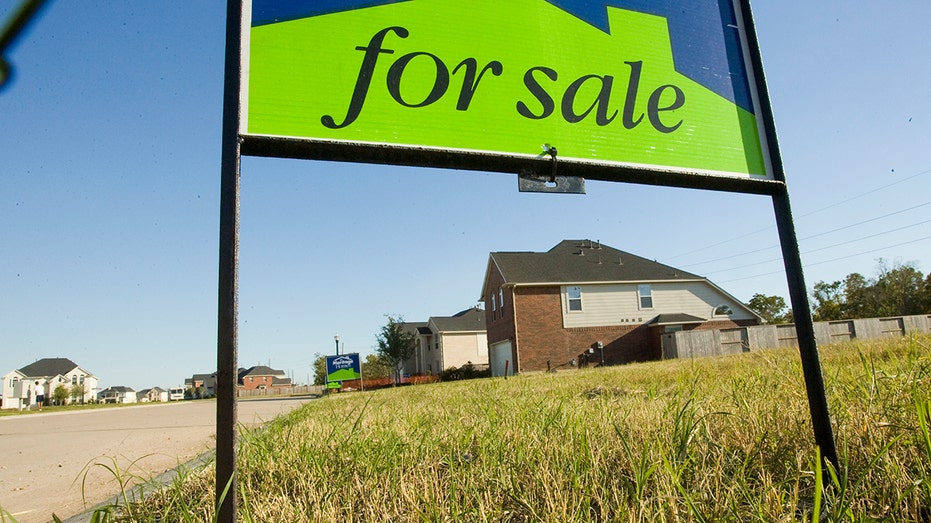
Here's what the monthly payment on a $1 million home really looks like
Yahoo Finance· 2026-02-10 19:02
A million-dollar home may not sound especially extravagant anymore, at least not in markets where average home prices flirt with seven figures. But while that kind of listing price might feel like the norm, the monthly payment on a $1 million mortgage can still deliver serious sticker shock. Interest rates, down payment sizes, loan types, taxes, insurance, and fees all stack up fast, and the difference between “affordable on paper” and “comfortable to live with” is often thousands of dollars a month. St ...
D.R. Horton(DHI) - 2026 Q1 - Earnings Call Transcript
2026-01-20 14:32
Financial Data and Key Metrics Changes - The company reported consolidated pre-tax income of $798 million on revenues of $6.9 billion, with a pre-tax profit margin of 11.6% [5] - Earnings per diluted share were $2.03, down from $2.61 in the prior year quarter [9] - Net income for the quarter was $595 million, with home sales revenues of $6.5 billion from 17,818 homes closed, compared to $7.1 billion from 19,059 homes closed in the prior year quarter [9][10] - The gross profit margin on home sales revenues was 20.4%, up 40 basis points sequentially [11] Business Line Data and Key Metrics Changes - Net sales orders increased by 3% year-over-year to 18,300 homes, while order value remained unchanged at $6.7 billion [10] - The average price of net sales orders was $364,000, flat sequentially and down 2% from the prior year quarter [10] - The company started 18,500 homes in the December quarter, up 27% sequentially [14] Market Data and Key Metrics Changes - 64% of the mortgage company's closings were to first-time home buyers [8] - The average closing price for the quarter was $365,500, which is approximately $135,000 lower than the average sales price of new homes in the U.S. [9] Company Strategy and Development Direction - The company is focused on capital efficiency to generate strong operating cash flows and deliver returns to shareholders, having returned $4.4 billion through repurchases and dividends over the past 12 months [7] - The strategy includes tailoring product offerings and sales incentives based on demand in each market to maximize returns [8] - The company aims to maintain a balanced approach to growth, focusing on community count and market share while managing margins [90] Management's Comments on Operating Environment and Future Outlook - Management noted that new home demand is impacted by affordability constraints and cautious consumer sentiment, but they are responding with discipline [5] - The company expects consolidated revenues for the second quarter to be in the range of $7.3 billion to $7.8 billion, with homes closed expected to be between 19,700 and 20,200 [21] - Management expressed confidence in their positioning for the spring selling season, noting that lower mortgage rates have spurred some activity [40][94] Other Important Information - The company generated $3.6 billion of cash from operations over the past 12 months and has a strong balance sheet with low leverage [7][19] - The company’s capital allocation strategy is disciplined, with plans for $2.5 billion in common stock repurchases and around $500 million in dividend payments for the year [18][21] Q&A Session Summary Question: Inquiry about SG&A expenses - Management stated that SG&A expenses were slightly down year-over-year in absolute dollars, but the ratio increased due to lower closings [25] Question: Community count growth expectations - Management expects community count growth to continue but may drift down to mid-single to high-single digit range [31] Question: Impact of lower mortgage rates on demand - Management noted that lower rates have historically spurred activity in sales offices, but it is too early to determine the full impact [50] Question: Warranty costs and their impact on gross margins - Management indicated that warranty recovery was unexpected but beneficial, and they expect warranty costs to normalize going forward [56] Question: Land market conditions - Management observed that while there hasn't been significant capitulation in the raw land market, there have been rational conversations with land developers [46] Question: Balance between volume and margin - Management emphasized a balanced approach, focusing on maximizing returns while responding to market conditions [90]

D.R. Horton(DHI) - 2026 Q1 - Earnings Call Transcript
2026-01-20 14:30
Financial Data and Key Metrics Changes - D.R. Horton reported consolidated pre-tax income of $798 million on revenues of $6.9 billion, with a pre-tax profit margin of 11.6% for Q1 2026 [4] - Earnings per diluted share decreased to $2.03 from $2.61 in the prior year quarter, with net income of $595 million [7] - Home sales revenues were $6.5 billion from 17,818 homes closed, down from $7.1 billion from 19,059 homes closed in the prior year quarter [7][8] - The average closing price for homes was $365,500, flat sequentially but down 3% year over year [8] Business Line Data and Key Metrics Changes - Net sales orders increased by 3% year over year to 18,300 homes, while order value remained unchanged at $6.7 billion [10] - The gross profit margin on home sales revenues was 20.4%, up 40 basis points sequentially, primarily due to a recovery of prior-period warranty costs [11] - Home building SG&A expenses decreased by 1% year over year, but as a percentage of revenues, it increased to 9.7% from 8.9% in the prior year quarter [12] Market Data and Key Metrics Changes - 64% of mortgage company closings were to first-time home buyers, indicating a focus on affordable housing [6] - The average number of active selling communities increased by 2% sequentially and 12% year over year [10] - The company ended the quarter with 30,400 homes in inventory, of which 20,000 were unsold [14] Company Strategy and Development Direction - D.R. Horton is focused on capital efficiency to generate strong operating cash flows and deliver returns to shareholders, with $3.6 billion generated from operations over the past 12 months [5] - The company aims to tailor product offerings and sales incentives based on demand in each market to maximize returns [6] - The strategy includes managing investments in lots, land, and development based on current market conditions, with a focus on relationships with land developers [15] Management's Comments on Operating Environment and Future Outlook - Management noted that new home demand is impacted by affordability constraints and cautious consumer sentiment, but they are responding with discipline [4] - The company expects consolidated revenues for Q2 2026 to be in the range of $7.3-$7.8 billion and homes closed to be between 19,700-20,200 [24] - For the full year, the company anticipates consolidated revenues of approximately $33.5-$35 billion and homes closed to be in the range of 86,000-88,000 [25] Other Important Information - D.R. Horton repurchased 4.4 million shares for $670 million and paid cash dividends of $0.45 per share, totaling $132 million [21] - The company has a strong balance sheet with $6.6 billion of consolidated liquidity and plans to maintain leverage around 20% over the long term [22] Q&A Session Summary Question: Inquiry about SG&A expenses - Management stated that SG&A was in line with expectations and attributed the increase to lower closings, but they expect it to stabilize over the year [28][29] Question: Capital allocation and cash flow expectations - Management confirmed that cash flow expectations remain reasonable, with a target of over $3 billion for the year [32] Question: Community count growth and future expectations - Management expects community count growth to continue but may drift down to mid-single to high-single digit range [35] Question: Warranty costs impact on gross margin - Management indicated that warranty recovery was unexpected but beneficial, and they expect warranty costs to normalize going forward [59][61] Question: Demand trends and inventory levels - Management noted that demand remains strong despite low job growth, and inventory levels are more balanced compared to the previous year [97][91]
Nearly 70% of US homebuyers don't shop around for the best mortgage rate, and it could be costing them thousands
Yahoo Finance· 2026-01-11 12:00
Core Insights - Many homebuyers make the mistake of submitting only one mortgage application, which can lead to significant financial losses [1] - High mortgage rates have persisted since the pandemic, with the average 30-year fixed-rate mortgage remaining above 6% since 2022 [2] - Home prices have dramatically increased since the pandemic, with the average home price rising from $246,326 in early 2020 to $359,241 by November 2025 [3] Mortgage Rate Trends - The average 30-year fixed mortgage rate is projected to drop to 5.9% by the end of 2026, but rates will likely remain high compared to pre-pandemic levels [2][3] - A 2023 Freddie Mac study indicates that the variability in mortgage rates offered to buyers has increased since 2010, with significant dispersion noted in 2022 [5] Home Affordability and Market Conditions - Home affordability has improved recently due to a dip in mortgage rates and better inventory, yet many Americans still face overall cost-of-living challenges [4] - The increase in rate dispersion means consumers with similar profiles may receive a wide range of mortgage rates, highlighting the importance of shopping around for the best deal [6]
5 Ways a 50-Year Mortgage Could Destroy (or Grow) Your Wealth
Yahoo Finance· 2025-11-14 07:00
Core Viewpoint - President Donald Trump's proposal for a 50-year mortgage aims to make home ownership more affordable, but it raises questions about the long-term financial implications for buyers [1][2]. Group 1: Financial Implications of a 50-Year Mortgage - A 50-year mortgage could significantly lower monthly payments, making it easier for home buyers to enter the market, especially as home values remain high [4][5]. - For a home priced at $400,000 with a 20% down payment, the monthly payment on a 30-year mortgage would be $2,339, while a 50-year mortgage would reduce it to $2,112, saving approximately $227 per month [7]. - However, the total payments over the life of a 50-year mortgage would amount to $1,267,200, which is $425,160 more than a 30-year mortgage totaling $842,040 [6]. Group 2: Interest Costs - A 50-year mortgage results in total interest payments that could reach approximately 225% of the total home price, which is more than double the interest paid on a 30-year mortgage [8].