Housing Market Sentiment

Search documents
上海二手房成交破25万套 机构称大量刚需集中入场
Mei Ri Jing Ji Xin Wen· 2026-01-06 23:28
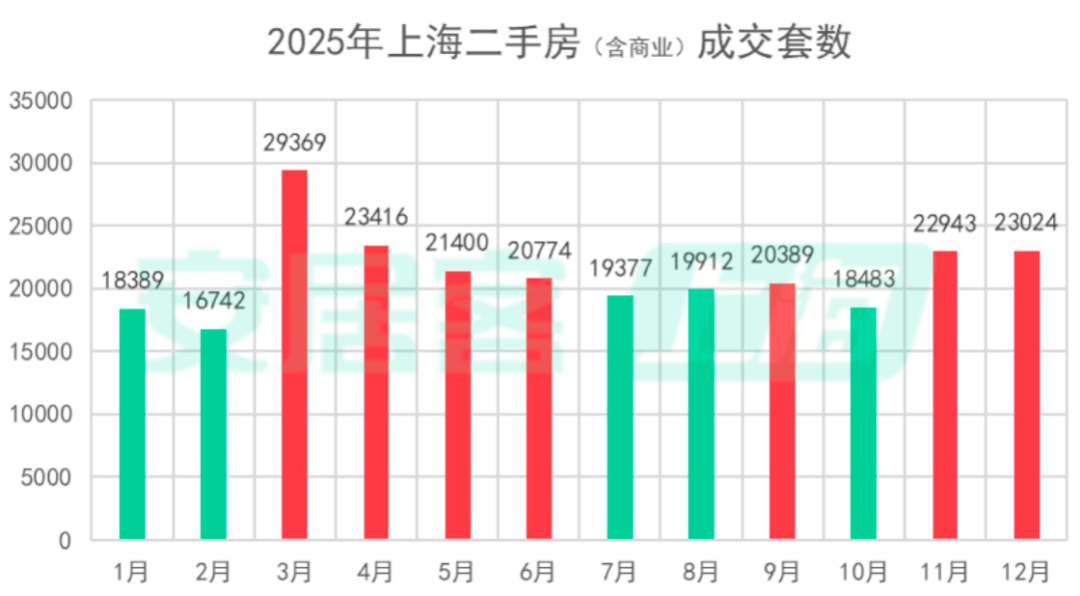
Market Overview - The Shanghai real estate market is showing unexpected strength, with both the second-hand and rental markets remaining active as of the end of December 2025 [1][5] - The new housing market in Shanghai also performed positively, with a reported transaction area of 467,000 square meters in December 2025, representing a month-on-month increase of 45.9% [4] Second-hand Housing Market - In December 2025, the transaction volume of second-hand homes (including commercial properties) in Shanghai exceeded 23,000 units, marking the third highest point of the year, following the peak seasons of March and April [6] - Throughout 2025, a total of 254,218 second-hand homes were sold in Shanghai, with monthly transactions consistently above 18,000 units, except for February due to the Spring Festival [6] - The entry threshold for purchasing has decreased significantly, with many older properties now priced around 2 million yuan, making it more accessible for first-time buyers [6] Rental Market - The rental market remains robust, with landlords experiencing quick turnover in rental agreements. For instance, a landlord reported that a new tenant was secured on the same day the previous contract expired, with a rent increase from 1,900 yuan to 2,000 yuan per month [5] - The rental income has steadily increased over time, indicating a strong demand for rental properties [5] Future Outlook - As of early 2026, Shanghai's second-hand housing transaction volume is leading compared to other cities, with 839 units signed during the holiday period [8] - Analysts suggest that while the current market performance is better than the previous two years, the transaction volume has not yet reached a critical point that would trigger a price rebound [10]

With No Government Data, This Index Shows Housing Starts Are Rising
Forbes· 2025-10-16 17:42
Core Insights - The NAHB/Wells Fargo Housing Market Index increased by five points to 37 in October, marking its highest level since April and the largest month-over-month improvement since January 2024 [1][2] - The index serves as a proxy for housing activity during the government shutdown, with an expected 3% rise in single-family permits based on the increase in builder sentiment [2] Group 1: Builder Sentiment and Market Conditions - The index measures builder confidence in current and expected sales conditions on a scale of 0 to 100, with readings above 50 indicating more builders view conditions as good than poor [1][3] - The index reached a record high of 90 in late 2020 but fell to a low of 31 in December 2022 due to rising interest rates [3][4] - Builder sentiment dropped to 32 in August and September 2023, the lowest since December 2022, before rebounding in October [4] Group 2: Interest Rates and Economic Impact - The Federal Reserve cut its benchmark interest rate last month for the first time since December 2024, which has led to lower mortgage rates and improved affordability for homebuyers [5][6] - The 30-year fixed-rate mortgage decreased from just above 6.5% to 6.3% in early October, contributing to a slightly improving sales environment [6] Group 3: Implications for Homebuilding Stocks - The SPDR S&P Homebuilders ETF, with $1.9 billion in assets, has dropped 15% over the past year, lagging the S&P 500 by approximately 30 percentage points, indicating a challenging environment for homebuilding stocks [7] - Optimism among builders could signal early stabilization in the homebuilding sector after a difficult period [7] Group 4: Current Market Challenges - Despite the increase in sentiment, only one in three builders describe conditions as favorable, and 38% report cutting prices, reflecting ongoing sensitivity to financing costs [8] - The average discount for new homes rose to 6% in October, with nearly two-thirds of builders offering incentives to close deals [8] - NAHB's chairman noted that while recent rate declines are encouraging, many homebuyers remain on the sidelines, waiting for further reductions in mortgage rates [9]