Housing cost

Search documents
6 Money Rules That Worked 20 Years Ago — and Fail Now
Yahoo Finance· 2026-03-02 11:06
Core Insights - Traditional personal finance rules are becoming less applicable due to rising living costs, stagnant wages, and changing job patterns, leading to financial risks for individuals Group 1: Saving and Income - The long-standing advice to save 10% of income is outdated; experts now recommend saving 15% to 20% to adapt to current economic realities [2][3] - Rising living costs and stagnant wages make it difficult for individuals to adhere to the 10% savings guideline [2] Group 2: Housing Costs - The recommendation to spend no more than 30% of income on housing is considered unrealistic in many areas; a more flexible, values-based approach is suggested [3] - Increased grocery prices and other cost pressures are impacting housing budgets, reducing financial flexibility for households [3] Group 3: Homeownership - The belief that buying a home as soon as possible is a financial milestone is shifting; renting is increasingly viewed as a viable option [4] - Higher housing prices and transaction costs make buying a home potentially more expensive than renting, especially in the wrong location [4]
How 'out-of-control costs' are hurting Americans & fueling the affordability crisis
MSNBC· 2025-12-21 19:07
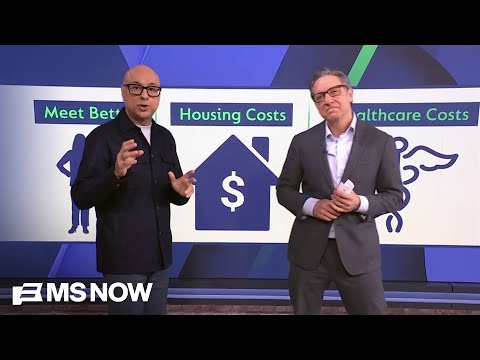
Affordability Crisis - Investopedia's most searched word of the year is "affordability," reflecting widespread concerns about the cost of living [1] - Housing, healthcare, and food costs are major contributors to the affordability crisis, disproportionately impacting working families [2][7][10] Housing Market - The median price for an existing home in America was $415,000 in October, significantly higher than $271,000 five years ago [2] - Housing costs now account for over 33% of the annual budget for many Americans, exceeding the previously recommended 30% threshold [3] - High mortgage rates and home prices make it difficult for first-time homebuyers to enter the market [2] Energy Costs - Electricity bills are rising due to increased demand from data centers supporting AI development and seasonal shifts [5] - In Massachusetts, energy bills have increased by an average of 10% since 2018 [5] Healthcare Costs - Failure to extend Affordable Care Act (ACA) subsidies could lead to a doubling or tripling of healthcare premiums for some families on January 1st [7][8] - Rising healthcare costs may exceed housing costs for some individuals, leading some families to forgo insurance [9][10] Food Costs - Overall food costs are approximately 18% higher than in January 2022, meaning a $100 grocery bill then would now cost $118 [10][11] - Prices for protein sources like beef and chicken have nearly doubled in the last two to three years [12] - Some prices have decreased, such as cocoa (down 43%) and sugar (down 30%), influenced by global markets and factors like GLP-1 medications [12] Economic Disparity - The economy is exhibiting a K-shaped recovery, with those invested in property and the stock market faring well, while others struggle [15][16] - The stock market is near record highs, and there is a record number of 401k millionaires, highlighting the benefits of asset ownership [16] Tariffs and Inflation - Tariffs may be contributing to higher prices in some areas, particularly produce [14] - Inflation is currently around 27%, with the Federal Reserve aiming for 2% [13] Consumer Spending - American consumers are projected to spend over $11 trillion during the holiday shopping season [14] - Many consumers began holiday shopping earlier than usual due to concerns about rising prices [15]