International Education

Search documents
Queen Elizabeth's School, Gurugram, Teil von GEDU Global Education, startet Admissions-Suite zur Begrüßung zukünftiger Familien
Prnewswire· 2026-03-16 07:30
Queen Elizabeth's School, Gurugram, Teil von GEDU Global Education, startet Admissions-Suite zur Begrüßung zukünftiger Familien Accessibility StatementSkip Navigation ~ Invites Applications for EY1 to Year 9 for Academic Year 2026-27 ~ ~ Begrüßt seine erste Kohorte von Tages- und Internatsschülern ~ GURUGRAM, Indien, 16. März 2026 /PRNewswire/ -- Die Queen Elizabeth's School, Gurugram, die zu GEDU Global Education, einer im Vereinigten Königreich ansässigen globalen Bildungsgruppe, gehört, gab heute den Sta ...
Rethink Our Dreams: Rebuild the International Education | Naveendradass Subramanian | TEDxIUJ
TEDx Talks· 2026-03-09 15:50
Good evening ladies and gentlemen. My name is Naven and I am an international education expert. I have over 10 years of experience in this industry but still this is the best place I could have sh I could have found to share my idea.I have met and I have helped and supported over 25,000 students over these past 10 years. I have met students studying arts. I have met students studying engineering. I have met students studying architecture. I have met students studying medicine.Whatever field there is educati ...


An International Student's Declaration of Independence | Hanyu Shen | TEDxMCA Youth
TEDx Talks· 2026-02-13 17:13
As an international school student, Shen has to fight against a stereotype: her education was a “shortcut bought with money.” Her anecdote of a family dinner where her uncle said her path was not difficult enough shows her struggle. While it’s true that her day ends early, she has to deal with TOEFL prep, Shakespeare essay-writing, club leadership, and the struggle of self-definition outside of a standardized test. Her talk is a manifesto of sorts: instead of avoiding the stereotype, she shows that internat ...

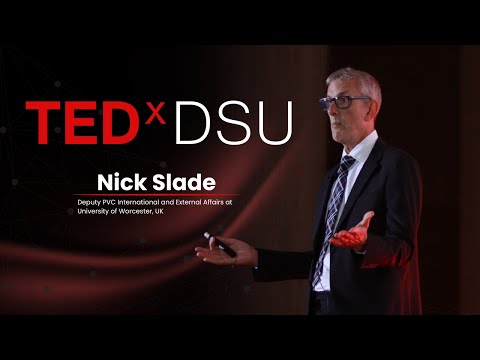
执教育开放之笔 绘“留学海南”画卷
Hai Nan Ri Bao· 2025-12-11 00:57
Core Insights - Hainan has signed agreements to introduce 48 renowned domestic and international universities, expanding the source countries and regions for students to nearly 100, marking a significant step in redefining international education in Hainan [11][14]. Group A: Open Innovation - Building an International Education Hub - The Lian'an International Education Innovation Pilot Zone was established in 2020 and has attracted 26 domestic and international universities, with 10 approved Sino-foreign cooperative education institutions and projects [12][14]. - The establishment of the Hainan Bielefeld University of Applied Sciences in 2023 represents a breakthrough in China's educational openness, aligning with Hainan's free trade port strategy [13]. - By 2025, the Hainan Lausanne University will also commence operations, further enhancing Hainan's appeal as a "policy testing ground" for international education [13]. Group B: Shared Integration - Innovating the "Study in Hainan" Model - The Lian'an Pilot Zone offers a unique educational experience with one-third of courses taught by foreign teachers, attracting students from over 50 countries [15]. - The "Big Sharing + Small College" model promotes inter-institutional collaboration, allowing students from different backgrounds to engage and learn together [16]. - By the fall of 2025, the pilot zone will have opened 287 shared courses, covering all participating universities [16]. Group C: Industry-Education Integration - Cultivating International Talent - The Hainan Bielefeld University emphasizes practical learning, with students engaging in internships that bridge theory and practice [17]. - The curriculum is tailored to Hainan's key industries, incorporating a "practice-embedded" training model that combines classroom learning with real-world experience [18]. - The pilot zone has established a "1+3+N" academic system focusing on cultural tourism, high-tech, and ecological environment disciplines, fostering collaboration with companies like Huawei [18]. Future Prospects - The Lian'an Pilot Zone and Hainan Bielefeld University are set to expand their enrollment significantly, with more overseas universities expected to establish independent programs in Hainan [20]. - An international education cluster is rapidly emerging in Hainan, driven by openness, industry alignment, and innovation [20].
Rediscovering Learning through Presence and Experience | Nick Slade | TEDxDSU
TEDx Talks· 2025-11-24 17:12
International Education Overview - The presentation explores the value of studying overseas from the perspectives of Indian and UK students [2] - It contrasts the motivations, perceived benefits, and returns on investment for international education between Indian and UK students [5] Student Mobility and Motivations - Approximately 18 million students from India study overseas, compared to only 30,000 from the UK [6] - Indian students are primarily motivated by quality education, career prospects, and post-study work opportunities [8][9][10] - UK students are more driven by cultural experiences and niche courses, such as language studies [12] Perceived Benefits of International Education - Indian students perceive employability, access to high-quality programs, and favorable work visa opportunities as key benefits [14][15] - UK students focus on developing a global perspective, cultural skills, and diverse learning environments [15][16] - Both groups recognize the potential for enhanced personal and professional development through international study [17] Unexpected Benefits and Employer Needs - Students who study abroad report improved communication skills, adaptability, and the development of global networks [18][19][20] - Employers seek candidates with soft skills such as communication, cultural awareness, self-sufficiency, and self-reliance [33] - These soft skills are often the unexpected benefits gained by students who study internationally [34] Return on Investment - Studies in the UK show a 20% to 37% return on investment for a degree [26] - Data suggests a significantly larger difference in salary expectations between degree and non-degree holders in India [27] - The graduate salary premium is higher for Indian students, making the return on investment a key motivator [28]