Kesler syndrome

Search documents
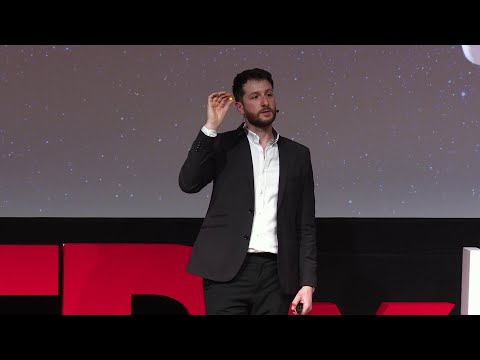
The Space Junk Problem is About to Get WAY Worse
CNET· 2026-02-22 13:00
The sky above our heads is about to get way more cluttered with space junk than it already is. Increasing risk of collisions, atmospheric contamination, and runaway doomsday scenario called Kesler syndrome that could put humanity's ability to operate in space at risk. Elon Musk just got the green light to double the number of Starlink satellites currently in orbit and to have them operate closer to Earth than ever before. He's even started pushing the idea of building AI data centers in space. And he's not ...

Does space belong to everyone? | Mikko Puumala | TEDxUNINA Federico II
TEDx Talks· 2025-09-16 15:16
Space Resource Management & Regulation - The current international space legislation, particularly the Outer Space Treaty of 1967, is vague and lacks specific regulations for different space environments, potentially leading to uncontrolled resource exploitation and geopolitical tensions [9][19][20] - The limited accessibility of valuable resources in near-term reachable locations like the Moon, Mars, and near-Earth asteroids makes them scarce and highly contested, increasing the risk of competition and conflict [14][15][16] - Unregulated activities in space, such as placing satellites, can lead to a hazardous accumulation of space debris, potentially triggering the Kessler syndrome and rendering orbits unusable [11][12] - The "founder effect" suggests that early actors in space will establish systems of property and resource management, making it difficult for future generations to alter these systems [23] - There is a golden opportunity to act now and create better rules for space activities before powerful parties develop vested interests, requiring ethical, societal, political, and cultural considerations alongside technological advancements [31][32][33] Environmental & Ethical Considerations - Space debris can stay in orbit for hundreds of years, posing a collision risk and potentially leading to a cascade effect of dangerous high-velocity objects [11] - The speaker advocates for coordinated action and better ground rules to ensure cooperation, deliberation, and preservation of value for future generations in space exploration [24] - The speaker emphasizes the importance of raising awareness that space belongs to all humankind to ensure everyone has an equal claim [26] International Cooperation & Future Trajectory - The Outer Space Treaty declares that space, including the Moon and other celestial bodies, belongs to everyone and is not subject to national appropriation [5][6] - The speaker draws a parallel between the current situation in space and climate change, highlighting the need for proactive regulation to avoid repeating past mistakes [29] - The speaker encourages envisioning the desired future of space to guide current actions and shape a sustainable path [25]

How Space Junk Could Crash the Global Economy | Andrea Antonello | TEDxLondonBusinessSchool
TEDx Talks· 2025-07-15 16:49
Space Debris Problem - A marble in orbit gains 8 kilometers per second of speed, about 20 times faster than a bullet, posing a significant threat to satellites [1] - A tiny object in orbit possesses the energy of a hand grenade, capable of shattering satellites into thousands of dangerous fragments [2][3] - There are over 36,000 large pieces of debris being tracked and millions more too small to track, constantly circling Earth [6] - Space is becoming overcrowded, increasing the risk of collisions, similar to a busy highway [8] - The 2009 collision between an American and a Russian satellite created over 2,000 new pieces of debris, many still posing a risk after 15 years [9][10] - The Kessler syndrome describes a potential runaway chain reaction of collisions, a very real possibility if no action is taken [12][13][14] - A serious collision in space could disrupt essential satellite-dependent systems like navigation, communication, weather updates, and financial transactions, potentially causing a global blackout [5][15][16] Clear Space Solution - Clear Space is launching its first mission in 2028 to remove space debris using a spacecraft with an innovative grasping system [17][18] - Clear Space One will capture debris and release it back into Earth's atmosphere to burn up without leaving residue [21] - The goal is to make space debris cleanup a routine part of satellite launches and disposal [21][22] Call to Action - Addressing space debris is a shared responsibility requiring collaboration between governments, private companies, scientists, and the public [24]
How Space Junk Could Crash the Global Economy | Andrea Antonello | TEDxLondonBusinessSchool
TEDx Talks· 2025-06-16 16:42
This is a marble. It's small. It's light. It's only a few grams.It's quite harmless in my hand. But if we were to place this marble in orbit, it would suddenly gain 8 kilometers per second of speed. That's 8 kilometers per second.Think about it. That's around 20 times faster than a bullet. It will take this marble less than 10 minutes to travel from London to New York.And even something this tiny and innocent could cause a disaster. Why. Well, at those speeds, it's not only about the size. It's also about t ...