
Market stabilization

Search documents
Oil shock prompts South Korea to impose fuel price cap for the first time in 30 years
CNBC· 2026-03-09 11:17
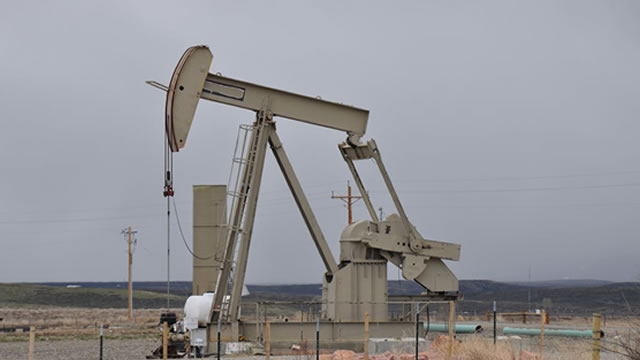
Core Viewpoint - South Korea is set to impose a fuel price cap for the first time in 30 years due to skyrocketing oil prices driven by geopolitical tensions in the Middle East, particularly the war in Iran [1][2]. Fuel Price Cap - President Lee Jae Myung announced the government's plan to "swiftly introduce" a fuel price cap in response to excessive price increases in petroleum products [2][3]. - The average gasoline price in Seoul reached 1,945 won ($1.28) per liter, marking a significant increase and prompting the need for emergency measures [4]. Oil Price Surge - Brent crude futures surged 13% to $104.7, while U.S. West Texas Intermediate crude futures jumped 30% to $118.46, marking the largest one-day gain since late 1988 [3]. - The increase in oil prices is attributed to output cuts by key Middle Eastern producers and escalating tensions involving Iran [2][3]. Economic Impact - The crisis in the Middle East has placed a "significant burden" on South Korea's economy, which is heavily reliant on energy imports from the region [6]. - The South Korean stock market, represented by the Kospi, experienced extreme volatility, including a 12% drop and subsequent recovery within a week [6][7]. Market Stabilization Measures - President Lee called for the expansion of a 100 trillion won market stabilization program to address the economic challenges posed by rising oil prices [8]. - The program, initiated to calm capital markets, is not intended to artificially support stock prices [9]. Regional Responses - Japan is preparing to release crude oil from its national reserves, which are sufficient for 254 days of domestic consumption [10]. - Vietnam announced amendments to import taxes on fuel products to ensure energy security, reflecting the vulnerability of Asian economies to oil disruptions [11].

Universal Insurance Holdings, Inc. Q4 2025 Earnings Call Summary
Yahoo Finance· 2026-02-25 13:30
Core Insights - The company experienced significant earnings growth attributed to a lower net loss ratio and higher net premiums earned, resulting in an adjusted return on common equity exceeding 46% [1] - Florida's legislative reforms have stabilized the market by reducing the flow of funds to third parties not impacted by claims [1] - The company's reserve position is reported to be the strongest in its history, supported by a robust capital position [1] Premium Growth - Direct premium growth of 2.7% was driven by an 18.2% expansion in non-Florida states, which offset a 3.1% decrease in Florida premiums [1] - Operational improvements and inflation adjustments across the multistate footprint have led to higher policies in force and improved retention rates [1] Competitive Environment - The competitive environment is viewed as favorable due to the company's internal profitability modeling, allowing for strategic opening and closing of specific markets [1]
Portsmouth Square, Inc. Reports Second Quarter Fiscal 2026 Results; Hotel Performance Improves Year-Over-Year as Market Stabilization Continues
Globenewswire· 2026-02-17 21:05
Core Insights - Portsmouth Square, Inc. reported financial results for the fiscal second quarter ended December 31, 2025, highlighting improvements in hotel performance despite ongoing challenges in the San Francisco lodging market [1][5]. Financial Performance - Hotel revenues for Q2 2026 reached $12.661 million, an increase from $9.965 million in the prior-year quarter, reflecting a year-over-year growth [6]. - The net loss for Q2 2026 was $2.291 million, or $3.12 per share, compared to a net loss of $4.036 million, or $5.50 per share, in the same quarter last year, indicating a reduction in losses [6]. - Income from operations was $1.004 million, a significant improvement from a loss of $0.264 million in the prior-year quarter [6]. - Average Daily Rate (ADR) increased to $234 from $190, with average occupancy rising to 92% from 88%, and Revenue Per Available Room (RevPAR) improved to $215 from $168 [6]. Year-to-Date Highlights - For the six months ended December 31, 2025, hotel revenues totaled $25.079 million, up from $21.785 million in the prior-year period [6]. - The net loss for the six-month period was $4.876 million, or $6.64 per share, compared to a net loss of $5.908 million, or $8.05 per share, in the previous year [6]. - Income from operations for the six months was $1.801 million, compared to $1.506 million in the prior-year period [6]. - ADR for the six-month period was $226, up from $200, with average occupancy at 94% compared to 92%, and RevPAR at $211 versus $184 [6]. Capital Expenditures - Capital expenditures for the six months ended December 31, 2025, were approximately $1.431 million, primarily for guest-room renovations and returning 14 rooms to available inventory [6]. Management Commentary - The President of Portsmouth noted that the company benefited from higher room revenues due to increased room availability and improved rate and occupancy dynamics, with 14 additional guestrooms returned to service in September 2025 [5]. - The CEO expressed cautious optimism regarding the gradual recovery of the San Francisco market, highlighting ongoing efforts to enhance the city's appeal for business and leisure travel [6].
X @CoinMarketCap
CoinMarketCap· 2025-10-24 10:00
Market Trends - Market stabilizes post-crash but conviction remains low [1] - MegaETH hype keeps ICO momentum alive [1] DeFi Infrastructure - Circle + Jupiter upgrades tighten DeFi infrastructure [1] Innovation & Adoption - Prediction markets gain mainstream validation via sports + DraftKings [1] - Aave + Stable move shows push toward consumer finance [1]
X @Bloomberg
Bloomberg· 2025-10-24 02:16
South Korea pledged to take action if needed to stabilize markets after the won declined to a six-month low https://t.co/CcQPj6Hvtx ...
Argentine FX Traders Estimate US Treasury Sold Over $200 Million
Yahoo Finance· 2025-10-17 21:22
Core Insights - The US Treasury has significantly increased its purchases of Argentine pesos, marking the highest volume in a single session as the currency continues to depreciate despite US support [1][2] - Secretary Scott Bessent disclosed that over $200 million in pesos were sold during the trading session, with a substantial portion occurring in the last 10 minutes [2] - The US Treasury is actively monitoring the situation and has the capacity to intervene to stabilize the Argentine market ahead of the upcoming midterm elections [3][4] Market Dynamics - The Argentine peso has depreciated approximately 30% this year, with a notable drop of up to 5.2% intraday on Friday, closing around 1,450 pesos per dollar [5] - The parallel exchange rate, known as the "blue-chip swap," has also weakened, reflecting ongoing market instability [3][5] - In addition to peso purchases, the US is offering a $20 billion currency swap line and facilitating private lending of the same amount to bolster Argentina's financial stability [4]
Bessent says US bought pesos again, currency dips
Yahoo Finance· 2025-10-17 15:54
Group 1 - The U.S. Treasury has begun purchasing Argentine pesos in both the "Blue Chip Swap" and spot markets to stabilize the currency [1] - Treasury Secretary Scott Bessent emphasized the Treasury's capacity to act flexibly and forcefully in monitoring and stabilizing Argentina's markets [1] - This marks the first announcement of U.S. participation in the "blue" market, following previous discussions about buying pesos in the open market [1] Group 2 - Both the "blue" peso and the official peso weakened, with the official currency declining by 2.8% to 1,441 per dollar and the blue peso decreasing by 0.3% to 1,450 [2] - One-month nondeliverable forwards for the peso are priced at 1,446, having peaked at 1,541 earlier in the month, while three-month forwards project the peso to be just below 1,700 [2] - The Treasury has not disclosed the amount spent on purchasing pesos or whether these purchases will follow a specific schedule [2]