
Nuclear Deterrence

Search documents
Missiles That Changed the Balance of Military Power
247Wallst· 2026-03-14 16:00
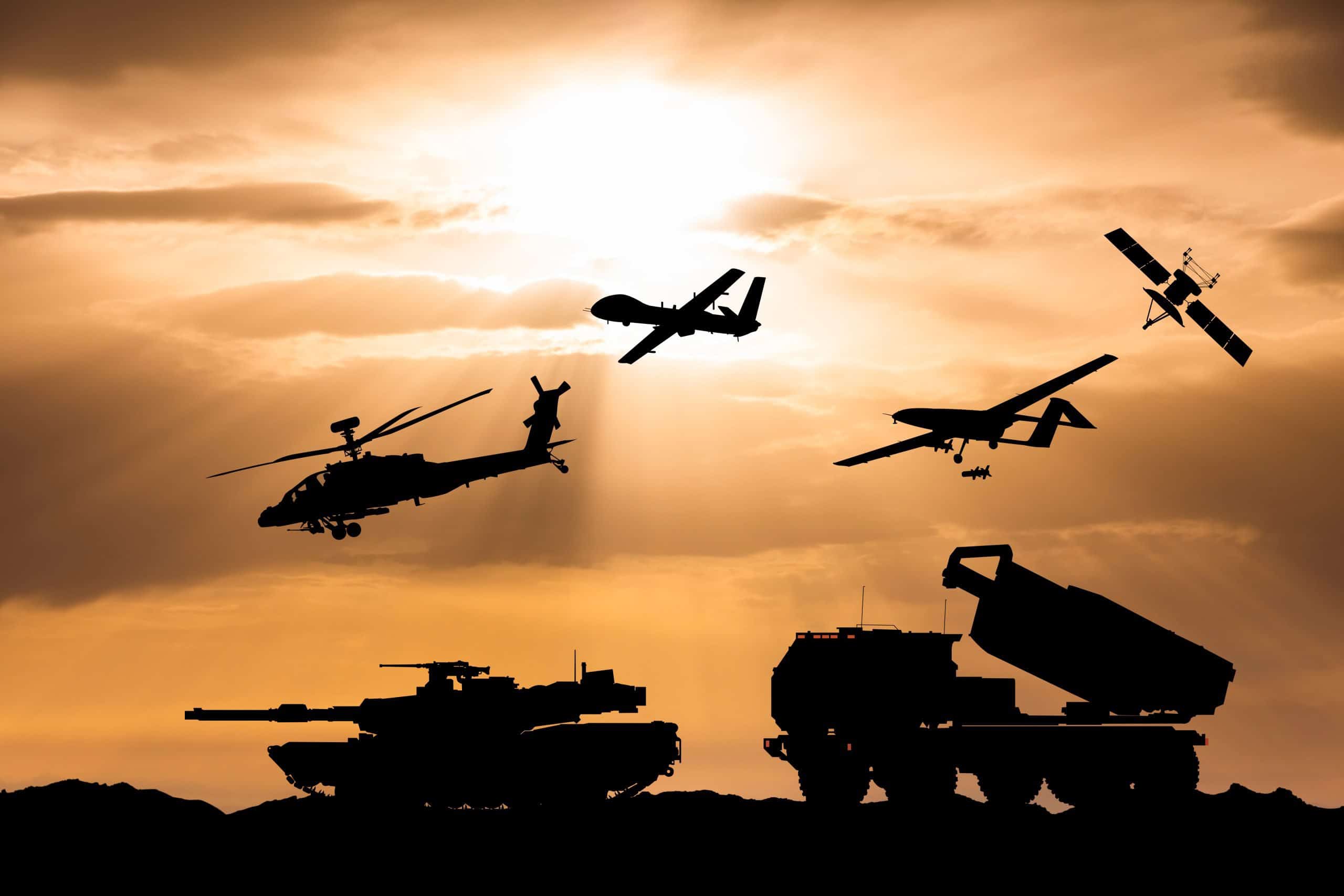
Core Insights - Missile technology has significantly transformed military power dynamics by extending strike ranges, enhancing precision targeting, and necessitating continuous tactical adaptations [1][2][3] Group 1: Evolution of Missile Technology - Over the past century, missile advancements have allowed nations to strike targets with unprecedented speed, range, and precision, fundamentally altering military strategies [1][2] - The introduction of long-range missile systems has enabled military forces to launch strikes from hundreds or thousands of miles away, changing strategic planning and threat capabilities [1][2] - Ballistic missiles have redefined global deterrence, particularly during the Cold War, by allowing for rapid nuclear warhead delivery across continents [1][2] Group 2: Impact on Warfare and Strategy - Precision missiles have changed battlefield strategies, allowing for targeted strikes on infrastructure and military assets with reduced risk compared to traditional bombing methods [1][2] - The development of various missile systems has forced rival nations to adapt their defenses and military doctrines, illustrating the ongoing evolution of military power [1][2] Group 3: Notable Missile Systems - The V-2 rocket was the first long-range guided ballistic missile, marking a technological breakthrough during World War II [2] - The R-7 Semyorka became the first operational intercontinental ballistic missile, significantly impacting Cold War nuclear strategy [2] - The SCUD-B missile facilitated the global spread of missile technology, influencing regional conflicts and warfare dynamics [2] - The LGM-30 Minuteman introduced solid-fuel technology, enhancing U.S. nuclear deterrence capabilities [2] - The Trident II D5 is recognized for its accuracy and role in the U.S. nuclear triad, serving as a powerful deterrent [2] - The DF-21D is noted as the first anti-ship ballistic missile, posing new threats to naval operations [3] - The S-400 Triumf represents one of the most advanced air defense systems, significantly affecting regional military balances [4]

X @The Economist
The Economist· 2026-03-08 08:40
The enthusiasm of Europeans in response to France’s new nuclear-deterrence arrangement is striking. In the past they have disregarded France’s offer of cooperation https://t.co/Uu1wGmHDGx ...
X @BSCN
BSCN· 2026-03-02 16:35
🇫🇷LATEST: PRESIDENT EMMANUEL MACRON SAYS FRANCE WILL INCREASE ITS NUCLEAR WARHEADSFrench President Emmanuel Macron states that France will increase its nuclear arsenal, adding that the country will stop revealing the size of its stockpile.Macron says the UK, Germany, Poland, Netherlands, Belgium, Greece, Sweden & Denmark will be key partners in “advanced deterrence” with French nukes forward deployed in other countries ...
X @The Economist
The Economist· 2026-02-04 00:25
America wants more nukes to deter Russia and China https://t.co/rclY7q7IKO ...
X @The Economist
The Economist· 2026-02-03 08:57
RT Sophie Pedder (@PedderSophie)Can Europe do nuclear deterrence without America? France and the UK are deepening their cooperation. Other European conversations with the continent’s two nuclear-armed powers are also underwayA joint report with @shashjhttps://t.co/ONmqyEQEnD ...
X @The Economist
The Economist· 2025-09-24 15:15
A new defence pact could see Saudi Arabia benefit from Pakistan’s nuclear deterrence. How will it affect the region? https://t.co/hjTdWzw9m2Illustraion: Ben Jones https://t.co/G9p7yCRvqj ...
X @The Economist
The Economist· 2025-09-23 22:40
A new defence pact could see Saudi Arabia benefit from Pakistan’s nuclear deterrence. How will it affect the region? https://t.co/AmfP5iECWY ...
What to Make of Trump Sending Nuclear Submarines Toward Russia?
Bloomberg Television· 2025-08-01 23:03
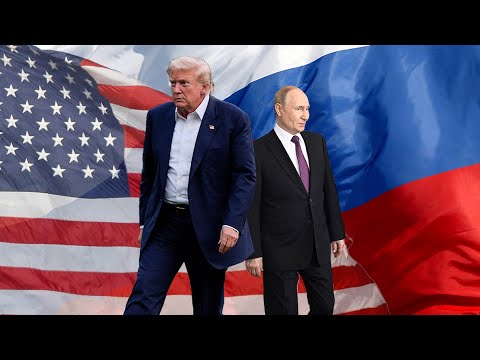
Geopolitical Strategy & Nuclear Deterrence - The analysis suggests Trump is signaling to Putin and Medvedev that the US is prepared to engage in nuclear posturing, mirroring Russia's actions in the Ukraine conflict [1][5] - The report indicates the US is reminding Russia of its robust nuclear deterrent, particularly the submarine-based second-strike capability, to discourage escalation [3] - The industry interprets Trump's actions as an attempt to regain control over nuclear rhetoric and push for a ceasefire in Ukraine [5][6] - The analysis suggests Trump's strategy involves applying military and economic pressure on Putin to encourage a more rational approach to the conflict [10] - The report highlights the US is restoring a clear and unambiguous nuclear deterrence strategy reminiscent of the Cold War to counter potential threats [16] Military & Economic Pressure - The report mentions potential secondary sanctions on buyers of Russian energy if a ceasefire in Ukraine is not agreed upon [8] - The analysis suggests the US is considering various forms of military pressure to deter Putin, including the deployment of nuclear-powered submarines [14] - The industry notes Russia's capacity to produce approximately 1500 tanks annually, indicating a significant war machine [15] Risk Assessment & Future Outlook - The report acknowledges Medvedev's statement implying Russia is a more formidable target than Israel or Iran, suggesting a higher threshold for threats [11][12] - The analysis highlights concerns about a potential two-pronged war involving simultaneous conflicts in Taiwan and Europe, prompting the US to reinforce its deterrence [15] - The report suggests Trump is attempting to shut down Putin's nuclear options, considering the limitations of battlefield nukes in Ukraine due to weather patterns and Chinese opposition [17]
X @The Economist
The Economist· 2025-08-01 18:40
Geopolitical Risk - The report highlights the potential expiration of a longstanding nuclear treaty between Russia and America, raising concerns about the future of nuclear deterrence [1] - The analysis focuses on assessing the nuclear threat in the 21st century [1]