
Oil market intervention

Search documents
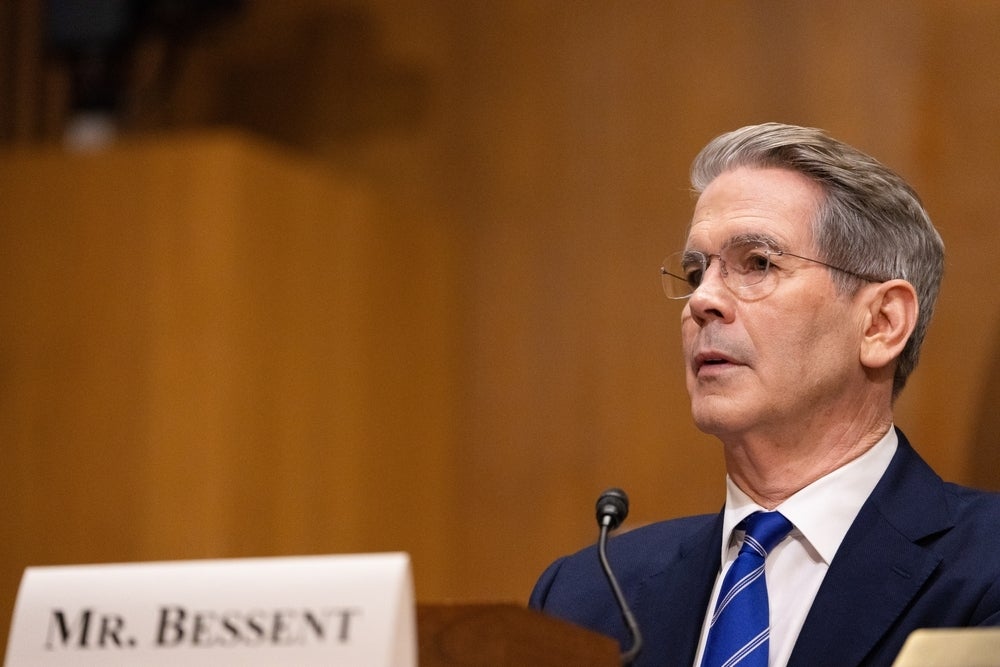
Scott Bessent Rejects Oil Markets Intervention As 'Rumor,' Points To Russian Sanctions Waiver As Short-Term Fix
Benzinga· 2026-03-20 06:35
Core Viewpoint - The U.S. Treasury Department has denied rumors of a planned intervention in the commodities market to control prices, emphasizing that such actions have not been taken [1][2]. Group 1: Financial Intervention Rumors - Bessent refuted speculation regarding the Treasury's potential use of the Exchange Stabilization Fund to short the oil futures market, labeling it as a common reaction during periods of significant price volatility [1]. - The legality and feasibility of such financial trades by the Treasury were questioned, indicating uncertainty about the authority under which these actions could be executed [2]. Group 2: Russian Oil Strategy - Instead of financial interventions, the Treasury is focusing on physical market adjustments, allowing countries to purchase Russian oil that is currently "stranded at sea" to mitigate global supply disruptions [3]. - This temporary waiver is described as a "narrowly tailored, short-term measure" aimed at increasing global supply without compromising the sanctions against Russia [3]. - Officials assert that the waiver applies only to oil already extracted and in transit, minimizing the financial benefits to the Russian government, which primarily earns revenue from taxes at the extraction point [4]. Group 3: Market Impact and Outlook - The energy markets are experiencing extreme volatility, with Brent crude futures reaching $107.24 and WTI crude futures at $93.84 per barrel [5]. - The United States Oil Fund LP (NYSE:USO) has shown significant year-to-date gains of 68.28%, reflecting the ongoing geopolitical tensions [5]. - Over the last six months and year, USO has increased by 59.63% and 62.05%, respectively, although it experienced a decline of 0.87% over the last five days [6].

Oil Prices Have Climbed 21% This Week
Yahoo Finance· 2026-03-06 06:45
Group 1 - Crude oil prices are projected to end the week with gains exceeding 21%, despite a dip on Thursday due to U.S. intervention signals in the futures market [1] - Brent crude is trading at $88.92 per barrel, while West Texas Intermediate is at $85.65 per barrel, following U.S. Treasury's announcement of sanction waivers for commodity trading companies to sell Russian oil [2] - The U.S. plans to sell approximately 9.5 million barrels of Russian oil to India under a 30-day sanction waiver, as Middle Eastern oil supply is disrupted due to issues in the Strait of Hormuz [2] Group 2 - The disruption in the Strait of Hormuz is expected to halt the storage of 20 million barrels per day and reduce global oil flow, potentially driving energy prices higher [3] - Some Middle Eastern oil producers, including Iraq, are beginning to cut production due to insufficient storage capacity, with Iraq reducing output by around 1.5 million barrels daily [4] - Analysts from ING suggest that while U.S. sanction waivers may provide temporary relief, a sustained decrease in oil prices will require a resumption of oil flows through the Strait of Hormuz, which is unlikely in the near term [5]