RaaS (Result as a Service)

Search documents
AI Agent如何实现商业化?
Xin Lang Cai Jing· 2026-02-14 08:31
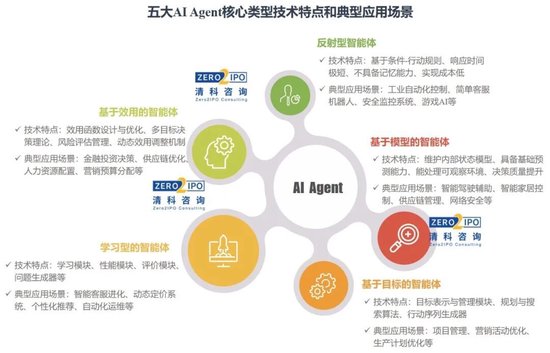
Core Insights - AI Agents are evolving from technical tools to new production factors, marking a critical phase for industry development and increasing investment interest [1][8] - The Chinese government aims for over 90% penetration of new generation AI applications by 2030, indicating a broad market potential for AI Agents [8][34] - The global AI Agent market is projected to grow from $5.1 billion in 2024 to $47.1 billion by 2030, with a CAGR of 44.8% [8][34] Group 1: AI Agent Definition and Characteristics - AI Agents are defined as autonomous or semi-autonomous software entities that perceive, decide, and act to achieve business goals, emphasizing autonomy, interactivity, and adaptability [2][3] - The "perception-decision-action" loop in AI Agents is powered by large models, which provide essential capabilities like dialogue and logical reasoning, although they lack autonomous action [3][29] - AI Agents can be categorized into five core types: reflex agents, model-based agents, goal-based agents, utility-based agents, and learning agents, each serving different applications [5][31] Group 2: Market Growth and Policy Support - The AI Agent industry is structured into three layers: foundational technologies, platform development, and application layers, with significant growth expected in enterprise and consumer applications [7][33] - The Chinese government's policies are driving rapid growth in the AI Agent market, with a focus on integrating AI into various sectors, including manufacturing [8][34] - Market forecasts indicate that by 2026, the proportion of enterprise applications integrating task-specific AI agents will rise from under 5% to 40% [8][34] Group 3: Competitive Landscape and Business Models - The AI Agent market features diverse players, including AI-native platform providers, tech giants, large model vendors, vertical solution providers, and traditional enterprises undergoing digital transformation [9][35] - Main business models in the AI Agent field include SaaS subscription, platform ecosystem, and customized enterprise services, each with distinct advantages [16][41] - The competition is intensifying, with companies focusing on integrating AI capabilities into existing products and developing specialized agents for various industries [15][40] Group 4: Application Areas and Demand Differentiation - AI Agents are being deployed across various sectors, including media, customer support, finance, and software development, with significant value realized in customer service and data analysis [19][44] - Different industries exhibit distinct needs for AI Agents, with manufacturing focusing on efficiency, finance on risk control, and healthcare on diagnostic accuracy [22][47] - The trend is shifting towards specialized AI Agents that cater to specific industry requirements, enhancing their effectiveness and value [22][47] Group 5: Investment Trends and Challenges - Investment in the AI Agent sector has surged since 2025, with notable funding rounds and acquisitions highlighting the growing interest in this space [48][49] - The investment focus is shifting from general platforms to specialized agents in vertical industries, with a preference for companies with established customer bases and positive cash flow [49] - Challenges remain in the commercialization of AI Agents, including technical limitations, integration difficulties, and emerging security risks [26][52]