Rare Earth Industry Development

Search documents
未知机构:中信证券金属回调即可买入持续推荐稀土产业链战略配置价值-20260304
未知机构· 2026-03-04 03:05
Summary of Key Points from the Conference Call Industry Overview - The rare earth industry is entering a new era of high-quality development, with national policies continuously improving and refining to enhance resource security, which has become a core aspect of national security [1][3] - The transition from a resource powerhouse to an industrial powerhouse is being facilitated through strict policy control, technological innovation, and green transformation [1][3] Supply Dynamics - Global rare earth supply growth is slowing, with a rigid supply logic likely to persist [3] - Domestic supply is constrained by national quotas, leading to a slowdown in growth [3] - Import volumes of rare earth minerals have been declining, with a cumulative year-on-year decrease of 25% from January to November 2025 [3] - It is projected that global rare earth supply will increase to 513,000 tons by 2028, with a compound annual growth rate (CAGR) of 5.6% from 2024 to 2028, indicating a continued slowdown in growth [3] Demand Trends - Traditional demand is expected to grow rapidly, with emerging fields showing promising growth potential [4] - Demand for high-performance neodymium-iron-boron is projected to reach 369,000 tons by 2028, driven by sectors such as electric vehicles, industrial motors, and variable frequency air conditioners [4] - New growth areas for rare earth permanent magnets include humanoid robots and the low-altitude economy, with neodymium-iron-boron demand in these sectors expected to reach 33,000 tons by 2035, accounting for 5.5% of total demand, and potentially increasing to 7.6% by 2040 [4] - A supply-demand gap for rare earths is anticipated to widen starting in 2026, with prices expected to stabilize and gradually increase [4] - Projected supply-demand gaps for praseodymium-neodymium oxide are estimated at -0.9, -1.3, and -2.1 million tons for the years 2026, 2027, and 2028 respectively, indicating a tightening market [4] Price Outlook - With the gradual recovery of exports and a rigid increase in supply from Southeast Asia, rare earth prices are expected to stabilize and rise, enhancing the profitability of companies in the industry [4] - The price of praseodymium-neodymium oxide is expected to rise to 800,000 yuan per ton by 2026 [4] Core Companies - Key companies in the rare earth sector include Northern Rare Earth, Shenghe Resources, China Rare Earth Holdings, Jinchuan Group, and Ningbo Yunsheng [5]
包头:稀土产业蓄势腾飞
Nei Meng Gu Ri Bao· 2025-07-22 02:17
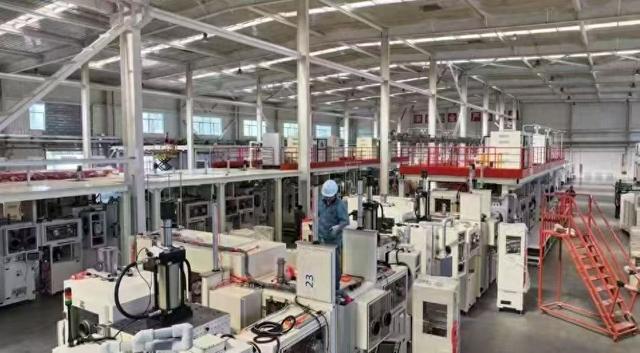
Core Viewpoint - The successful launch of the first batch of neodymium-iron-boron products marks the official production of the first phase of a 5,000-ton rare earth permanent magnet material project by Jinlong Rare Earth New Materials (Baotou) Co., Ltd. [1] Group 1: Project Development - The project leverages the strong R&D capabilities of Xiamen Tungsten, achieving advanced levels in efficiency, cost, energy consumption, and environmental protection [2] - The project includes six core technologies such as self-developed mixing equipment and oxygen-free processes, which enhance product performance and reduce costs [2] - Baotou Yingsite Rare Earth Magnetic New Materials Co., Ltd. has initiated a 650 million yuan integrated application project for rare earth permanent magnet materials [2] Group 2: Industry Growth - Baotou is actively developing "two rare earth bases," attracting major companies like Xiamen Tungsten and Yingsite, resulting in a strong industrial cluster effect [5] - The rare earth high-tech zone has gathered over 100 enterprises across the entire industry chain, with eight of the top ten rare earth magnetic material companies establishing production bases [5] - The total production capacity of magnetic materials has reached 159,000 tons, further solidifying the national leading position in this sector [5] Group 3: Technological Innovation - The rare earth high-tech zone is promoting high-end and intelligent transformation of the industry, extending down the supply chain [8] - The zone has established a comprehensive technology innovation system in the rare earth field, with 109 innovation platforms and 62 technology achievements converted in the past three years [8][9] - The region is recognized for its technological leadership, with several innovative projects and products achieving national and international recognition [9] Group 4: Economic Impact - In the first quarter, the rare earth industry achieved an output value of 12.459 billion yuan, reflecting a year-on-year growth of 21% [9] - The rare earth high-tech zone is positioned as a strong engine for economic growth, focusing on technological innovation and industrial upgrading [9]