Regulatory Burden

Search documents
Markets Rebound as Fed Signals Patience; Trump Targets $237B Regulatory Burden
Stock Market News· 2026-02-17 19:08
Core Insights - The NASDAQ 100 (NDX) showed resilience, recovering from a nearly 1% pre-market decline to trade in flat-to-positive territory by late afternoon, influenced by Federal Reserve comments and regulatory shifts [2][10] Federal Reserve Commentary - Federal Reserve Governor Michael Barr indicated a cautious approach to monetary policy, suggesting inflation is expected to decrease as the effects of recent tariffs are absorbed by the economy, and the risk of a persistent inflation spiral is manageable [3][10] Regulatory Environment - The White House Council of Economic Advisers (CEA) reported that federal regulatory burdens cost U.S. consumers over $237 billion, which supports President Trump's campaign to dismantle the Consumer Financial Protection Bureau (CFPB) [4][10] Geopolitical Developments - Iranian media reported a temporary closure of the Strait of Hormuz due to security drills, highlighting the region's potential to disrupt 20% of the world's oil supply [5][10] Digital Asset Innovations - Tether announced a partnership with Elemental Royalty Corp (ELE) to allow shareholders to receive dividends in tokenized gold (XAU₮), bridging traditional commodity markets with blockchain technology [6][10] Individual Equity Movements - Norwegian Cruise Line Holdings (NCLH) rose by 7.2% following a significant investment from Elliott Investment Management, while Masimo Corp (MASI) surged over 30% on news of a potential $10 billion acquisition by Danaher (DHR), contributing to positive market sentiment [7][10]



Public market investors are missing out on some of the growth of private companies: ACME's Hany Nada
CNBC Television· 2025-12-22 13:19
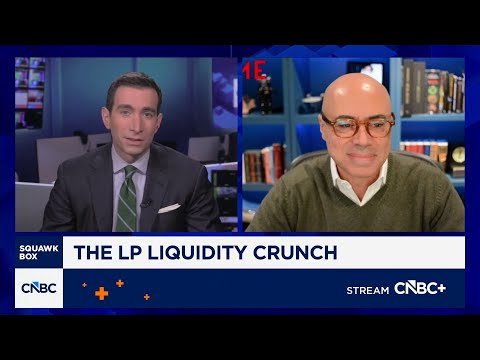
The IPO window open once again which could offer relief for some limited partners who have been strapped for quite some time for liquidity over the past decade as more companies stay private for longer. Joining us right now is Haninada uh co-founder of Acme Capital. He has backed the likes of Alibaba, DraftKings, SoFi and so many other companies through multiple venture capital cycles.But this has been a particularly unique one in terms of just the length with which these companies have remained private. Wh ...
Public market investors are missing out on some of the growth of private companies: ACME's Hany Nada
Youtube· 2025-12-22 13:19
Core Viewpoint - The IPO market is reopening, potentially providing liquidity relief to limited partners who have faced challenges over the past decade due to companies remaining private for extended periods [1][2]. Group 1: Current IPO Landscape - The trend of companies staying private for longer has been notable, with many firms not returning capital to limited partners effectively over the last decade [2]. - The influx of capital into the private equity market has led to the creation of mega funds that can invest substantial amounts into small private companies, making it less appealing for these companies to go public [3][4]. Group 2: Implications of Staying Private - Companies that remain private may experience better quality when they eventually go public, but public market investors miss out on significant growth that typically occurs between years five and ten of a company's lifecycle [5][6]. - The delay in going public can result in slower growth rates for companies when they finally enter the public market, which can affect investor returns [5][6]. Group 3: Regulatory Environment - The current regulatory burden is seen as a significant barrier for small companies considering an IPO, with the requirements having increased to the point where only companies with substantial revenues can go public [8][9]. - The Dodd-Frank Act is identified as a detrimental factor for the IPO market, particularly for small private companies, suggesting that many regulations should be reconsidered or removed to facilitate easier access to public markets [9]. Group 4: Market Dynamics - There is a fundamental mismatch between the short-term focus of public markets and the long-term perspective of private investors, which complicates the transition for companies from private to public [12]. - The need for reduced scrutiny and regulatory requirements for small companies is emphasized as a way to encourage more firms to consider going public [13].