Retail investor influence

Search documents
Gamestop Meme Stock Saga at 5: What Endured and What's Changed
Benzinga· 2026-01-24 18:46
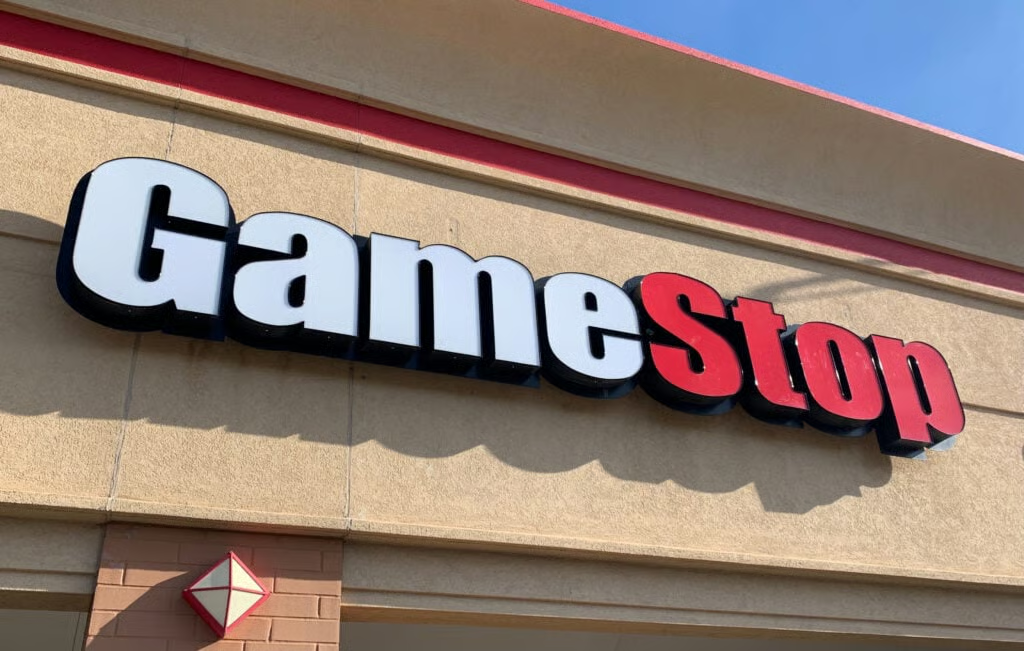
Core Viewpoint - The potential for a financial crisis similar to the GameStop upheaval still exists, as warned by Thomas Peterffy, founder and chairman of Interactive Brokers [1] Group 1: GameStop Incident and Its Implications - The GameStop event involved retail investors inflating the stock price of the company, which had the potential to destabilize the financial system [1] - If investors had sold even a small portion of their GameStop shares purchased on margin, it could have led to brokers needing to retrieve shares from short sellers, potentially causing a bidding war [2] - Short selling in GameStop exceeded the total number of shares available for trading, which could have resulted in brokers needing to bid prices up uncontrollably, risking a system breakdown [3] Group 2: Changes in the Financial Landscape - The GameStop incident led to a significant increase in retail trading volumes and shifted perceptions of investing, with retail investors becoming a notable market force [3][5] - Brokerage firms are now competing to cater to a more discerning client base, influenced by the changes brought about by the GameStop event [4] - The SEC has implemented rule changes to improve clearinghouse efficiency and reduce trade settlement times, addressing gaps in the financial system exposed by the GameStop incident [4]


Retail Investors Drove Opendoor Up 500%, Now The Party's Over
Benzinga· 2025-08-20 15:53
Core Viewpoint - Opendoor Technologies Inc. is experiencing a significant decline in stock price following the resignation of CEO Carrie Wheeler and disappointing guidance after a brief rally fueled by retail investors [1][2][5]. Leadership Change - CEO Carrie Wheeler resigned under pressure from activist investors, leading to the appointment of Chief Technology and Product Officer Shrisha Radhakrishna as interim CEO while the board searches for a permanent successor [3][4]. Earnings Performance - Opendoor reported second-quarter revenue of $1.57 billion, exceeding estimates of $1.50 billion, and achieved an adjusted EBITDA of $23 million, marking its first quarterly profit since 2022 [5]. - Despite the positive earnings, the company provided weak guidance for the third quarter, projecting revenue between $800 million and $875 million, significantly below the consensus estimate of $1.22 billion, and an adjusted EBITDA loss of $21 million to $28 million [5][6]. Analyst Reactions - Following the earnings report, analyst Ryan Tomasello downgraded Opendoor's stock to Underperform with a target price of $1, citing concerns over the company's pivot to an agent-led model and a revenue outlook approximately 40% below consensus [6]. - The downgrade reflects expectations of wider EPS losses and deeper EBITDA deficits in 2025 and 2026, raising concerns about weakening demand and delayed margin recovery [6]. Stock Performance - Opendoor's stock is currently trading at approximately $3.22, a decline of about 34% from its 52-week high of $4.97, while remaining significantly above its 52-week low of $0.51 [7].