Sediment-hosted copper exploration

Search documents
Latin Metals Commences First Systematic Exploration at Ventana North, within 500,000 Hectare Regional Copper Exploration Play, Northwest Argentina
Globenewswire· 2026-03-26 12:45
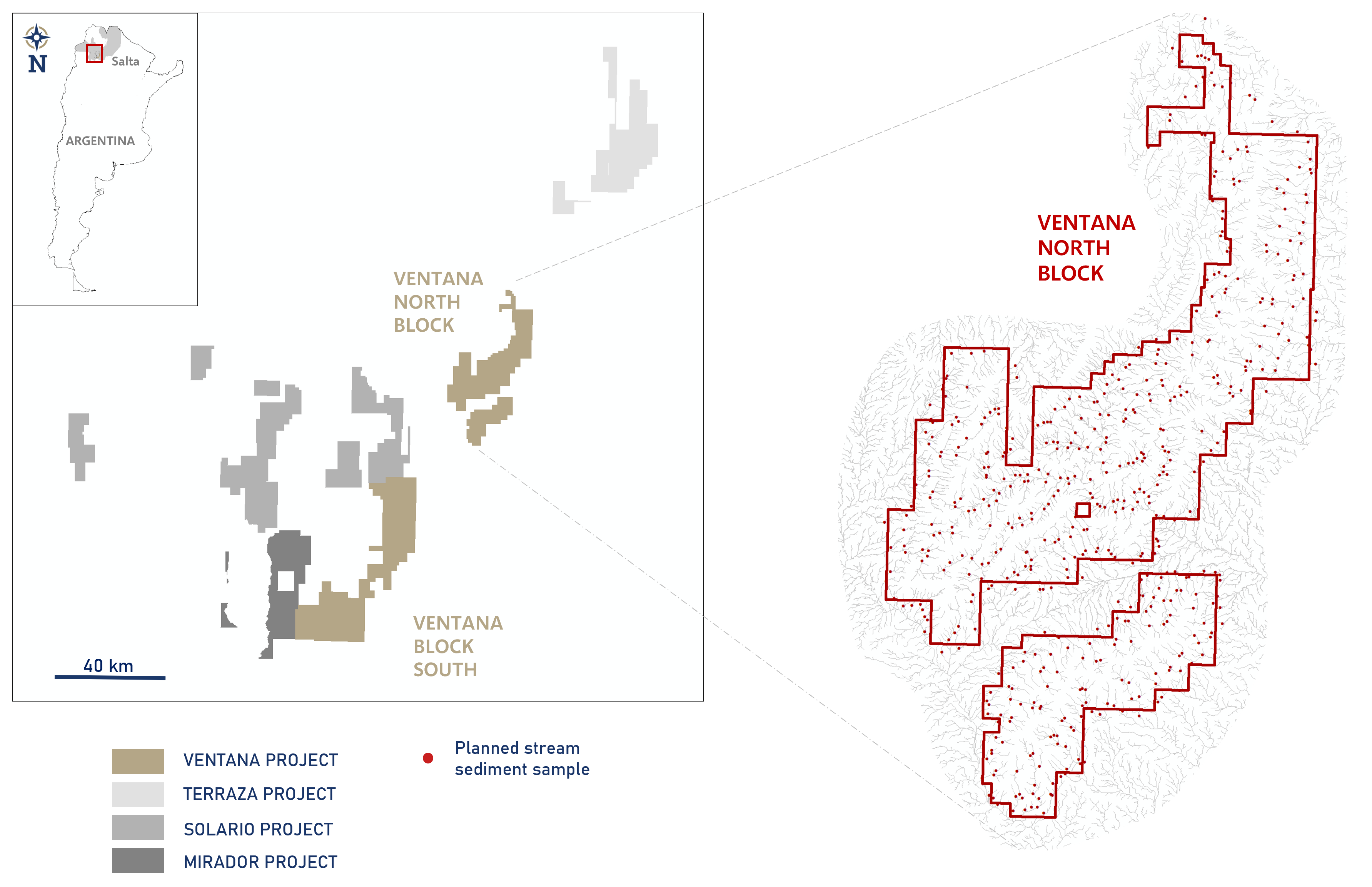
Core Insights - Latin Metals Inc. is advancing a significant sediment-hosted copper exploration portfolio in northwest Argentina, with a large-scale field program planned for the Ventana North property in Q2 2026 [1][4] - The company controls approximately 500,000 hectares across four sediment-hosted copper projects, positioning it as an early entrant in an underexplored region [1][7] Planned Work - The initial phase of the exploration program will include a detailed stream sediment sampling program, involving approximately 500 samples across a 73,000-hectare area [3] - This systematic approach aims to generate high-value targets through cost-effective early-stage exploration, defining priority areas for follow-up exploration [4][8] Project Background - The Ventana Project is a 100%-owned sediment-hosted copper exploration project covering approximately 176,000 hectares within the Salta Rift basin [5] - The region is characterized by favorable infrastructure, including highway access and nearby power lines, enhancing its attractiveness for exploration and potential development [6] Strategic Advantages - The company's total land position is comparable to major global sediment-hosted copper districts, providing a first-mover advantage in systematically evaluating a large, prospective region [7][8] - The 2026 program is designed to rapidly generate high-quality drill targets and advance the project toward partner-funded drilling [8] Company Overview - Latin Metals operates under a prospect generator model, minimizing risk and dilution while maximizing discovery potential, and is actively seeking new strategic partners [10]

Viridian Confirms Basin-Scale Plumbing Systems and Copper-Bearing Chemical Traps at the Sedna Project
Globenewswire· 2026-02-18 13:00
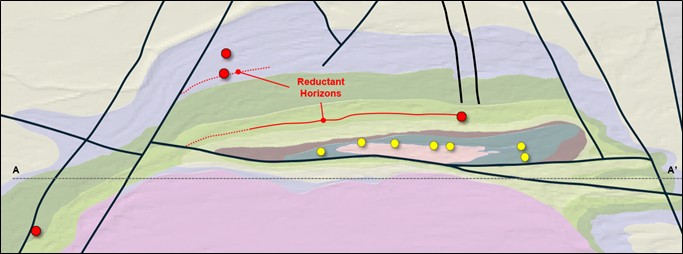
Core Insights - The Sedna Project by Viridian Metals Inc. has confirmed a deeply rooted, crustal-scale plumbing network that drives extensive sediment-hosted copper mineralization in the Seal Basin, Labrador, Canada [1][2]. Geological Framework - Integration of newly acquired magnetotelluric (MT) data with surface mapping has defined the geological architecture of the mineralizing system, comparable to major global sediment-hosted copper districts [2]. - The geological framework links deep fluid sources to favorable surface horizons, confirming the structural basis of an emerging copper district [2]. Key Discoveries - A confirmed multi-level plumbing system has been identified, with MT data revealing north-south oriented structural breaks that act as highways for transporting copper-rich fluids from depth [3]. - Basin-scale fertile copper traps have been delineated, with copper-bearing reduced horizons extending over tens of kilometers at favorable stratigraphic levels [4]. - Widespread disseminated copper mineralization has been discovered, characterized by fine-grained chalcopyrite that was previously overlooked in historical exploration [5]. Project Scale and Control - The Sedna Project covers over 2,600 km², securing the majority of the Seal Basin, making it one of the largest contiguous exploration projects in Canada [6]. - The project allows for systematic basin-wide targeting, moving from a theoretical model to a proven framework [6]. Exploration and Future Steps - The company has initiated the permitting process for access infrastructure within the Sedna Project, focusing on the Kendall target area where a copper-bearing structure has been traced over approximately 600 meters [15]. - A basin-scale airborne geophysical survey is being defined to trace reduced stratigraphic horizons and identify intersections with major plumbing structures [16]. System Validation - The MT survey has confirmed the presence of deeply rooted plumbing systems capable of sourcing and transporting copper-bearing fluids, validating a key component of the exploration thesis [10]. - The lateral extent of fluid pathways has been constrained by regional structural mapping and satellite imagery, identifying extensive east-west structural corridors traceable for over 100 kilometers [7]. Conclusion - The results confirm that the fundamental ingredients for a major sediment-hosted copper district are present and spatially associated within the project area, indicating significant potential for future exploration and development [14].