Single-use plastics

Search documents
What can we do about microplastic exposure? | Leonie Joubert | TEDxJohannesburg
TEDx Talks· 2026-02-09 16:03
[music] Thank you for joining me here today. Not a great venue, the smoker's lounge. Try and ignore the smoke catching in your throat and don't think about your delicate pink lung tissue soaking it all in.And you're right, our kids shouldn't be in here with us. But we're here to ask one simple question. What is a lethal dose of plastics poisoning.See, today we know a great deal about passive smoking. That's why we don't light up with our kids in the car anymore the way we did my the way our parents did when ...

Turn Off the Plastic Tap to Break Free From Plastic | Melissa Aguayo | TEDxGreatPacificGarbagePatch
TEDx Talks· 2025-12-11 16:05
Environmental Impact of Plastics - 99% of plastic is made from fossil fuels, contributing to climate crisis as oil and gas companies increase plastic production [3] - By 2050, the amount of plastic could double or triple, exacerbating the climate crisis [4] - Over 4,200 out of 16,000 chemicals associated with plastic production pose significant hazards to human and environmental health [4][5] - Microplastics are found in remote environments, water, air, and even human organs, including the placenta and testicles [5][6] - The average human brain contains the equivalent of one plastic spoon's worth of microplastics [7] Plastic Production and Usage - 40% of all plastic produced today is used for packaging, which are often used briefly but last forever [8] - The industry is flooding markets with plastics and concealing the risks associated with it [4] Solutions and Alternatives - Reducing single-use plastics through policy reforms, brand audits, corporate accountability, and zero waste initiatives are crucial [11] - Investing in reuse systems, like the milkman model, can restore health and community connections [12] - Ending the unchecked production of plastics is essential to protect the environment and human health [12][13] Environmental Justice - Communities near production sites, landfills, and incinerators, often black, brown, indigenous, and rural communities, are disproportionately affected by plastic pollution [6]
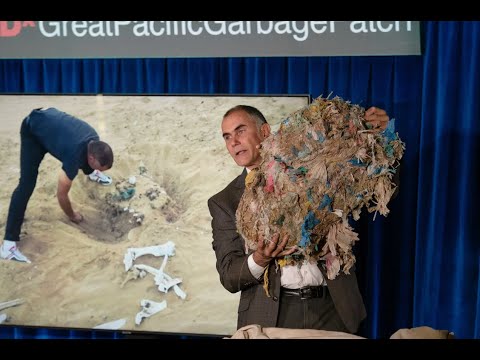
The Gyre Within: Reflections from a Plastic Sea | Marcus Eriksen | TEDxGreatPacificGarbagePatch
TEDx Talks· 2025-12-11 16:04
When world leaders come together to solve the problem of plastic pollution, what do they need to get the job done. Well, to start, they need scientists. So, when I was a kid growing up in southern Louisiana, I spent so much of my summer collecting snakes and turtles.When I was 14 years old, my clubhouse was full of aquariums. There were snakes everywhere. I had a backyard pond.My mom let me dig with I counted 96 turtles. There baby alligator in there somewhere. I was a kid with a neighborhood zoo and I love ...
Meet the environmental superhero that could save the planet | Inga Potter | TEDxPortsmouth
TEDx Talks· 2025-07-16 16:36
Kelp's Potential & Benefits - Kelp is a regenerative resource that improves ocean and environmental health [2] - Kelp has versatile uses beyond food, including skin cream, health supplements, fuel, and plastic packaging replacement [2][3] - Kelp farming provides an alternative to commercial fishing, especially in warming ocean regions like the Gulf of Maine [3][4] - Kelp farming creates new market demand, jobs, and income diversification, building resilience against climate change [4] - Kelp absorbs carbon dioxide 20 times more efficiently than land forests and deacidifies oceans [12] - Kelp provides habitat for marine life and protects shorelines [13] US Kelp Industry & Innovation - The US imports 90-95% of its seaweed, missing opportunities for domestic growth [13] - Maine is a leader in US seaweed farming, producing over 1 million pounds (approximately 453,592 kilograms) of kelp commercially in 2024 [16][17] - US companies are receiving federal funding for R&D into green extraction technology to maximize bioactive compounds in kelp for skincare, pharmaceutical, and nutraceutical uses [17] - Innovators are creating seaweed-based biomaterials for coatings, packaging, single-use plastic replacements, and fishing gear [19][20] - Kelp farms needed to replace single-use plastics would take up less than 1% of the oceans [21]
They Take in What We Take Out | Kate Gu & William Zhang | TEDxYouth@YCYWShanghai
TEDx Talks· 2025-07-08 15:24
Creatures [Music] [Applause] from all around the world create waste. And honestly, who do you think creates the most. Yes, it's us, humans.What if I were to tell you that this was garbage that me, a kid, made in a day. And that doesn't even count the mice I made in school. Sounds extraordinary, right.Hi, I'm William. I'm Kate. Every year, we produce over 11 billion tons of waste worldwide.Our oceans, which cover up 70% of the Earth's surface, are facing an unpredictable crisis. Astonishingly, every day, 3 b ...