Social expectations

Search documents
Smashing the Cage: Liberation for Women | Mohan Zhu | TEDxZhengzhou No.7 HS
TEDx Talks· 2025-11-06 17:44
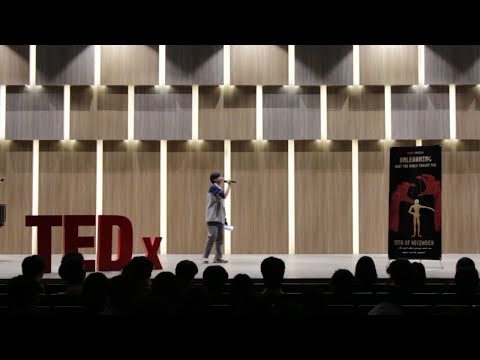
Picture room 1946. We see worse scar stress region cards and dia a woman whose word is inched with bruises unpaid bills and the burden of families. In the films there's still tomorrow.We see her scrap floors, swallow insults and cradle dreams in secret. Her labels wife, mother, servant. Fast forward to today.Different straits, same cages. The label's name have changed. Emotional, bossy to ambitious, not ambitious enough.But the prison of expectations for women remains. From Dia, I feel the power of women an ...

If Every Part Of You Changes.. Are You Still You? | Tvisha Agarwal | TEDxNPSIS Singapore Youth
TEDx Talks· 2025-10-13 15:16
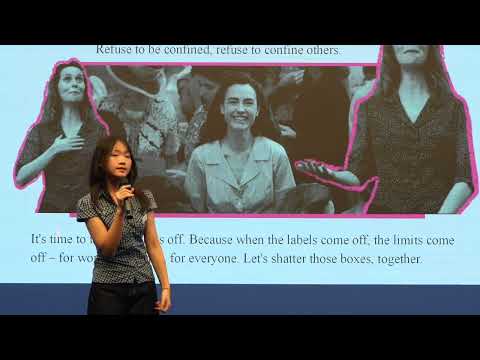
Have you ever wondered whether you're still the same person you were yesterday, last year, or when you were a child. Since I was 5 years old, I found myself in various situations that made me self-conscious. For instance, I used to go to ballet classes and sometimes we played improv games and once we played Cinderella.And of course, like every little girl my age, I wanted to be Cinderella, the one who gets to go to a ball, meet her prince charming, you know, get a princess makeover. But instead, my teacher ...
Law of diminishing marginal utility: How "more" can be less | Quynh Chi Truong | TEDxRGSV Youth
TEDx Talks· 2025-09-30 14:56
Core Argument - The presentation explores the concept of diminishing marginal utility and its relevance to young people, particularly students and ambitious individuals, who often feel pressured to take on numerous responsibilities [2][3][5] - It suggests that at a certain point, the benefits derived from additional activities or responsibilities decrease, leading to feelings of being overwhelmed and a reduced appreciation for each task [16][17][19] - The speaker encourages reflection on personal values and a mindful approach to balancing workload and well-being, rather than blindly pursuing quantity over quality [18][19][20] Economic Principle - The presentation introduces the economic principle of the law of diminishing marginal utility, explaining that as consumption of a product increases, the satisfaction derived from each additional unit decreases [7][8] - This concept is illustrated with the example of consuming multiple Kit Kat bars, where the initial bar brings great satisfaction, but subsequent bars provide diminishing returns and eventually lead to discomfort [9][10] - The principle is then applied to household income, referencing a research paper that suggests the difference in well-being between households earning $20,000 and $16,000 is similar to that between households earning $60,000 and $180,000, indicating that additional income provides diminishing returns in happiness [13] Application to Education and Extracurriculars - The presentation connects the law of diminishing marginal utility to the pursuit of knowledge and extracurricular activities, arguing that taking on too many responsibilities can lead to a decrease in the enjoyment and learning derived from each task [14][16] - It highlights the pressure faced by students, especially Asian students, to pursue multiple diplomas and extracurriculars, driven by societal expectations and the desire to impress college admissions [3][4][5] - The speaker suggests that while society encourages taking on more responsibilities, it's crucial to recognize the point at which the marginal benefits decrease and the risk of feeling overwhelmed increases [17][19]