Space law

Search documents
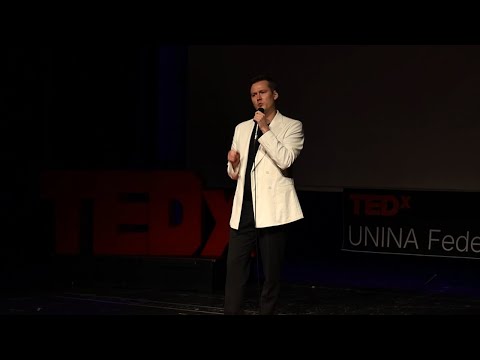
Does space belong to everyone? | Mikko Puumala | TEDxUNINA Federico II
TEDx Talks· 2025-09-16 15:16
Space Resource Management & Regulation - The current international space legislation, particularly the Outer Space Treaty of 1967, is vague and lacks specific regulations for different space environments, potentially leading to uncontrolled resource exploitation and geopolitical tensions [9][19][20] - The limited accessibility of valuable resources in near-term reachable locations like the Moon, Mars, and near-Earth asteroids makes them scarce and highly contested, increasing the risk of competition and conflict [14][15][16] - Unregulated activities in space, such as placing satellites, can lead to a hazardous accumulation of space debris, potentially triggering the Kessler syndrome and rendering orbits unusable [11][12] - The "founder effect" suggests that early actors in space will establish systems of property and resource management, making it difficult for future generations to alter these systems [23] - There is a golden opportunity to act now and create better rules for space activities before powerful parties develop vested interests, requiring ethical, societal, political, and cultural considerations alongside technological advancements [31][32][33] Environmental & Ethical Considerations - Space debris can stay in orbit for hundreds of years, posing a collision risk and potentially leading to a cascade effect of dangerous high-velocity objects [11] - The speaker advocates for coordinated action and better ground rules to ensure cooperation, deliberation, and preservation of value for future generations in space exploration [24] - The speaker emphasizes the importance of raising awareness that space belongs to all humankind to ensure everyone has an equal claim [26] International Cooperation & Future Trajectory - The Outer Space Treaty declares that space, including the Moon and other celestial bodies, belongs to everyone and is not subject to national appropriation [5][6] - The speaker draws a parallel between the current situation in space and climate change, highlighting the need for proactive regulation to avoid repeating past mistakes [29] - The speaker encourages envisioning the desired future of space to guide current actions and shape a sustainable path [25]