Space-based Computing

Search documents
After Beating TSLA in EVs, is China Eyeing Musk's SpaceX Ambitions?
ZACKS· 2026-01-30 14:06
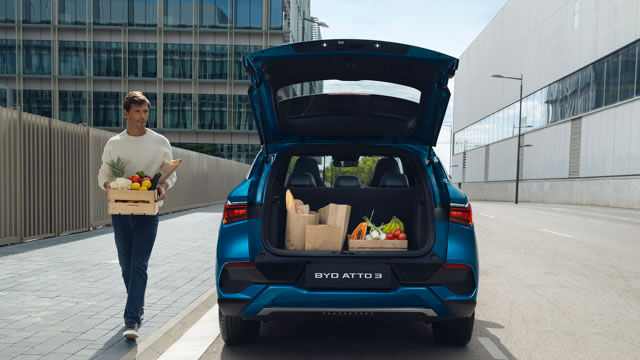
Core Insights - Tesla has lost its position as the world's largest electric vehicle (EV) seller to BYD, which sold approximately 2.25 million EVs in 2025, marking a 28% year-over-year increase, while Tesla faced declining sales and profits [2][9] - SpaceX is preparing for a significant IPO focused on deploying AI data centers in orbit, amidst increasing competition from China's space ambitions [5][6] Group 1: Electric Vehicle Market - BYD dethroned Tesla in 2025, selling 2.25 million electric vehicles, ending Tesla's two-year growth streak [2][9] - Tesla's challenges include an aging product lineup and increased competition from Chinese automakers, leading to two consecutive years of declining sales and profits [2][9] - BYD's success is attributed to its scale, pricing power, and strong domestic demand in China [2] Group 2: Space-Based AI Data Centers - China's CASC plans to launch space-based AI data centers over the next five years, aiming to process Earth-collected data in orbit [4][9] - SpaceX intends to deploy solar-powered AI data center satellites within the next two to three years, leveraging abundant solar energy and natural cooling in space [6][7] - Major technology companies, including Google, NVIDIA, and Blue Origin, are also exploring space-based data centers, indicating a competitive landscape [7][11] Group 3: Competitive Landscape in Space Technology - Google has initiated Project Suncatcher to test AI computing hardware in orbit, with plans to launch prototype satellites by early 2027 [8] - NVIDIA's Starcloud startup successfully demonstrated AI model training in space with its satellite carrying an NVIDIA H100 GPU [10] - Blue Origin is developing systems to support AI workloads in orbit, viewing orbital computing as a natural extension of the AI boom [11] Group 4: Future Outlook - The coming years, particularly around 2027, will be critical in determining the scalability of space-based data centers and the competitive dynamics between SpaceX and China's CASC [12][13]



Baron Capital rolls out five active ETFs, SpaceX becomes the firm's biggest investment
CNBC· 2025-12-15 21:07
Core Insights - Baron Capital has launched five actively managed exchange-traded funds (ETFs), leveraging its long-term investment success to meet growing demand for active strategies in the ETF market [1][2] Group 1: New ETF Launch - The newly launched ETFs include Baron First Principles ETF (RONB), Baron Global Durable Advantage ETF (BCGD), Baron SMID Cap ETF (BCSM), Baron Financials ETF (BCFN), and Baron Technology ETF (BCTK), which began trading on Monday [2] - Each ETF is designed to reflect the investment strategies that Baron Capital has successfully employed over decades in its mutual funds and private accounts [2] Group 2: Investment Focus - SpaceX has become Baron Capital's largest investment at approximately $10 billion, surpassing Tesla, with its expanding Starlink satellite network being a key factor in the long-term investment thesis [3] - The firm is optimistic about the potential of space-based data centers, suggesting that such infrastructure could significantly lower energy and cooling costs [3][4] - Baron Capital has also invested in xAI, another company founded by Elon Musk, which is expected to benefit from the growth of satellite networks and space-based computing for AI services [4] Group 3: Performance and Future Goals - Baron Capital reports that 98% of its assets have outperformed their benchmarks, with around 60% ranking in the top 5% of funds, indicating strong historical performance [4] - The Baron Partners Fund has been recognized as the top-performing U.S. fund since 2003 [4] - Since its inception in 1992 with $100 million in assets, the firm has generated approximately $57 billion in profits and aims to quintuple that amount over the next decade [5]