Spinal Cord Injury

Search documents
ONWARD Medical Announces First Participant Enrolled in Global Pivotal Study Evaluating ARC-IM System to Address Blood Pressure Instability After Spinal Cord Injury
Globenewswire· 2026-02-04 06:30
Core Viewpoint - ONWARD Medical N.V. has initiated the Empower BP study, a pivotal global trial to assess the safety and effectiveness of the ARC-IM® System for managing blood pressure instability in individuals with chronic spinal cord injury (SCI) [1][5]. Group 1: Study Overview - Empower BP is the first global pivotal study evaluating the implantable ARC-IM® System, involving approximately 20 leading neurorehabilitation and neurosurgical research centers across the US, Canada, France, Germany, Spain, and the UK [2][5]. - The study targets individuals with spinal cord injuries at levels C2-T6 and severities of AIS A-D, with the first participant enrolled at Craig Hospital in Denver, Colorado [2][5]. Group 2: Clinical Significance - The ARC-IM System aims to address unmet needs related to blood pressure instability after SCI, which is characterized by chronic orthostatic hypotension and episodes of autonomic dysreflexia [3][5]. - Among individuals with tetraplegia, 78% are diagnosed with orthostatic hypotension, yet only 28% receive treatment, and of those treated, 91% continue to experience symptoms such as dizziness and fatigue [3][5]. Group 3: Expected Outcomes - Previous clinical feasibility results published in Nature Medicine indicated that participants receiving ARC-IM Therapy experienced significant increases in blood pressure and reduced hypotensive symptoms, leading to improved quality of life and greater engagement in rehabilitation activities [3][4]. - Benefits observed included reduced fatigue, improved bowel management, and increased tolerance of upright postures, with participants able to reduce or discontinue traditional low blood pressure treatments [3][4]. Group 4: Company Background - ONWARD Medical is a leading neurotechnology company focused on developing therapies to restore movement, function, and independence for individuals with spinal cord injuries and other movement disabilities [4][6]. - The company has received 10 Breakthrough Device Designations from the FDA for its proprietary ARC Therapy, which is based on extensive scientific research and clinical studies [4].


The Potential of Regenerative Medicine | Stefano Sinicropi | TEDxMinneapolis
TEDx Talks· 2025-11-10 16:25
Main Argument - The body possesses innate self-healing capabilities that can be harnessed to treat various conditions [3][4][5] - Regenerative medicine, particularly stem cell therapies, offers a promising approach to enhance self-healing and improve patient outcomes [9][22] - Misinformation and the corporatization of healthcare hinder the broader adoption of regenerative therapies [16][17][31] Clinical Evidence & Statistics - A Mayo Clinic stem cell trial showed that 70% of patients with spinal cord injuries had measurable functional improvements [13] - A Yale stem cell study showed benefit in 12 out of 13 patients, with over half showing measurable motor improvements [13] - A 2023 meta-analysis of 68 patients showed that stem cell injections for disc disease resulted in a significant improvement in pain scale and a 12-point reduction on a standard disability index [26] - Globally, 1 billion people suffer from back and neck pain, the leading cause of disability worldwide [14] - In the US alone, 25 million people suffer from chronic daily pain, with spine conditions being a primary cause [14] - There are 18,000 new spinal cord injuries each year in the US [14] Call to Action - Challenge the status quo and break down silos in healthcare to provide patients with access to regenerative therapies [32] - Patients should become proactive in their health and inquire about available therapies [32] - Share the message about the body's self-healing power and consider donating to research [33][34]
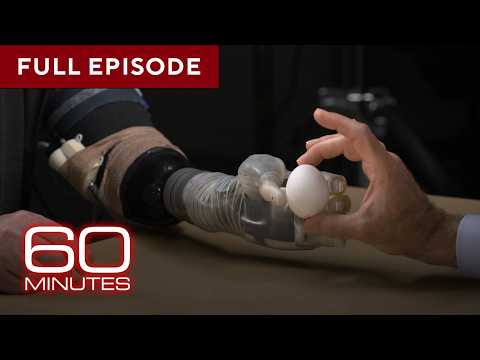
Reports on prosthetics and the "digital bridge" for paralyzed patients | 60 Minutes Full Episodes
60 Minutes· 2025-10-04 11:00
for those who've suffered a traumatic spinal cord injury and are paralyzed. There's rarely encouraging news, which is why what's happening in early clinical trials in a research lab in Loausanne, Switzerland, is so remarkable. A renowned French neuroscientist Gregoire Cortine and Swiss neurosurgeon Dr.. Joseen Block have implanted a small stimulation device on the spine of paralyzed patients helping them once again stand up and walk. What's even more surprising is their newest innovation which uses an impla ...