Stranded Cost

Search documents
How families could get stuck with higher electric bills if the AI data center boom goes bust
CNBC· 2025-12-03 16:49
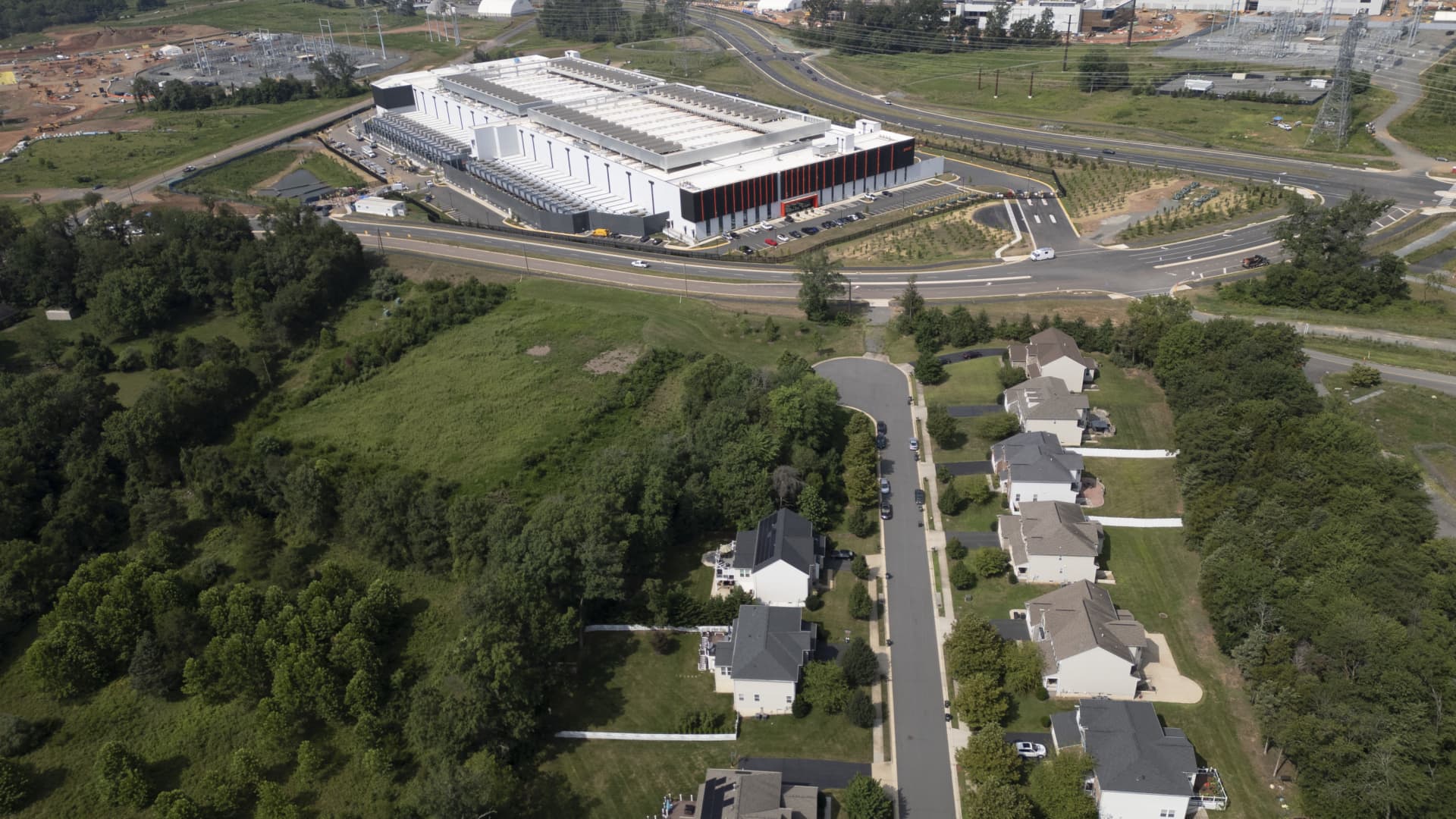
Core Insights - The construction of new data centers, driven by the demand for artificial intelligence, is leading to increased electricity prices and potential financial burdens on consumers if demand forecasts prove inaccurate [2][3][4] - A report indicates that consumers in the PJM Interconnection region will incur $16.6 billion in costs to secure future power supplies for data centers from 2025 to 2027, with $15 billion attributed to data center demand [3][4] - Concerns are rising among investors and analysts about the possibility of an AI-related bubble in data center investments, which could result in costly infrastructure that may not be fully utilized [3][12] Data Center Demand and Consumer Impact - The PJM Interconnection serves over 65 million people and is experiencing a significant increase in demand from data centers, with forecasts predicting an additional 30 gigawatts of demand by 2030, equivalent to the annual power consumption of over 24 million homes [4][9] - Residential electricity prices have surged in key states, with Illinois seeing a 20% increase, Ohio 12%, and Virginia 9% compared to the previous year, reflecting the rising costs associated with data center demand [6] - The costs of securing power for data centers are directly impacting consumer utility bills, as wholesale power costs fluctuate [7][8] Regulatory Responses and Market Dynamics - Stricter regulations are being implemented by utilities like American Electric Power (AEP) to mitigate risks associated with speculative data center projects, requiring data centers to pay for 85% of their claimed energy needs upfront [16][18] - Following the introduction of these rules, AEP reported a significant drop in data center connection requests, indicating that financial commitments are deterring speculative projects [18][19] - The potential for overbuilt electrical infrastructure poses a risk to consumers, who may end up covering stranded costs if demand does not materialize as expected [14][15] Future Considerations - The reliability of the electrical grid may be compromised as large data center projects advance, necessitating substantial infrastructure investments [20] - Recommendations have been made for PJM to reject data center connection requests if sufficient power is not available, encouraging data centers to either wait for capacity or invest in their own generation [21][22] - The ongoing costs borne by consumers due to data center demand are expected to continue rising unless demand forecasts are clarified and managed effectively [23]