Strategic Allocation

Search documents
You’ll be Thrown Off the Horse before You Ever Harvest that Good Return.
Investment Moats· 2026-01-25 23:25
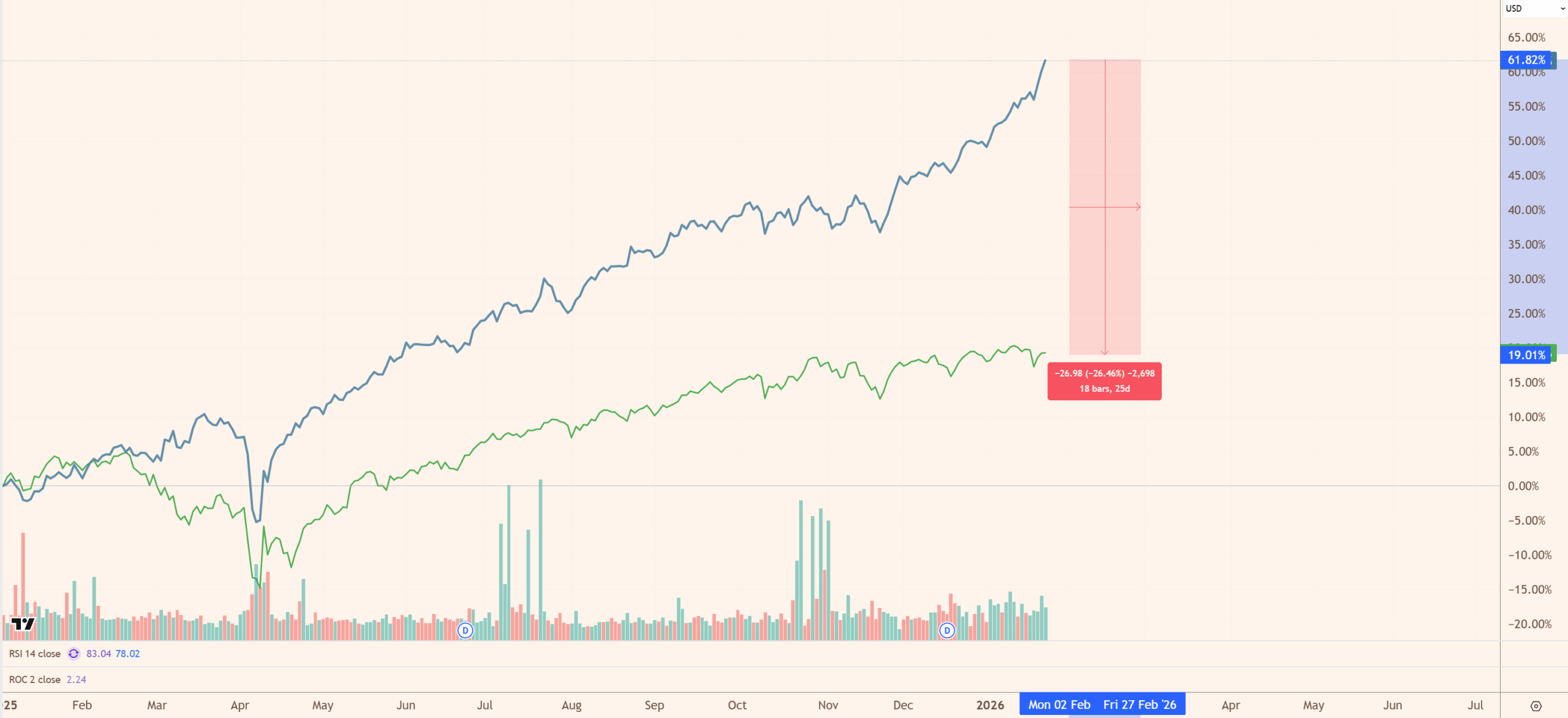
Core Insights - The article emphasizes the importance of understanding market trends over various time frames, including short-term (1 year), medium-term (5 years), and long-term (20 years) to derive valuable lessons from market behavior [1] - It highlights the challenge of staying invested in a systematic portfolio strategy, particularly when market conditions appear unfavorable [4][20] - The article warns against common cognitive biases such as recency bias and sunk cost fallacy that can mislead investors [3] Investment Strategy - Advising clients in wealth management involves imparting timeless lessons that can be applied consistently over time [2] - Investors often focus on recent performance data, which can lead to misguided investment decisions, neglecting the potential volatility and challenges of the investment journey [5][6] - The performance comparison between the S&P 500 ETF (SPY) and the Avantis International Small Cap Value ETF (AVDV) illustrates the importance of understanding different investment strategies and their long-term potential [7][10] Performance Analysis - Over a 5-year period, the cumulative performance difference between SPY and AVDV was 28%, equating to an annualized difference of 5% [10] - The article discusses the psychological challenges investors face when their investments underperform compared to benchmarks, leading to potential premature selling [11][15] - AVDV's performance since inception in 2020 shows that systematic strategies can yield significant returns despite initial underperformance [16][20] Market Behavior - The article notes that sectors and strategies can have vastly different paths to similar long-term returns, emphasizing the need for patience and a long-term perspective [25] - Investors must mentally prepare for periods of underperformance and the psychological toll it can take on their investment decisions [22][25] - The discussion on sector performance, particularly in materials and technology, highlights how market perceptions can shift over time, affecting investment strategies [19]