
Tech Investment

Search documents
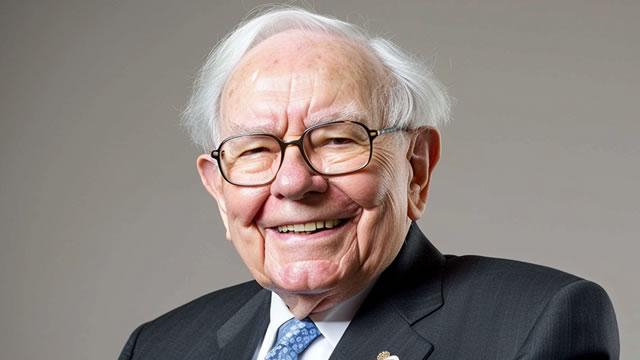
Why Berkshire Hathaway's Stake in Alphabet Could Be Just the Start of Many More Tech Moves to Come
The Motley Fool· 2025-11-23 06:05
Core Viewpoint - Berkshire Hathaway has recently acquired nearly 18 million shares of Alphabet, marking a notable shift in its investment strategy, particularly in the tech sector, which CEO Warren Buffett has traditionally avoided [1][2][3]. Investment Strategy - Berkshire Hathaway has been primarily selling stocks throughout the year, resulting in a record cash balance, indicating a cautious investment approach by Buffett [1]. - The addition of Alphabet to the portfolio raises questions about the future direction of Berkshire's investments, especially with Buffett stepping down at the end of the year [2][7]. Company Insights - Alphabet is considered a prototypical Buffett stock due to its strong competitive advantages through popular assets like Google Search and YouTube, which align with Buffett's investment philosophy [4]. - Buffett has previously expressed regret for not investing in Alphabet sooner, acknowledging missed opportunities in the tech sector [5][6]. Management Transition - The investment in Alphabet may signal a willingness from incoming CEO Greg Abel to embrace tech stocks, suggesting a potential shift in Berkshire's investment strategy [7][9]. - While Berkshire has modest positions in tech stocks, the growing stake in Alphabet (1.7% of the portfolio) indicates a possible trend towards increasing tech investments [8]. Market Performance - Traditional holdings like Coca-Cola and Kraft Heinz have underperformed compared to the S&P 500 over the past five years, highlighting the need for a strategic shift towards faster-growing sectors like technology [10][11]. - A transition to tech stocks could enhance Berkshire's investment returns, especially as management changes may lead to a different mix of stocks in the portfolio [11].


QQQ considered best tech ETF, but numbers say otherwise
Yahoo Finance· 2025-11-06 19:03
Core Viewpoint - The Invesco QQQ ETF, despite being the fifth-largest ETF globally with over $400 billion in assets, may not be the best option for tech exposure, as it does not effectively target technology companies [1][3]. Group 1: QQQ's Structure and Limitations - QQQ is often perceived as a tech ETF due to its inclusion of major tech stocks, but its investment objective is based on the Nasdaq 100, which includes the largest non-financial companies listed on the Nasdaq without specific investment criteria [3][4]. - The construction rules of the Nasdaq 100 Index prioritize promoting the exchange rather than providing a sound investment rationale, limiting the fund's opportunity set [5]. Group 2: Alternative Options - The Vanguard Information Technology ETF (VGT) is presented as a superior alternative, as it tracks the MSCI US IMI 25/50 Information Technology index, providing true tech exposure by investing in companies classified as tech by the Global Industry Classification Standard (GICS) [6]. - VGT includes significant tech stocks that are not present in QQQ, highlighting the limitations of QQQ in providing comprehensive tech exposure [7].
Invesco QQQ vs. Vanguard Information Technology ETF: Which Is Better for Tech Investors?
Yahoo Finance· 2025-10-19 16:05
Core Insights - The tech sector has been the most rewarding for investors over the past decade, with nine of the world's ten most valuable companies being tech firms, each with a market cap of at least $1.4 trillion as of October 15 [1] ETF Overview - Investing in tech-focused exchange-traded funds (ETFs) is a great way to capitalize on the tech sector's growth while minimizing risks associated with individual stocks [2] - Two popular tech ETFs are the Invesco QQQ Trust ETF (NASDAQ: QQQ) and the Vanguard Information Technology ETF (NYSEMKT: VGT) [3] ETF Focus - QQQ mirrors the Nasdaq-100, which includes the largest 100 non-financial companies on the Nasdaq stock exchange, with over 60% of the fund allocated to the tech sector [4] - VGT is a pure-tech ETF containing 314 companies solely from the information technology sector, including large-cap, mid-cap, and small-cap stocks [5] Top Holdings - Both QQQ and VGT share Nvidia, Microsoft, Apple, and Broadcom as their top four holdings, with Nvidia making up 9.56% of QQQ and 17.16% of VGT [5][6] - VGT has outperformed QQQ over the past decade by over 140%, but its high concentration in a few stocks makes it riskier for long-term investment compared to QQQ [6] Performance Comparison - Over the past decade, VGT has returned 616% while QQQ has returned 468%, translating to average annual returns of 21.8% for VGT and 19% for QQQ [8] - VGT's outperformance has been particularly notable in the past year, driven by significant growth from Nvidia [9] Cost Efficiency - VGT is cheaper than QQQ, with an expense ratio of 0.09% compared to QQQ's 0.2%, which can lead to substantial savings over time for investors [10]