U.S. foreign policy

Search documents
X @Nick Szabo
Nick Szabo· 2026-03-17 05:30
RT Nick Szabo (@NickSzabo4)U.S. foreign policy people are so insane and anti-American they don't even expect the obvious. ...
X @Nick Szabo
Nick Szabo· 2026-03-16 19:49
RT Nick Szabo (@NickSzabo4)You are explaining why U.S. foreign policy is insane: because it is tied to fanatical ethnic and cultural interests, not to actual normal American interests.I was explaining some of the specific consequences of that insanity, i.e. how upside-down our foreign policy is as a result of that insanity. ...
X @Nick Szabo
Nick Szabo· 2026-02-22 16:30
RT The Jason Jones Show (@JasonJonesVPP)“It would be fine if they took it all.”In his interview with Tucker, Huckabee fused Christian Zionist theology with U.S. foreign policy, defended sweeping biblical territorial claims, minimized documented civilian suffering of Gazans, and left little doubt that his loyalties lie more with an ideological vision of Israel than with the traditional restraints of American diplomacy.Read here 👉: https://t.co/j8svXMcLny ...
Silver Prices Keep Confounding Experts. I Won’t Be Surprised If They Hit $100 Soon.
Yahoo Finance· 2026-01-15 16:34
Core Insights - The recent surge in silver prices is considered one of the most remarkable market developments in the commodities sector, with prices reaching a record high of $53.765 in mid-October 2025 before experiencing a temporary decline [2][4] - The silver market is characterized by extreme volatility, with prices doubling in a short period, indicating a parabolic market behavior that defies traditional logic and technical indicators [4] Price Movements - Silver futures were trading at $36 an ounce in August 2025, achieving the $50 mark by November, showcasing a significant price increase [2] - After hitting a record high of $53.765 in mid-October, silver prices fell to a low of $45.51 in late October, reflecting the market's volatility [2] Market Drivers - Safe-haven demand is identified as the primary driver for the increase in silver and gold prices, influenced by aggressive U.S. foreign policy actions [5] - The uncertainty surrounding U.S. foreign policy is causing traders and investors to seek refuge in precious metals like silver and gold [5]
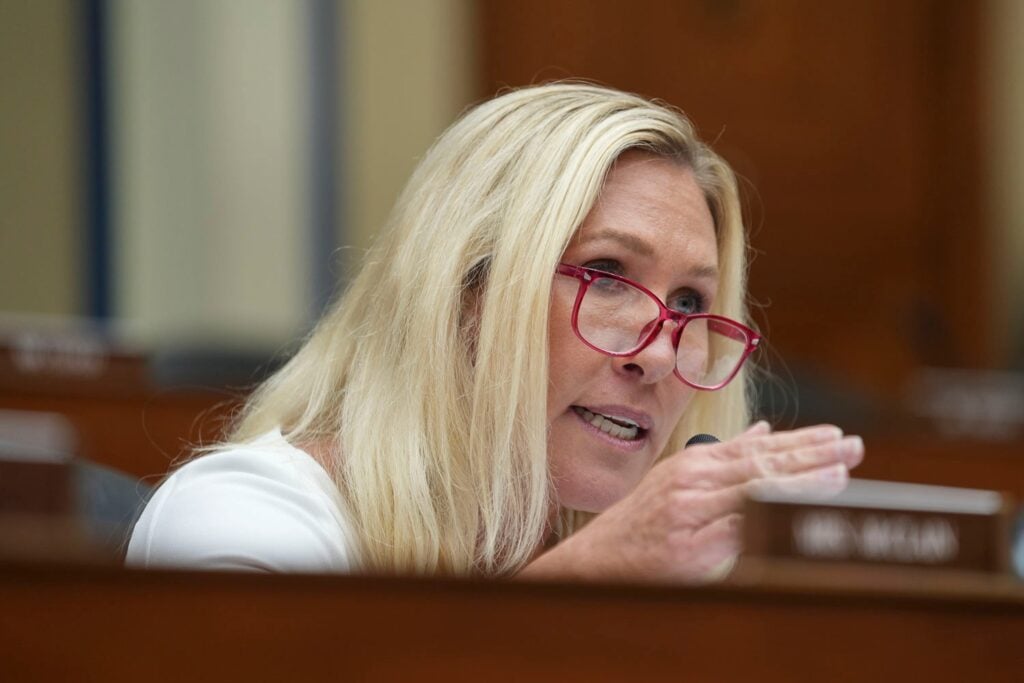
Marjorie Taylor Greene Slams Donald Trump's Strike on Venezuela
Benzinga· 2026-01-04 02:06
Core Viewpoint - Representative Marjorie Taylor Greene criticized President Trump's military strike against Venezuela, questioning its rationale and highlighting inconsistencies in the administration's approach to drug trafficking and narco-terrorism [1][5]. Group 1: Criticism of Military Action - Greene questioned why the Trump administration did not take action against Mexican cartels if the goal was to save American lives from drugs, emphasizing that fentanyl, responsible for over 70% of U.S. drug overdose deaths, comes from these cartels [2][3]. - She argued that the military action against Venezuela seemed more focused on controlling oil supplies rather than genuinely combating drug trafficking [4]. Group 2: Political Implications - Greene's comments reflect a growing divide within the Republican party regarding foreign policy and military intervention, suggesting a shift in priorities towards domestic issues [5]. - Her outspoken nature on these matters may continue to influence political discourse even as her congressional tenure concludes [5].

India now incurs higher U.S. tariffs than China. What does it say about Trump's foreign policy?
CNBC· 2025-11-03 08:02
Core Points - The strategic relationship between India and the U.S. has significantly deteriorated, with experts suggesting that rebuilding trust could take years [2] - U.S. tariffs on India have increased, with a 50% tariff imposed in August, including secondary duties of 25% on Russian oil purchases, contrasting with lower tariffs on China [6][7] - President Trump's approach towards India has shifted from valuing it as a strategic partner against China to a more transactional relationship [4][3] U.S.-India Relations - The U.S. has imposed higher tariffs on India than on China, with a notable 50% tariff and additional duties on oil imports [7] - Experts highlight that the relationship built over two decades has eroded due to various factors, including steep tariffs and visa fees [2] - The perception of India as a partner in balancing China has diminished under the current U.S. administration [3] U.S.-China Relations - Recent meetings between U.S. and Chinese leaders have led to a trade truce, reducing tariffs on Chinese goods from 20% to 10% on fentanyl-related products, resulting in an overall tariff rate of around 47% [6] - The establishment of military-to-military channels between the U.S. and China aims to deconflict and deescalate tensions [5] - The U.S. appears to be prioritizing its relationship with China over India, marking a significant shift in foreign policy [4]