Urban Oil Field

Search documents
Erschließung des „Urbanen Ölfelds": Den Wert von Kunststofffolienabfällen erschließen
Prnewswire· 2025-12-13 22:02
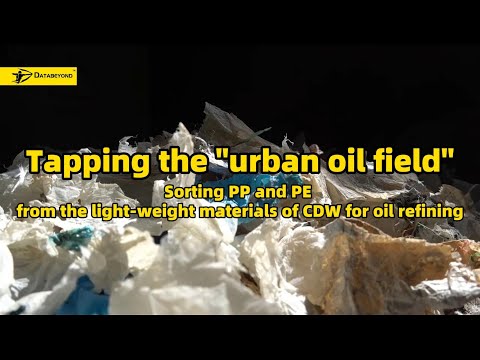
Core Insights - The article discusses the potential of converting discarded plastic films into fuel, highlighting the significant presence of PP (polypropylene) and PE (polyethylene) films in construction and demolition waste, which constitute about 50% of the lightweight materials [1][2] - Traditional sorting technologies have failed to achieve high-purity separation of PP/PE films, leaving this energy potential untapped for years [1][2] Group 1: Urban Oil Fields - The concept of "urban oil fields" refers to the vast amounts of PP/PE films found in various waste streams, including construction debris and municipal waste, which can be harnessed for energy [1][2] - Efficient sorting technology is crucial for accessing these urban oil fields, as lightweight materials often contain complex contaminants like PVC and PET films that hinder the pyrolysis process [2][3] Group 2: Sorting Technology - DATABEYOND's FASTSORT-FILM, an AI hyperspectral optical sorter, can extract PP/PE films with over 95% accuracy from complex lightweight materials, effectively removing PVC and PET films along with other impurities [3][4] - This advanced sorting technology ensures the purity of the feedstock for subsequent pyrolysis, eliminating contaminants at the source [3][4] Group 3: Conversion Process - High-purity PP/PE films can be converted into pyrolysis oil through anaerobic thermal cracking, with each ton of PP/PE film yielding approximately 0.6 to 0.75 tons of oil [4] - The refined oil can be transformed into fuel components such as off-spec diesel and gasoline, contributing to a sustainable waste-to-energy cycle and significantly reducing carbon emissions [4] Group 4: Environmental Impact - The development of urban oil fields represents a green opportunity, with DATABEYOND's sorting technology facilitating breakthroughs in the global energy transition and enhancing environmental protection [5] - By leveraging innovations, the company aims to invigorate the circular economy and promote sustainable development through collaboration and innovative solutions [5]

Exploiter le « champ pétrolifère urbain » : Valoriser les déchets de films plastiques
Prnewswire· 2025-12-13 21:58
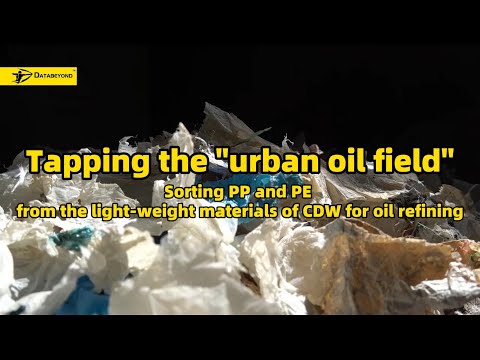
Core Insights - The article discusses the transformation of plastic waste, specifically PP and PE films, into valuable fuel through advanced sorting technology and pyrolysis processes [1][4][5] Group 1: Industry Overview - Hundreds of millions of tons of lightweight materials, primarily PP and PE films, are found in construction and demolition waste, constituting about 50% of this waste [1] - Traditional sorting technologies fail to achieve high-purity separation of PP/PE films, leaving significant energy potential untapped for years [1][2] Group 2: Technological Advancements - The key to exploiting these "urban oil fields" lies in effective sorting technology, which can handle complex impurities such as PVC and PET films, wood chips, plastic waste, paper, and sand [2] - DATABEYOND's FASTSORT-FILM utilizes advanced AI databases and hyperspectral recognition to sort PP/PE films with over 95% accuracy, effectively removing harmful impurities [3] Group 3: Conversion Process - High-purity PP/PE films can be converted into pyrolysis oil through anaerobic thermal cracking, yielding 0.6 to 0.75 tons of oil per ton of film [4] - This process supports a sustainable cycle of waste-to-energy conversion and significantly reduces carbon emissions [4] Group 4: Environmental Impact and Opportunities - The concept of "urban oil fields" represents a green opportunity, with DATABEYOND's intelligent sorting technology facilitating breakthroughs in global energy transition and environmental protection [5] - By leveraging innovation, the industry aims to enhance the circular economy and promote sustainable development through collaboration and advanced solutions [5]