Waste management

Search documents
Amentum-led Joint Venture selected for $112 Million Clean-up at Four European Nuclear Research Sites
Businesswire· 2026-03-10 08:00
Core Insights - Amentum-led joint venture has been awarded a $112 million contract for decommissioning and waste management at four European nuclear research sites [1] - The contract aims to accelerate cleanup efforts at sites in Ispra (Italy), Karlsruhe (Germany), Geel (Belgium), and Petten (The Netherlands) [1] - Amentum's experience and strong ties with regulatory authorities in the EU were key factors in securing the contract [1] Contract Details - The contract is valued at €95.7 million and is awarded by the European Commission Joint Research Centre (JRC) [1] - The scope includes decommissioning solutions for research reactors, hot cells, accelerators, laboratories, and other infrastructure handling radioactive substances [1] - The contract has a duration of two years with three potential two-year extensions [1] Company Background - Amentum is a global leader in advanced engineering and technology solutions, with approximately 50,000 employees across more than 70 countries [1] - The company has a significant presence in Europe, with over 6,500 employees involved in nuclear projects in the UK, France, Poland, Slovakia, and the Netherlands [1] - Amentum's key nuclear energy programs include Hinkley Point C, Sizewell C, and Rolls-Royce SMR in the UK, as well as ITER in France [1]



Plastic's Crime Against Nature | Pam Longobardi | TEDxGreatPacificGarbagePatch
TEDx Talks· 2025-12-11 16:06
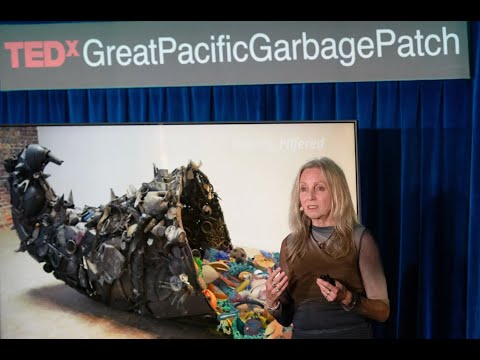
Environmental Impact of Plastic Pollution - Plastic pollution is a pervasive issue, with plastic waste accumulating in the ocean and being deposited on beaches [2] - The accumulation of plastic waste in the ocean is described as a "crime of greed, negligence, waste, and overconsumption" [3] - Plastic materials are entering the food chain, with creatures ingesting plastic debris, including microplastics [13][14] - Plastic debris can act as "food impostors," with plastic nerdles visually resembling fish eggs, potentially harming marine life [15] Artistic and Activist Response - The artist creates "monuments" from plastic waste to highlight the issue of pollution and its impact [4][6] - The artist views plastic waste as a "zombie material that never dies," emphasizing its persistence in the environment [4] - The artist sees plastic materials as "messages from the ocean," urging people to pay attention to the environmental crisis [19][22] Call to Action - Cleaning up plastic is an act of care and reparation, but it is not sufficient to address the problem [16][17] - The industry needs to hold producers responsible for the plastic waste they generate [18] - The industry needs to reduce plastic consumption and remove plastic from the environment to protect the planet [23]
Turn Off the Plastic Tap to Break Free From Plastic | Melissa Aguayo | TEDxGreatPacificGarbagePatch
TEDx Talks· 2025-12-11 16:05
Environmental Impact of Plastics - 99% of plastic is made from fossil fuels, contributing to climate crisis as oil and gas companies increase plastic production [3] - By 2050, the amount of plastic could double or triple, exacerbating the climate crisis [4] - Over 4,200 out of 16,000 chemicals associated with plastic production pose significant hazards to human and environmental health [4][5] - Microplastics are found in remote environments, water, air, and even human organs, including the placenta and testicles [5][6] - The average human brain contains the equivalent of one plastic spoon's worth of microplastics [7] Plastic Production and Usage - 40% of all plastic produced today is used for packaging, which are often used briefly but last forever [8] - The industry is flooding markets with plastics and concealing the risks associated with it [4] Solutions and Alternatives - Reducing single-use plastics through policy reforms, brand audits, corporate accountability, and zero waste initiatives are crucial [11] - Investing in reuse systems, like the milkman model, can restore health and community connections [12] - Ending the unchecked production of plastics is essential to protect the environment and human health [12][13] Environmental Justice - Communities near production sites, landfills, and incinerators, often black, brown, indigenous, and rural communities, are disproportionately affected by plastic pollution [6]

Tribal wisdom inspires sustainable art practices | Chetan Raut | TEDxGIBS
TEDx Talks· 2025-11-24 17:19
[संगीत] हर एक वेस्ट पीस की एक कहानी होती है। एक उद्देश्य था, एक लाइफ थी और शायद इसीलिए उसे बेहतर बनने का एक मौका मिल सकता है। आपको भी याद होगा आपका पहला मोबाइल, पहला कंप्यूटर। मेरी कहानी शुरू होती है। मेरा नाम है चेतन राउत और मेरी कहानी शुरू होती है महाराष्ट्र के एक छोटे से आदिवासी गांव से वारली समाज से। यहां पर जीवन बहुत सिंपल था। यहां पर दीवारों पर चित्र बनते थे और सिंपलीसिटी लाइफ स्टाइल हमारी पहचान थी। यहां पे लोग एक दूसरे के साथ जीते थे। एक एक दूसरे के साथ डांस करते थे। आपने वारली नृत्य देखा रहेगा। अपने ...

How Small Actions Create Big Environmental Change | Shashank Prabhu | TEDxAhlconIntlSchool
TEDx Talks· 2025-11-21 16:12
Environmental Issues - Waste is a significant problem, with examples cited from Dharam Shala, Manali, and Delhi (Ghazipur), highlighting widespread waste accumulation in mountainous regions and urban areas [2][3] - Improper waste disposal harms animals, as they ingest plastic waste left behind by people in forests [4] - The Ghazipur dumpsite contained 85 million kgs of waste and continues to grow [7] Waste Management Practices - The common waste management approach involves waste collectors, but the final destination and processing of waste are often unknown to individuals [5][6] - Segregation of waste into wet and dry categories is crucial for proper processing, as mixed waste often ends up being dumped [14] Individual Actions & Solutions - Segregating waste, carrying personal water bottles and bags, and using dustbins in cars are small actions that can lead to significant positive change [13][14][15][16][17][18][19] - Avoiding disposable items like plastic water bottles, utensils, and straws in favor of reusable alternatives can reduce waste generation [18][19] Community & Organizational Efforts - Waste Warriors organization works to develop waste management systems in the Indian Himalayan region [8] - Deepak, a young change maker, collects and sells waste from his village, using the proceeds to raise awareness about waste management [9][10][11] Responsibility & Collaboration - Waste management is a shared responsibility, not just an individual or governmental concern, requiring collective action [20]

Healing our planet to heal ourselves: A bank’s role in a world of plastic | Chow Sheng Wai | TEDxIMU
TEDx Talks· 2025-11-18 17:25
Environmental Impact of Waste - Malaysia generates approximately 39,000 tons of waste daily, with each person contributing 1 to 2 kg daily [6] - Malaysia contributes about 11 million tons of post-consumer plastics waste annually [7] - Only over 30% of waste in Malaysia is recycled [10] - The bank's carbon equivalent operations generate about 25,000 tons annually [20] Bank Initiatives for Sustainability - The bank is deploying resources to create a circular economy, moving away from a linear "take-make-use-waste" model [12][13] - The bank collected 26,000 plastic bottle caps in one month through a campaign with the Sea Monkey Project, upcycling them into name card holders for new employees [14][17] - The bank has recycled approximately 185,000 kg of waste [19] - The bank's recycling efforts have resulted in a carbon avoidance of approximately 200 tons of TCO2 equivalent [20] - The bank launched a waste circularity program at PPR flats in Tamulia, promoting source separation and community-led waste treatment, including composting [21][22][23] Call to Action for the Medical Industry - The medical industry widely uses single-use plastics, contributing to significant waste generation [26][27] - Future medical professionals are urged to think about how to heal more sustainably, advocating for a systemic shift in hospital operations [28][29] - Suggestions include reducing plastic use at the source by championing reusable equipment, improving recycling infrastructure for medical-grade plastics, and demanding manufacturers focus on design for recyclability [30][31][32] - Future medical professionals should advocate for changes from purchasing to the operating table, educating patients on the link between environmental and human health [34][35]

Three Generations, One Green Vision | Sharada Phadke, Mohini Acharya & Vaman Acharya | TEDxABBS
TEDx Talks· 2025-11-11 16:30
Waste Management Challenges in India - India faces a significant garbage problem, with litter on roads, plastic in rivers, and trash in parks, indicating a hidden and growing issue [2] - Composting, while seemingly simple, requires dedicated effort, proper space, and maintenance at both household and industrial scales [9][10] - Industrial-scale composting faces challenges such as land requirements, scientific processing to avoid greenhouse gas emissions, and ensuring the compost is nutritious and economically viable [10][11] - Waste management should be viewed as a responsibility rather than a source of wealth, requiring understanding from citizens and policymakers [12] Government's Role in Waste Management - The government needs a clear policy for waste management, covering collection, sweeping, segregation, transportation, and disposal, while avoiding monopolies [14] - Clear laws are needed for composting, landfills, bricketting, recycling, biogas, and BSF (Black Soldier Fly) processes [15] - Officers handling waste management should possess good knowledge of environmental issues and the consequences involved [16][17] - Processors in waste management should be supported with proper lands and laws that environmentally aware people can handle [17] Community and Individual Responsibility - Individuals can contribute by not littering, separating wet and dry waste, and reducing unnecessary consumption [5][6] - Segregating wet and dry waste is crucial for effective composting and recycling [5] - Reducing consumption is essential before considering recycling or reuse [6] - Collective effort and conversations about waste management can contribute to a garbage-free India [18]

The One Bin Revolution | Ayaan Tuli | TEDxBasant Nagar
TEDx Talks· 2025-09-22 16:46
Urban Sanitation Challenges in India - The current solutions are likened to fixing a leaking bucket by adding more water instead of plugging the hole, indicating ineffective problem-solving [2] - There's a perceived disconnect between the government and citizens regarding responsibility for cleanliness, leading to inaction and complaints [4] - Open garbage contributes to 30% of vector-borne diseases, according to the World Health Organization [9] - Stray dogs are present on the streets due to rats breeding on garbage, hindering safe exploration of markets [11] Proposed Solution: Standardized Waste Disposal - The proposal is to implement one large compulsory bin outside every home or shop [5] - Studies by the World Bank show that littering drops by 70% when there's a visible container 5 meters away from the source [6] - A predictable waste disposal system would facilitate efficient waste collection by municipal trucks [7] - Standardized containers, similar to those used in global trade, can bring speed and efficiency to waste management [7] Potential Benefits of Improved Sanitation - Clear surroundings can lead to more walkable and photogenic streets, attracting more tourists [8] - Eliminating open garbage through closed bins can significantly reduce vector-borne diseases [9] - Making the bin the responsibility of the household or shop can improve the efficiency of municipal trucks and overall cleanliness [10]

Writing the Future: Sustainability in Our Laws | Catherine Blakespear | TEDxEncinitas Blvd
TEDx Talks· 2025-07-28 15:18
[Music] I'd like you each to put your hands out in front of you, palms facing down, and take a look at the veins in your hands. Your circulatory system is transporting oxygen and nutrients to all parts of your body and it's also transporting microplastics. This is microplastics in your blood and in many ways this is horrifying.We think about the public health effects that we will see. Long-term studies are underway to determine what is the effect on human health. But initial studies are dire.There are conne ...
Soil: A Lagacy to Preserve for the Future | Rouzbeh Salehabadi | TEDxUniversityofTehran
TEDx Talks· 2025-07-16 15:37
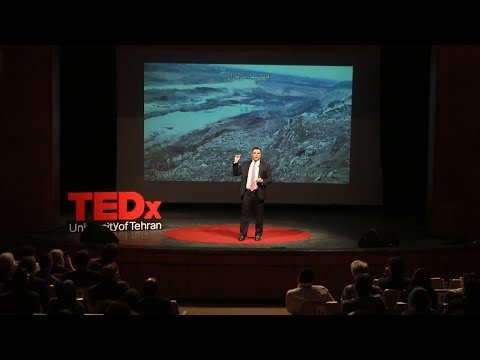
Environmental Issues in Iran - Iran accounts for 8% of global soil erosion, despite comprising only 1% of the Earth's land area [2] - The country experiences an annual soil erosion rate of 165 tons per hectare, approximately 7 times the global average [2] - The average land subsidence rate in Iran is 15 centimeters per year, which is 5 times the global average [2] - 49% of the Iranian population is currently affected by land subsidence [2] - Iran produces 58,000 tons of waste daily, with 48,000 tons originating from urban areas [2] Waste Management Practices - Only 3% of waste in Iran is incinerated, 5% is recycled, and 147% is used for compost production, while 80% is landfilled [2] - Iran ranks 120th globally in sustainable waste management, managing only 198% of its waste according to global standards [3] - 70% of household waste in Iran is organic, compared to 10% in the United States [3] Potential Solutions and Perspectives - The industry should shift its perspective on soil from a problem to be solved to a question to be lived with [4] - Proper landfill site selection and engineering design are essential, including leachate management and gas capture for energy production [3] - Viewing inaction as a choice, emphasizing the need for awareness and responsibility in environmental decisions [4]