Storage

Search documents
打破传统存储器性能和容量瓶颈 华为发布AI固态硬盘
Mei Ri Jing Ji Xin Wen· 2025-08-27 14:21
Core Viewpoint - Huawei has launched a new high-end SSD series optimized for AI workloads, addressing the increasing data demands and performance limitations of traditional SSDs in AI applications [1][2]. Group 1: Product Launch and Features - The new SSD series includes three types: OceanDisk EX (extreme performance), SP (high performance), and LC (large capacity), catering to different AI application scenarios [2]. - Huawei aims to break the performance and capacity bottlenecks of existing SSDs, emphasizing high performance and large capacity as key differentiators [2]. Group 2: Market Context and Competition - The global SSD market is currently dominated by overseas manufacturers, with the top five brands being Samsung, SK Hynix, Micron, Kioxia, and SanDisk as of Q1 2025 [2]. - Domestic manufacturers like Huawei are increasing their SSD investments to capitalize on new AI opportunities, as the performance bottleneck in systems is shifting from CPU to SSD [2]. Group 3: Technological Innovations - Huawei has developed a 32Die high-density stacking technology, enabling SSDs with capacities of 128TB and 245TB [3]. - The SpeedFlex technology allows for increased density and improved heat dissipation in SSDs, addressing challenges in compact environments [3]. - Future R&D directions include increasing single-drive capacity to 512TB and 1PB, enhancing performance, and offloading AI computing tasks to SSDs to improve data processing efficiency [3].
华为发力AI存储 布局高端SSD
2 1 Shi Ji Jing Ji Bao Dao· 2025-08-27 11:02
Core Viewpoint - Huawei has launched a new series of high-end SSDs, the Huawei OceanDisk EX/SP/LC, aimed at overcoming performance and capacity bottlenecks in AI storage, thereby enhancing AI training efficiency and inference experience [1][2]. Group 1: Product Features - The Huawei OceanDisk EX 560 (extreme performance disk) offers a random write performance of up to 1500K IOPS, with a write latency of less than 7µs and durability of 60 DWPD, suitable for AI training scenarios [2]. - The Huawei OceanDisk SP 560 (high-performance disk) emphasizes cost-effectiveness, achieving a random write performance of up to 600K IOPS, with a write latency of less than 7µs and durability of 1 DWPD, enhancing inference experience and reducing costs [3]. - The Huawei OceanDisk LC 560 (large capacity disk) has a maximum single-disk physical capacity of 245TB and a read bandwidth of up to 14.7GB/s, aimed at improving data collection and preprocessing efficiency by 6.6 times [3]. Group 2: Market Trends - The global SSD market is expected to see significant growth, with IDC predicting that by 2025, global SSD shipment capacity will reach 805EB, accounting for 25% of total global storage [1]. - The shift from HDD to SSD is accelerating, with SSDs expected to account for 9%-10% of server storage solutions this year, and projected to reach 20% by 2028 due to AI server demand [5][6]. - The trend towards larger capacity SSDs is evident, with the main capacities shifting from 30TB to 60TB-120TB in AI servers, indicating a growing reliance on SSDs for AI training [6]. Group 3: Industry Collaboration and Innovation - Huawei has initiated the "AI SSD Innovation Alliance" in collaboration with various organizations to promote industry ecosystem collaboration and technological innovation in AI storage [4]. - The domestic storage industry is witnessing rapid advancements, with a shift towards SSD technology and increasing production capabilities, indicating a significant opportunity for growth in the sector [5][7].
以存代算,华为存储开创大模型训推新范式
NORTHEAST SECURITIES· 2025-08-18 10:12
Investment Rating - The report rates the industry as "Better than the Trend" [7] Core Insights - The report emphasizes the importance of storage in enhancing the training and inference efficiency of large models, highlighting that storage optimization can significantly reduce training time and improve inference performance [3][17] - The shift towards inference as the core growth driver for computing power is noted, with increasing demand for diverse and long-context tasks [3][30] - Huawei's "Storage as Computation" approach is presented as a systematic solution to optimize performance through hardware and software integration [4][51] Summary by Sections 1. Storage Enhancements for Large Model Training and Inference - Storage plays a critical role in reducing data loading and checkpoint recovery times, potentially shortening training durations by 30% [18][21] - Inference performance can be significantly improved, with "Storage as Computation" reducing the first token latency by 90% and expanding context windows by over 10 times [24][27] 2. Transition to Inference-Centric Models - The report notes a surge in inference demand, with predictions indicating that by 2027, inference computing power will account for 70% of total demand [30][31] - The complexity of inference tasks is increasing, necessitating advanced storage solutions to manage longer contexts and higher concurrency [36][37] 3. Huawei's Systematic Approach - Huawei's AI SSDs are designed to handle both hot and cold data, with innovations in storage technology aimed at enhancing performance and capacity [4][52] - The UCM unified memory data manager is highlighted as a key component in optimizing inference efficiency [52] 4. Related Investment Opportunities - The report identifies several companies as potential investment targets, including Huawei storage agents and suppliers, as well as those involved in advanced packaging and SSD controller chips [5][6][4]
ExponTech创始人曹羽中:传统存储已触及天花板,统一通用架构重构AI存储
Tai Mei Ti A P P· 2025-08-18 08:26
Core Insights - The evolution of large models is slowing down, indicating that many associated technologies are reaching the productization stage rather than mere incremental improvements [2] - The storage industry is facing a fundamental architectural overhaul rather than a gradual upgrade, as traditional storage arrays are becoming performance and scalability bottlenecks in the context of AI [2][3] - The AI storage sector is witnessing a surge in valuations for unicorns, with a market acceptance of the "unified storage layer + AI-native interface" approach [2] Industry Changes - Traditional storage arrays are becoming bottlenecks due to four core changes driven by AI: 1. The need for ultra-high performance driven by large model training, requiring storage systems to provide high bandwidth and concurrency [3] 2. Efficiency optimization during the inference phase, necessitating a unified management of fragmented data [3][4] 3. Data control and security concerns, as enterprises are reluctant to share core data with public models [5] 4. Limitations of traditional architectures, including isolated designs and inadequate adaptation to new hardware environments [5] Ideal Storage System Characteristics - An ideal AI-era storage system should feature: 1. A unified data platform that simplifies management and avoids complex data migrations [6] 2. A flat architecture that utilizes a single unified storage layer adaptable to various business needs [6] 3. Support for new AI-native interfaces alongside traditional storage interfaces [8] ExponTech's WADP Platform - ExponTech has launched the WADP (WiDE AI Data Platform) to address core pain points in AI applications, focusing on efficient integration of storage and management of vast multi-source data [6][7] - The WADP is built on a self-developed distributed storage engine and metadata engine, capable of managing trillions of files and achieving high performance metrics [8] - The platform aims to modernize traditional storage arrays and provide a future-proof AI data infrastructure for enterprises [7][8]


Silicon Motion Showcases MonTitan™ SM8366 in Core to Edge AI Server Applications at FMS 2025
Prnewswire· 2025-08-05 13:00
Core Insights - Silicon Motion Technology Corporation is showcasing its MonTitan™ SM8366 PCIe Gen5 SSD controller solutions at the Future of Memory and Storage (FMS) 2025 event, highlighting its commitment to advanced storage solutions for AI applications [1][4] - The collaboration with VAST Data and Innodisk emphasizes the integration of high-capacity SSDs into AI infrastructure, enhancing performance and scalability for data-intensive workloads [2][3] Company Developments - Silicon Motion is demonstrating its MonTitan™ SM8366 controller-based SSDs, including the Unigen Cheetah High Capacity 128TB QLC E1.L SSD and 3.2TB SLC U.2 SSD, showcasing efficient storage solutions for AI applications [1][2] - The company is also presenting its collaboration with Innodisk on an 8TB E1.S MonTitan™ based SSD, designed for high-performance edge computing environments [2][3] Industry Trends - The integration of SSD technology with disaggregated storage architectures, such as VAST Data's Ceres V2, is aimed at meeting the growing demands of AI and data-intensive workloads [2] - Silicon Motion's portfolio includes a wide range of storage solutions for various AI-driven applications, including gaming consoles, smartphones, robotics, and automotive systems, indicating a broad market reach [3]



江波龙(301308) - 2025年7月8日投资者关系活动记录表
2025-07-10 10:06
Group 1: Competitive Advantages in Enterprise Storage - The company is one of the few A-share listed companies that officially discloses specific enterprise storage product performance, including eSSD and RDIMM [3] - In Q1 2025, the revenue from enterprise storage products reached 319 million CNY, representing a year-on-year growth of over 200% [3] - The company has gained recognition from various well-known clients across different industries, including large internet companies and telecom operators, showcasing the adaptability and reliability of its products [3] Group 2: Impact of TCM Model on Revenue and Profitability - The company has partnered with SanDisk to leverage its strengths in main control chip development and packaging, aiming to launch customized high-quality UFS products for the mobile and IoT markets [4] - The UFS 4.1 product, featuring the company's self-developed main control chip, achieves sequential read/write speeds of 4350MB/s and 4200MB/s, and random read/write speeds of 630K IOPS and 750K IOPS, outperforming mainstream market products [4] - The TCM model is expected to enhance visibility in supply and demand, reduce price volatility impacts, and create continuous value through core capabilities [5] Group 3: Future Development of Self-Developed Main Control Chips - The company has launched three main control chips for eMMC, SD cards, and automotive-grade USB products, with cumulative applications exceeding 30 million units [5] - The first batch of UFS self-developed main control chips has been successfully taped out, indicating progress in high-end product development [5] - The company anticipates significant growth in the application scale of self-developed main control chips throughout 2025, while maintaining long-term collaborations with third-party chip manufacturers to diversify its product offerings [5]
Ceph存储效能飙升20%+!忆联PCIe5.0 ESSD智能多流技术攻克“隐形损耗”
Jin Tou Wang· 2025-06-12 00:10
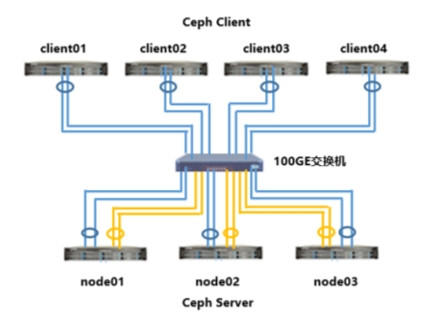
Core Insights - Distributed storage is essential for enterprises to build efficient and resilient data foundations to meet large-scale data storage and application needs [1] - Ceph is a leading open-source distributed storage solution favored by various industries, including telecommunications, finance, and top internet companies due to its high scalability, multi-protocol support, and mature ecosystem [1] Advantages of Yilian Ceph Distributed Storage Solution - Utilizes PCIe 5.0 ESSD, achieving data throughput efficiency that is double that of the previous generation [1] - Innovative intelligent multi-stream technology adapts to Ceph's data distribution characteristics, outperforming mainstream competitors by up to 3.15% [1] - Effectively suppresses write amplification (WAF) by 20%-32% compared to mainstream competitors [1] - Extends SSD lifespan by over 20%, providing a storage infrastructure with ultra-low latency and high consistency for cloud-native environments [1] Challenges of Ceph Distributed Storage - Ceph faces challenges in distributed storage scenarios, including multi-replica data consistency, network latency, and storage medium performance bottlenecks, which can exacerbate write amplification and affect SSD lifespan and system stability [1] Performance Testing and Results - Performance tests showed that with a queue depth (QD) of 32, UH812a achieved random read IOPS of over 1.755 million and random write IOPS of over 190,000, with latencies of 1.1 milliseconds and 9.9 milliseconds, respectively [10] - For sequential read performance, at a QD of 64, UH812a exceeded 56GB/s bandwidth with a latency of 8.85 milliseconds, while sequential write bandwidth surpassed 15.3GB/s with a latency of 32.88 milliseconds, outperforming competitors by 3.15% [13] Write Amplification Factor (WAF) Optimization - UH812a achieved an average WAF of 1.78, which is 25% lower than competitor A, 32% lower than competitor B, and 20% lower than competitor C [16] - The reduction in WAF is expected to extend the effective lifespan of UH812a by over 20% [18] Technical Advantages of Yilian UH812a/UH832a - The intelligent multi-stream technology enables dynamic hot and cold data classification, achieving a low WAF of 1.78, significantly extending SSD lifespan and providing reliable storage for high-load enterprise scenarios [20] - Performance consistency is maintained in mixed load and multi-replica deployment scenarios, ensuring compliance with business service level agreements (SLAs) [21] - High reliability is achieved through a multi-layer data protection system that integrates distributed storage replica strategies and end-to-end data integrity protection [22] Customer Value Across Industries - In telecommunications, the solution enhances storage efficiency and reduces costs, with a lifespan increase of over 20% for ESSD [23] - For leading internet companies, performance consistency ensures stable latency and bandwidth, maintaining high-quality user experiences [23] - In the financial sector, the multi-layer data protection system ensures data security and compliance, reducing risks of data breaches and losses [24] Conclusion - Yilian PCIe 5.0 ESSD demonstrates exceptional performance and stability in distributed storage scenarios, with WAF metrics significantly outperforming mainstream competitors, making it an ideal choice for building next-generation scalable distributed storage systems [24]
Pure Storage (PSTG) 2025 Conference Transcript
2025-06-03 21:00
Summary of Pure Storage (PSTG) 2025 Conference Company Overview - **Company**: Pure Storage (PSTG) - **Event**: BFA's Global Tech Conference - **Date**: June 03, 2025 Key Industry Insights - **Industry**: Enterprise Storage - **Market Size**: The enterprise storage market is approximately $50 billion, with Pure Storage currently holding over $3 billion in revenue, indicating a significant growth opportunity of around $47 billion to $57 billion [12][13]. Core Points and Arguments 1. **Macro Environment Uncertainty**: The macroeconomic and geopolitical landscape is highly uncertain, affecting customer conversations and projections for the second half of the year [3][4]. 2. **AI's Impact on Storage**: AI is expected to transform the storage industry, with a shift in focus from software to data. Pure Storage's new product, FlashBlade Exa, is designed for high-performance environments, particularly for AI applications [5][6][10]. 3. **Enterprise vs. Hyperscale Opportunities**: While AI-related storage is currently a small segment (estimated at $2 billion), it is expected to grow. However, the larger opportunity lies in the enterprise environment, which may not require specialized storage [12][13]. 4. **Hyperscale Market Potential**: The top five hyperscalers account for 60-70% of the total hard disk market, representing a significant opportunity for Pure Storage. The company has secured a design win with Meta, aiming to ship 1-2 exabytes in the near term [15][16][17]. 5. **Total Cost of Ownership (TCO)**: Pure Storage emphasizes its competitive TCO compared to hard disk drives (HDDs), highlighting advantages in density, performance, and lower failure rates [25][32][34]. 6. **NAND Supply Chain Management**: The company is working closely with major suppliers (Micron, Kioxia, Hynix) to ensure adequate NAND supply for future growth, despite the ramp-up period required [36][37]. 7. **Investment Strategy**: Pure Storage is currently in an investment phase, focusing on R&D and market penetration, which may compress margins temporarily. The company aims to resume margin expansion in the following year [41][42]. 8. **Tariff Uncertainty**: Ongoing tariff changes create additional uncertainty in the market, but Pure Storage has a flexible supply chain to manage potential impacts [44][45]. Additional Important Insights - **Product Pricing Strategy**: The lower gross margins on the E Series product are part of a strategy to penetrate lower-tier storage markets aggressively [51][52]. - **Future Growth Confidence**: The introduction of PureFusion allows customers to manage their storage as a cloud, potentially creating a network effect in enterprise storage [56]. This summary encapsulates the key points discussed during the conference, providing insights into Pure Storage's strategic positioning and market opportunities.

存储供应商,陷入困境
半导体行业观察· 2025-05-28 01:36
Core Viewpoint - The primary challenge for storage vendors is how to store data for artificial intelligence (AI) access, ensuring that AI models and agents can quickly retrieve this data through efficient data pipelines [1][3]. Group 1: AI Integration in Storage - AI is being utilized in storage management to enhance efficiency and is crucial for cybersecurity [1]. - Storage hardware and software vendors are adopting Nvidia GPUDirect support to expedite raw data transmission to GPUs, which has expanded from file support to include object storage via RDMA [3][4]. - Data management software can transition from storage array controllers to databases or data lakes, and can be hosted in public clouds like AWS, Azure, or GCP [3][4]. Group 2: Data Processing and Storage Solutions - Data must be identified, located, selected, and vectorized before being usable by large language models (LLMs), with vector storage options including specialized vector databases [4][5]. - Vendors like VAST Data are developing their own AI pipelines, contrasting with companies like Qumulo that focus on internal operations enhancement without GPUDirect support [5][10]. - Major storage vendors such as Cloudian, Dell, and IBM support GPUDirect for file and object storage, although support may vary across product lines [8][9]. Group 3: Advanced AI Capabilities - Nvidia's BasePOD and SuperPOD GPU server systems have been certified by several vendors, indicating a trend towards deeper integration with Nvidia's AI software [9][10]. - Companies like Hammerspace and VAST Data support Nvidia GPU server's key-value (KV) cache offloading, which is essential for optimizing AI model performance [11]. - Cloud file service providers are also exploring AI data pipelines to support GPU-based inference, although collaboration with Nvidia remains limited [12]. Group 4: Challenges in Data Accessibility - Backup and archive data pose challenges for AI model access, as many backup vendors are reluctant to provide API access to their stored data [13][14]. - Organizations with diverse storage vendors and systems may face difficulties in creating a unified strategy for AI model data accessibility, potentially leading to vendor consolidation [14].

Pure Storage Margin To Expand From NAND Pricing Weakness: Analyst
Benzinga· 2025-05-27 19:01
Core Viewpoint - B of A Securities analyst Wamsi Mohan has revised full-year estimates for Pure Storage, Inc. (PSTG) ahead of its earnings release, forecasting first quarter fiscal 2026 revenue of $772 million and EPS of 26 cents, slightly above Street expectations [1] Group 1: Revenue and Earnings Forecast - The first quarter is typically the company's weakest seasonally, with an average sequential revenue decline of 16% since 2016 [2] - Mohan anticipates a more moderate 12% quarter-over-quarter decline, reflecting continued momentum from FlashBlade/E adoption [3] - The second quarter revenue is estimated at $835 million, slightly below the Street estimate of $839 million [4] Group 2: Operating Margin Insights - The forecasted operating margin for the first fiscal quarter is 10.7%, higher than the Street's estimate of 10.6% and the company's guidance of 10.4% [4] - The primary driver for the stronger-than-expected operating margin is robust subscription margins [4] - The analyst expects PSTG to reiterate its full-year operating margin guidance of 17% [5] Group 3: Market Conditions and Competition - A pause in enterprise IT spending is expected in the second and third quarters of 2025 due to macro uncertainty, impacting IT hardware, especially storage [6] - Increased competition from Dell Technologies' new products and aggressive pricing is anticipated to limit upside in the storage industry [6] Group 4: Long-term EPS Revisions - EPS for FY27 has been revised to $2.07 from $2.06, and FY28 to $2.46 from $2.49 [6] Group 5: Risks and Price Forecast - Upside risks include a faster recovery in the commercial segment, lower flash costs, quicker supply chain recovery, and unexpected market share gains [7] - Downside risks involve an extended economic slowdown, rising costs, intense competition, enterprise migration to the public cloud, and execution challenges [8] - The analyst maintains a Neutral rating with a price forecast of $73, citing that product growth has yet to re-accelerate and competitive pressures present margin risks [9]