Medical Imaging

Search documents
Nanox Receives FDA 510(k) Clearance for TAP2D New Image Enhancement Capability for Nanox.ARC and Nanox.ARC X Systems
Globenewswire· 2026-02-03 13:15
Core Viewpoint - The FDA has granted 510(k) clearance for TAP2D, a new cloud-enabled image enhancement capability for Nanox's digital tomosynthesis systems, marking a significant step in the company's regulatory strategy to establish its systems as primary diagnostic solutions [1][4]. Group 1: Product Development and Features - The TAP2D capability provides radiologists with an additional 2D view generated from digital tomosynthesis scans, enhancing evaluation while maintaining workflow efficiency [2]. - Nanox.ARC and Nanox.ARC X systems utilize advanced 3D imaging technology, offering enhanced diagnostic capabilities at a lower cost and radiation dose compared to traditional systems [3]. - Software upgrades and new capabilities like TAP2D can be added remotely to the Nanox.ARC systems following regulatory clearances [3]. Group 2: Company Vision and Strategy - The company aims to remove the adjunctive use of its systems in the U.S., allowing Nanox.ARC to function as a standalone primary imaging solution, similar to its status in Europe under CE Mark certification [4]. - Nanox is focused on delivering innovations that improve patient care and expand access to high-quality imaging globally [4]. - The company's vision includes expanding medical imaging access beyond traditional hospital settings by providing a seamless solution from scan to interpretation [6]. Group 3: Ecosystem and Services - The Nanox ecosystem includes various components such as Nanox.ARC, Nanox.AI for AI-driven analytics, Nanox.CLOUD for data management, and Nanox Health IT for healthcare IT solutions [7]. - By integrating imaging technology, AI, cloud infrastructure, and clinical expertise, Nanox seeks to lower barriers to adoption and advance preventive care worldwide [8].



Butterfly Network to Report Fourth Quarter and Full Year 2025 Financial Results on February 26, 2026
Businesswire· 2026-02-03 13:01
Core Insights - Butterfly Network, Inc. will report its fourth quarter and full year 2025 financial results on February 26, 2026, at 8:00 am ET [1] - The conference call will be hosted by Joseph DeVivo, President and CEO, and John Doherty, CFO, to discuss financial performance and operational progress [1] Company Overview - Butterfly Network is a healthcare company focused on transforming medical imaging through its proprietary Ultrasound-on-Chip™ technology and ultrasound software solutions [3] - The company launched the first handheld, single-probe, whole-body ultrasound system, Butterfly iQ, in 2018, followed by iQ+ in 2020 and iQ3 in 2024, each with enhanced processing power [3] - The iQ3 received the Best Medical Technology award at the 2024 Prix Galien USA Awards, highlighting its recognition in the healthcare sector [3] Product and Market Strategy - Butterfly combines advanced hardware, intelligent software, AI, services, and education to promote the adoption of affordable and accessible imaging solutions [4] - Clinical publications indicate that Butterfly's handheld ultrasound probes, when paired with Compass™ enterprise workflow software, can improve care workflows, reduce costs, and enhance provider economics [4] - The company's cloud-based solution enables healthcare delivery anywhere, addressing significant global healthcare challenges and aiming to democratize healthcare [4] - Butterfly devices are available to trained healthcare practitioners across various regions, including parts of Africa, Asia, Australia, Europe, the Middle East, North America, and South America [4]


PreciseOnco research consortium awarded EUR 14.9 million IHI grant to drive breakthroughs in precision cancer treatment
Globenewswire· 2026-02-03 09:00
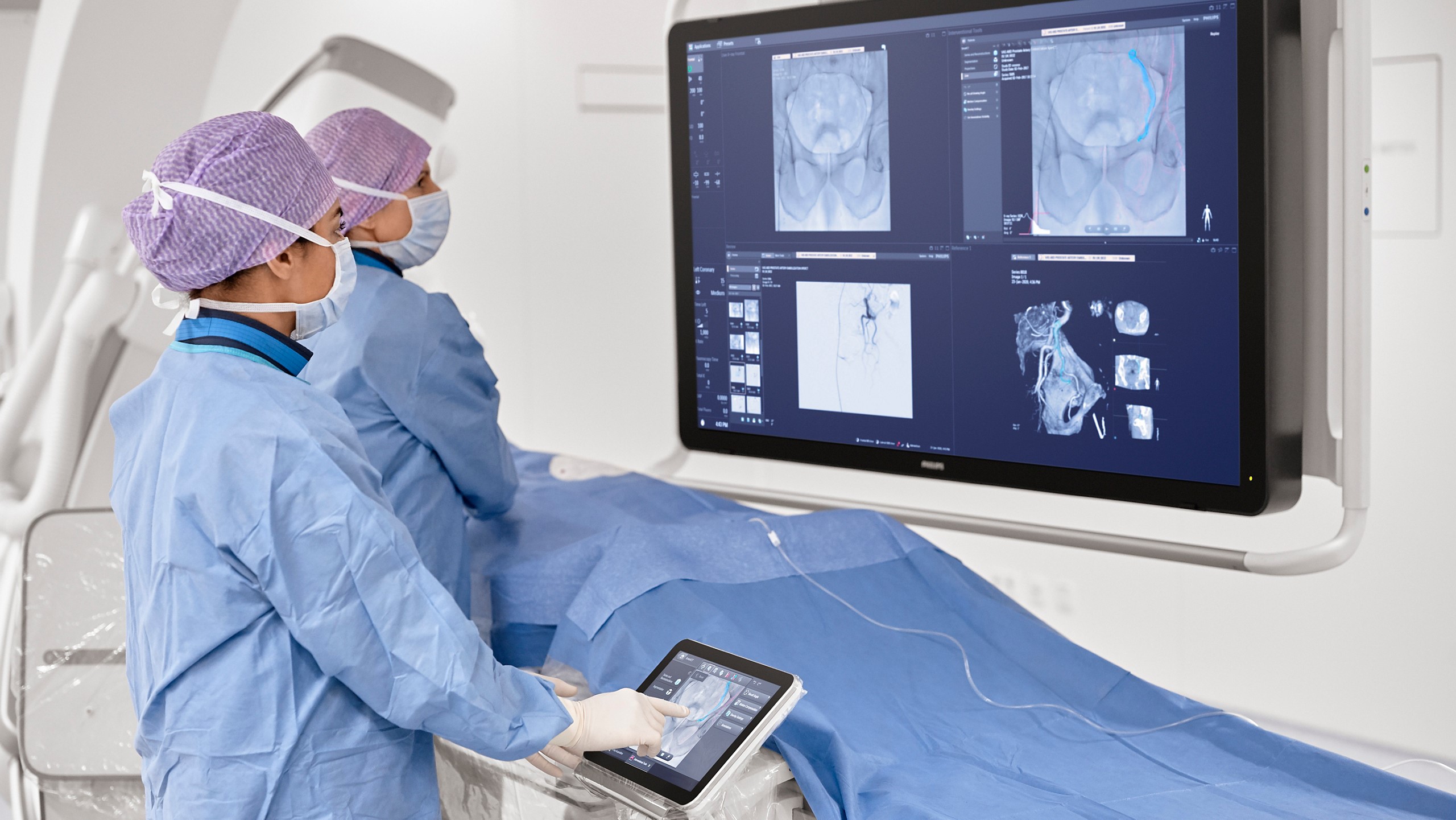
Core Viewpoint - The PreciseOnco consortium, led by Royal Philips, has received EUR 14.9 million in public funding from the EU's Innovative Health Initiative to enhance precision cancer treatment through advanced medical imaging, robotic assistance, and minimally invasive therapies, with a total budget of EUR 23.9 million for a five-year research program [3][4]. Group 1: Research Program and Funding - The PreciseOnco research program includes five clinical studies aimed at validating technical solutions for precision, safety, and efficiency in minimally invasive cancer care [3]. - The total budget for the program is EUR 23.9 million, which includes EUR 14.9 million in public funding and EUR 9 million in in-kind contributions from industry partners [3]. Group 2: Technological Innovations - The consortium will develop integrated technologies, including spectral imaging and robotic guidance systems, to improve precision in cancer treatment [7][8]. - Spectral imaging will provide richer information about tissue composition, allowing for better differentiation between tumors and healthy tissue [7]. - Robotic guidance systems will utilize real-time imaging data to guide interventional instruments with sub-millimeter precision [8]. Group 3: Clinical Studies and Validation - The project will conduct five clinical studies across various cancer types and interventional workflows to validate the effectiveness of the new technologies in real-world clinical settings [10]. - These studies aim to generate evidence supporting the adoption of advanced minimally invasive treatments in European cancer centers [10]. Group 4: Industry Collaboration - The PreciseOnco partnership includes collaboration among industry experts, research organizations, medical societies, and leading European hospitals to set new benchmarks in cancer care [5]. - Philips has over 40 years of experience in public-private partnerships, which are crucial for advancing healthcare innovation [11].

QT Imaging & Olea Medical Partner to Enhance Cloud Imaging Platform
ZACKS· 2026-01-28 17:30
Core Insights - QT Imaging Holdings, Inc. (QTIH) has announced a collaboration with Olea Medical to enhance its cloud imaging platform through advanced visualization and quantitative analytics capabilities [1][2][3] Collaboration Details - The partnership will integrate Olea Medical's visualization and AI-ready imaging capabilities into QTIH's cloud-based SaaS platform, improving clinical interpretation and research workflows [2][3] - The collaboration aims to support multimodality breast imaging, combining various imaging techniques such as mammography, ultrasound, and MR imaging [9][10] Market Performance - Following the announcement, QTIH shares increased by 8.3%, outperforming the industry growth of 5.6% and the S&P 500's rise of 11.4% over the past six months [4][7] - QTIH currently has a market capitalization of $71.55 million [6] Strategic Positioning - The collaboration strengthens QTIH's value proposition by integrating innovative acoustic imaging with established software, positioning the company competitively in the breast imaging market [5][11] - The partnership aligns with QTIH's strategic roadmap to drive the adoption of its Breast Acoustic CT technology and future AI-based analytics [10][11] Industry Prospects - The artificial intelligence in the breast imaging market is projected to reach $666.9 million by 2026, with a CAGR of 15.9% through 2035, driven by factors such as high breast cancer incidence and increased awareness [12]

Guerbet: Karim Boussebaa appointed Chief Executive Officer
Globenewswire· 2026-01-28 16:45
Group 1 - Guerbet has appointed Mr. Karim Boussebaa as Chief Executive Officer, effective February 2, 2026, following a decision by the Board of Directors [2][4] - Mr. Boussebaa has over 25 years of international experience in healthcare and medical technology, with a strong background in medical imaging and medical devices [3] - The appointment aims to strengthen Guerbet's operational and strategic management to adapt to a rapidly evolving market environment [4] Group 2 - Mr. Hugues Lecat, Chairman of the Board, emphasized the importance of Mr. Boussebaa's leadership in supporting the company's strategy and performance [4] - Mr. Jérôme Estampes will return to his role as Group Chief Financial Officer and SVP Business Development & Licensing after serving as interim CEO [5] - Guerbet reported €841 million in revenue for 2024 and dedicates 9% of its revenue to Research & Development [7]

Lumexa Imaging's Dr. Jennifer L. Kemp Elected to RSNA Board, Advancing National Leadership in Quality and Patient-Centered Care
Prnewswire· 2026-01-28 12:00
Core Insights - Lumexa Imaging's Dr. Jennifer L. Kemp has been elected to the Board of Directors of the Radiological Society of North America (RSNA), highlighting the company's clinical leadership and commitment to quality in radiology [1][2] Company Overview - Lumexa Imaging is a leading provider of outpatient imaging services in the U.S., operating over 185 imaging centers across 13 states and employing more than 5,000 team members [5] - The company conducted approximately 4 million outpatient scans in 2024, positioning itself as a partner of choice for health systems and radiologists [5] Leadership and Innovation - Dr. Kemp's election to the RSNA Board emphasizes the importance of physician leadership in shaping the future of radiology, particularly in the context of growth, AI innovation, and evolving policies [2][4] - As Chief of Patient Experience at Scanslated, Dr. Kemp leads initiatives to enhance patient understanding of radiology results, utilizing AI-driven software to translate complex reports into accessible language [2] Patient Engagement - Lumexa Imaging patients have accessed over 2 million reports through the Scanslated platform, with 99% of surveyed patients indicating that patient-friendly explanations positively influence their likelihood to choose Lumexa Imaging centers in the future [3]

NVIDIA GTC 2025: Accelerate the Future of Healthcare with GE HealthCare
NVIDIA· 2026-01-27 13:00
#NVIDIAhealthcare #medicalimaging Join Roland Rott, President and CEO of imaging at GE HealthCare, and Parry Bhatia, Chief AI Officer, to explore how GE HealthCare is transforming diagnostic imaging with cutting-edge AI technologies. Learn how AI-driven imaging is reshaping modern medicine, offering personalized insights and advancing health outcomes worldwide. Follow us: X: https://nvda.ws/4hi2sxB LinkedIn: https://nvda.ws/4eSlE3B Subscribe to the NVIDIA AI Healthcare Newsletter: https://nvda.ws/4eS1F54 ...



4DMedical Secures US$100+ Million Funding to Accelerate U.S. Expansion and increase Technology Dominance in Software-Based Lung Imaging
Prnewswire· 2026-01-26 22:27
Core Insights - 4DMedical has secured over US$100 million (AU$150 million) in new institutional funding to enhance the adoption of its CT:VQ™ imaging product and to advance research and development efforts [1][2][3] Funding and Financial Position - The funding will enable 4DMedical to scale hospital deployments of its CT:VQ™ product and support early adopters at prestigious institutions such as Stanford, Cleveland Clinic, University of Miami, and UC San Diego Health [1][2] - Following the funding round, 4DMedical reported a pro forma cash position exceeding US$130 million (AU$200 million), which will facilitate the company's U.S. expansion strategy [4] Product and Technology - CT:VQ™ is an FDA-cleared SaaS technology that provides ventilation and perfusion insights from CT imaging, which has been rapidly adopted by leading U.S. academic medical centers within four months of its clearance [2][9] - The technology is designed to integrate seamlessly into existing hospital workflows, enhancing operational efficiency and decision-making for clinicians [5][10] Strategic Partnerships and Market Position - 4DMedical is focusing on strategic partnerships, including collaboration with Philips, to support broader adoption of its technology [5] - The company aims to deepen partnerships and dominate the global marketplace for software-based lung imaging tools, reflecting its technological leadership and growth potential in the U.S. [3][8] Research and Development - Ongoing research and development efforts are aimed at expanding 4DMedical's technology leadership and product portfolio in functional lung imaging [8] - The company is committed to providing customer success, training, and technical support to ensure effective integration of CT:VQ™ into clinical workflows [8]

Polarean Expands Xenon MRI Platform into Cardiopulmonary Drug Development with Multi-Center PH-ILD Study
Globenewswire· 2026-01-20 13:46
Core Insights - Polarean is expanding its Xenon MRI platform into cardiopulmonary drug development through a multi-center study focused on pulmonary hypertension patients with interstitial lung disease (PH-ILD) [1][2] Group 1: Study Overview - The study is funded by a leading cardiopulmonary pharmaceutical company and aims to evaluate an inhaled therapy using Xenon MRI-derived biomarkers [2] - The design captures both acute and chronic treatment effects, quantifying changes in lung ventilation, gas diffusion, pulmonary capillary blood volume, and microvascular hemodynamics [4][5] Group 2: Technology and Innovation - Xenon MRI is unique as it directly measures the pulmonary capillaries, an area previously considered a "silent zone" in lung function assessment [3][28] - The technology allows for noninvasive, radiation-free imaging, providing insights into cardiopulmonary physiology at the site of drug delivery [5][8] Group 3: Clinical Implications - The study aims to clarify the local pulmonary effects of inhaled therapies, differentiating them from systemic mechanisms [7] - There is a significant need for better tools to detect and monitor pulmonary vascular involvement in PH-ILD, which affects tens of thousands of patients in the U.S. [9][10] Group 4: Market Position and Future Prospects - Polarean's collaboration with VIDA Diagnostics enhances its capabilities in centralized imaging operations and advanced biomarker analysis [2] - The use of Xenon MRI can accelerate clinical development, potentially saving time and costs while providing novel biomarkers for pulmonary vascular and interstitial disease [8][12]

Hyperfine Announces NEURO PMR Study Results Showing High Diagnostic Value and Superior Patient Experience in Neurology Clinics
Businesswire· 2026-01-20 13:15
Core Insights - Hyperfine, Inc. has announced results from the NEURO PMR study, showcasing the effectiveness of its portable MRI system, Swoop®, in clinical settings [1][5]. Clinical Study Results - The NEURO PMR study is the first prospective, multi-center study evaluating the clinical utility of portable MRI compared to standard MRI in outpatient neurology clinics, enrolling 125 patients with common neurological conditions [2][3]. - Portable MRI demonstrated 92% concordance with standard MRI in identifying intracranial pathology during blinded reviews, increasing to 98% in unblinded reviews [3]. Patient Experience - Patients preferred the portable MRI, being four times more likely to choose it over standard MRI, with superior ratings across comfort, anxiety, claustrophobia, noise, and overall satisfaction [3][4]. - The Swoop® system can be operated by trained clinical staff without the need for specialized MR technologists, indicating a safe and simple workflow [3][4]. Technological Innovation - The Swoop® system is portable, fits in an exam room, requires no specialized sitting or shielding, and can be plugged into a standard outlet, addressing historical challenges in bringing MRI on-site [4][5]. - The system is FDA-cleared for brain imaging and is designed to provide clinically relevant diagnostic imaging [6][7]. Market Impact - The NEURO PMR results validate the potential of portable MRI to expand imaging capabilities beyond traditional hospital settings, benefiting physicians, patients, and the healthcare system [5].