Benefits Administration

Search documents
HealthEquity Announces Fiscal Year 2027 Outlook Presentation at J.P. Morgan Healthcare Conference
Globenewswire· 2026-01-12 13:50
Core Insights - HealthEquity, Inc. is the largest health savings account custodian in the U.S. and a leading provider of consumer-directed benefits, announcing its initial outlook for fiscal year 2027 and reaffirming guidance for fiscal year 2026 [1][3] Financial Outlook - For fiscal year ending January 31, 2027, the company expects revenues between $1.38 billion and $1.41 billion, with an Adjusted EBITDA margin of 43.8% to 44.3% and a yield on HSA Cash of approximately 3.75% [2] Strategic Positioning - The company has modernized its business, enhancing security, accelerating digital experiences, and driving engagement, positioning itself for durable growth and long-term shareholder value [3] - HealthEquity collaborates with over 200 integrated Network Partners, including health and retirement plan partners, brokers, and benefit advisors, to address healthcare affordability challenges [3] Investor Engagement - The company will present its fiscal 2027 estimates and expectations at the 44th Annual J.P. Morgan Healthcare Conference on January 13, 2026 [3][4]


HealthEquity Reports Third Quarter Ended October 31, 2025 Financial Results
Globenewswire· 2025-12-03 21:01
Core Insights - HealthEquity, Inc. reported a record third quarter for fiscal 2026, achieving a net income of $52 million, a 20% growth in Adjusted EBITDA, and a 29% increase in non-GAAP net income per share, highlighting the company's commitment to enhancing healthcare consumer experiences [2][4]. Financial Performance - Revenue for the third quarter ended October 31, 2025, was $322.2 million, reflecting a 7% increase from $300.4 million in the same quarter of the previous year [3][12]. - The company reported net income of $51.7 million, or $0.59 per diluted share, compared to $5.7 million, or $0.06 per diluted share, for the same quarter in 2024 [4][12]. - Adjusted EBITDA reached $141.8 million, marking a 20% increase compared to the previous year, with Adjusted EBITDA representing 44% of revenue, up from 39% [5][40]. Account and Asset Metrics - As of October 31, 2025, HealthEquity administered 10.1 million HSAs, a 6% increase year-over-year, including 802,000 HSAs with investments, which is a 12% increase [6][32]. - Total HSA Assets amounted to $34.4 billion, reflecting a 15% year-over-year growth, with $16.9 billion in HSA cash and $17.5 billion in HSA investments [7][34]. Shareholder Returns - The company repurchased 1.0 million shares of its common stock for $93.7 million during the third quarter, with $258.8 million remaining authorized for future repurchases [8][12]. Business Outlook - For the fiscal year ending January 31, 2026, management anticipates revenues between $1.302 billion and $1.312 billion, with net income projected between $197 million and $205 million, translating to net income per diluted share of $2.24 to $2.33 [9][41].

HealthEquity (NasdaqGS:HQY) FY Conference Transcript
2025-11-14 15:52
Summary of HealthEquity FY Conference Call Industry Overview - The discussion revolves around the U.S. healthcare industry, focusing on consumer-driven healthcare and the challenges associated with rising healthcare costs, which now approach 20% of GDP [2][3][4]. Key Points and Arguments 1. **Consumer Empowerment and Healthcare Costs** - Despite efforts to empower consumers through health savings accounts (HSAs) and transparency initiatives, U.S. healthcare spending continues to rise due to factors like aging population, obesity, and advancements in medical technology [3][4]. - The healthcare system has focused more on treatment rather than prevention, leading to increased costs [3][4]. 2. **Challenges in Consumer-Driven Healthcare** - The complexity of the healthcare system makes it difficult for consumers to make informed decisions, as unexpected costs can arise from additional tests or out-of-network providers [6][7]. - High deductible plans have not significantly reduced costs but have added complexity for consumers [7][8]. 3. **Need for Price Transparency** - The federal government has introduced policies for price transparency and surprise billing protections, but the effectiveness of these measures is still evolving [11][12][13]. - Consumers often lack the ability to interpret complex data, highlighting the need for tools that convert data into actionable information [12][19]. 4. **Role of AI in Healthcare** - AI is seen as a transformative tool that can enhance consumer interactions and decision-making in healthcare [21][26][30]. - Companies are exploring AI applications to improve user experience and provide personalized recommendations based on individual health data [30][34]. 5. **Specialty Drugs and Cost Management** - Specialty drugs represent a significant portion of healthcare spending, and there are ongoing discussions about how to manage costs effectively through formulary management and site of care considerations [39][41][43]. 6. **Innovative Solutions for Consumer Engagement** - Employers are experimenting with tiered benefit designs to encourage more thoughtful healthcare utilization [25]. - The introduction of Individual Coverage Health Reimbursement Arrangements (ICHRA) is proposed as a way to allow consumers to choose more personalized and cost-effective insurance products [45][49]. 7. **Long-term Consumer Engagement** - The average tenure with health insurers is short, which disincentivizes long-term investment in preventive care [63]. - There is a call for the industry to focus on preventive health measures to reduce overall costs in the long run [88]. Other Important Insights - The panelists emphasized the importance of simplifying healthcare choices and improving consumer education to foster better decision-making [16][19]. - There is a recognition that the healthcare system must evolve to meet consumer expectations similar to other consumer markets, such as retail and technology [79]. - The discussion highlighted the need for collaboration among various stakeholders in the healthcare ecosystem to drive meaningful change [16][19][55]. This summary encapsulates the key discussions and insights from the HealthEquity FY Conference Call, focusing on the challenges and opportunities within the U.S. healthcare system.
HealthEquity's AI-Powered Tool Recognized for Innovation in Streamlining Benefits Education
Globenewswire· 2025-08-29 15:00
Core Insights - HealthEquity's HSAnswers has won multiple prestigious awards for its innovative approach to healthcare benefits education, utilizing AI technology to enhance accessibility and reliability for users [1][3]. Group 1: Product Overview - HSAnswers is an AI-powered tool designed to provide quick and reliable answers to questions regarding Health Savings Accounts (HSAs) and other consumer-directed benefits (CDBs) [2]. - The tool has facilitated hundreds of thousands of conversations since its launch in October 2024, addressing both simple and complex inquiries related to healthcare benefits [4]. Group 2: Industry Recognition - HSAnswers has received notable accolades, including the 2025 AI Breakthrough Awards for Informational Bot Solution of the Year and two Globee Silver Awards for AI achievements in healthcare [3]. Group 3: Market Demand and Impact - A significant 73% of employees express a need for improved benefits education, highlighting the tool's relevance in addressing real-world consumer questions [4]. - The tool leverages over 500 curated educational resources and 20 years of industry expertise, ensuring users receive reliable and contextually relevant information [6]. Group 4: Accessibility and Future Development - HSAnswers is freely available to a wide audience, including current and prospective HealthEquity members, benefits administrators, and health plan partners [7]. - The company plans to continue investing in HSAnswers, aiming to incorporate more sophisticated use cases to enhance user experience in the future [6].
HealthEquity Assist™: A new suite of integrated benefit solutions that drive deeper engagement, deliver cost savings, and increase transparency for employee benefits
Globenewswire· 2025-03-18 13:15
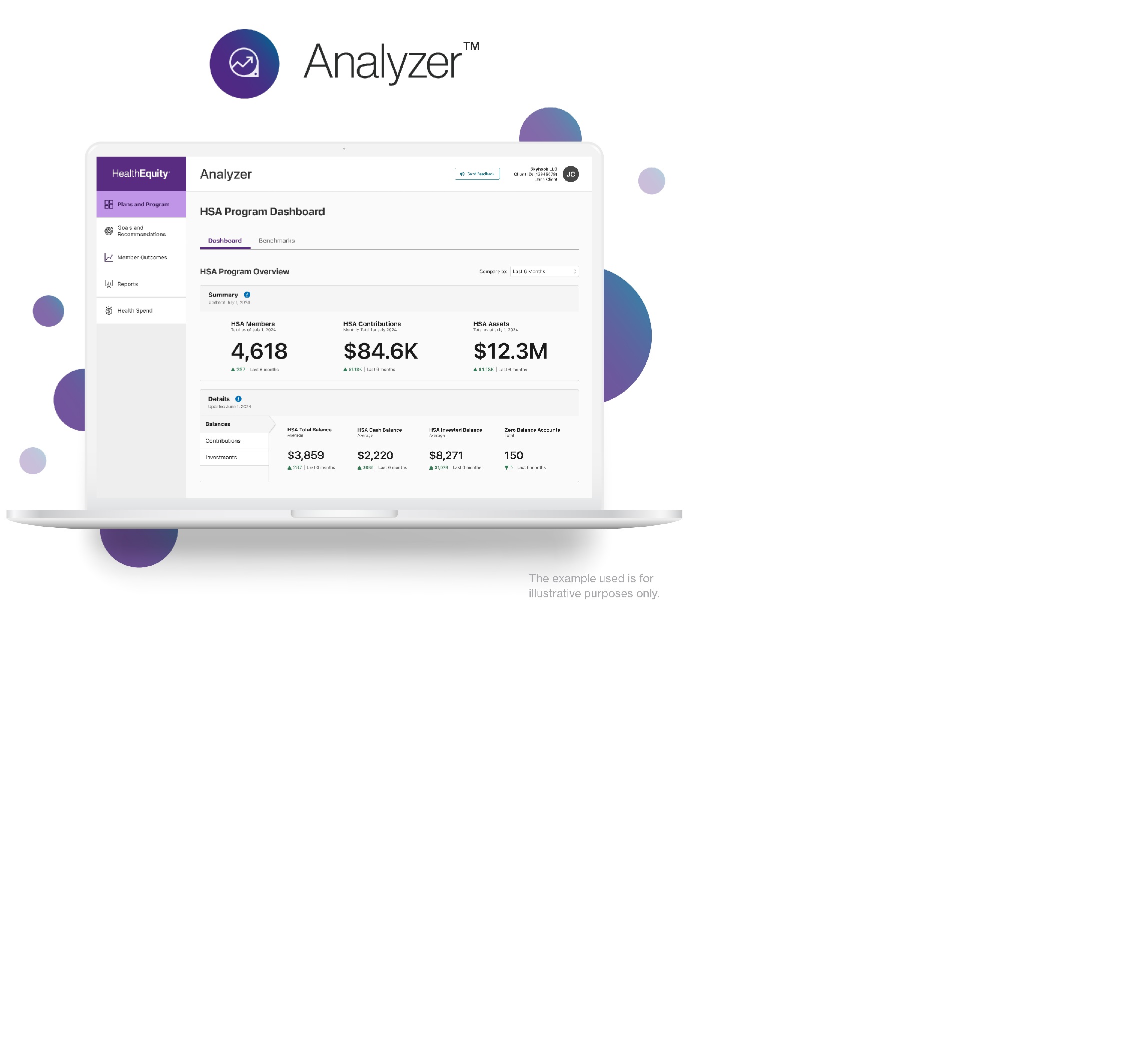
Core Insights - HealthEquity, the largest Health Savings Account (HSA) administrator in the U.S., launched HealthEquity Assist™, a suite of tools designed to help employers manage healthcare costs and enhance employee engagement [1][5] - The tools aim to address rising healthcare costs, projected to increase by 9% in 2025, and the complexities of navigating benefits [2][3] Product Offerings - HealthEquity Assist includes three main tools: HealthEquity Analyzer™, HealthEquity Navigator™, and HealthEquity Momentum™ [3][10] - HealthEquity Analyzer™ provides employers with near real-time data on inefficiencies and trends, enabling smarter decision-making [10][11] - HealthEquity Navigator™ simplifies healthcare spending decisions for employees by offering guidance on provider selection and cost-saving opportunities [10] - HealthEquity Momentum™ encourages proactive health and expense planning, increasing employee engagement with benefits programs through personalized rewards [10] Market Context - The benefits industry faces challenges related to cost and complexity, impacting both employers and employees [3] - HealthEquity's initiatives are positioned to reshape the future of benefits technology, aiming for a seamless and intuitive experience for members [5][7]