Broadcast Media

Search documents
Nexstar Tells Judge Aspects Of Tegna Merger “Cannot Be Reversed”
Deadline· 2026-03-31 22:16
Core Viewpoint - Nexstar faces challenges in complying with a judge's order that has temporarily halted its merger with Tegna, citing that certain aspects of the transaction cannot be reversed [1][2]. Group 1: Legal and Regulatory Context - U.S. District Judge Troy Nunley issued a temporary restraining order to DirecTV, indicating that it is likely to succeed in its antitrust claims against the merger, which has resulted in a 14-day freeze on the transaction [1][3]. - DirecTV filed an antitrust lawsuit on March 18, and the FCC approved the merger the following day, while the Justice Department did not challenge it [3]. Group 2: Operational Implications - Nexstar's legal team expressed that the restraining order creates immediate operational harm to both Tegna and Nexstar, leading to regulatory conflicts and a governance vacuum [2]. - The merger, once completed, would create a broadcast entity with 259 stations covering approximately 80% of the U.S. [3]. Group 3: Financial and Compliance Concerns - Nexstar highlighted ongoing debt agreement reporting obligations that necessitate the inclusion of Tegna's financial information in its reports, warning of potential breaches of securities laws [4]. - The company faces operational confusion regarding contract obligations, as Tegna's retransmission consent agreements are now under Nexstar's governance, complicating compliance [5]. Group 4: Proposed Actions and Future Steps - Nexstar proposed that the combined company be allowed to service its debt obligations and complete necessary post-closing security processes to avoid default [6]. - The company requested permission to maintain Tegna's day-to-day operations and to appoint Tegna officers to ensure continuity, indicating that further proposals may be needed to mitigate harm from the restraining order [6].




FCC Chairman Brendan Carr And Gavin Newsom Clash Over Nexstar-Tegna Merger, Censorship And Jimmy Kimmel
Deadline· 2026-03-26 22:15
Core Viewpoint - The Nexstar-Tegna merger, which would create a significant broadcasting entity with nearly 260 stations, is facing legal challenges and political disputes, particularly between California Governor Gavin Newsom and FCC Chairman Brendan Carr [1][8]. Regulatory Approval - The FCC's Media Bureau granted Nexstar a waiver from the national media ownership cap, allowing the combined stations to reach 80% of U.S. households, exceeding the 50% limit [2]. Political Clash - Governor Newsom criticized FCC Chairman Carr, labeling his actions as disgraceful and accusing him of censorship related to media coverage [3]. - Carr responded by accusing Newsom of serving the interests of liberal media billionaires and claimed that broadcasters must operate in the public interest [4]. Threats and Responses - Carr has threatened broadcasters with license renewals if they do not correct perceived distortions in news coverage, which has been described by some as regulatory harassment [5][6]. - Anna Gomez, the sole Democrat on the FCC, argued that Carr's threats lack legal grounding and are politically motivated [6]. Legal Challenges - The FCC's decision to approve the merger is being contested in a D.C. federal appellate court by a coalition including Newsmax and DirecTV, with the FCC defending its decision [8][9]. - Nexstar's legal team contended that the states' arguments against the merger are based on flawed market definitions and outdated legal precedents [10].

Newsmax, DirecTV And Broadband Groups Appeal FCC's Approval Of Nexstar-Tegna Merger, Call Out Trump's Directive To “Get That Deal Done!”
Deadline· 2026-03-23 14:58
Core Viewpoint - The merger between Nexstar and Tegna has received FCC approval, but it faces legal challenges from state attorneys and other groups who argue that the approval process was flawed and that the merger violates existing ownership rules [2][3][4]. Group 1: Merger Approval and Legal Challenges - The FCC approved the merger, creating a broadcast entity with 259 stations that reach 80% of the U.S. population [2]. - A new appeal has been filed against the FCC's approval, claiming that the waiver granted to Nexstar violates national ownership rules that limit any entity from owning stations reaching more than 39% of the country [3]. - The plaintiffs, including Newsmax and various state cable and broadband associations, argue that only Congress has the authority to raise the ownership cap [3]. Group 2: Process and Political Influence - The appeal criticizes the FCC's approval process as "anything but ordinary," highlighting that the merger was endorsed by former President Trump and that the FCC Chairman responded positively during the review period [4]. - The plaintiffs assert that the FCC should have held a hearing and conducted a full commission vote on the merger, which did not occur [5]. - The approval was expedited, taking less than four months, which is significantly shorter than the typical timeline for similar transactions [5]. Group 3: Additional Legal Actions - Just before the FCC's approval, a group of state attorneys general filed an antitrust lawsuit to block the merger, and after Nexstar announced the deal's closure, they sought a temporary restraining order [6]. - The American Conservative Union Foundation's Center for Regulatory Freedom supports the appeal, arguing that waiving ownership rules could lead to further media consolidation and limit public access to independent local voices [7].

Eight states ask US judge to temporarily block Nexstar, Tegna merger
Reuters· 2026-03-20 19:12
Core Viewpoint - Eight states are seeking a temporary restraining order to block the $3.5 billion merger between Nexstar Media Group and Tegna, citing concerns over media consolidation and its impact on local jobs and programming [1][2]. Group 1: Merger Details - The merger, valued at $3.5 billion, aims to create the largest broadcast station group in the U.S. [1][2]. - The Federal Communications Commission and the U.S. Justice Department had previously approved the merger, allowing the companies to close the transaction [2]. Group 2: States' Concerns - The states argue that the merger would lead to increased concentration of broadcast programming, resulting in fewer people controlling more media content [2]. - Concerns include potential job cuts in local markets, higher cable bills for consumers, and a significant negative impact on the delivery of news and media content across the nation [2].

CBS to End Storied News Radio Broadcast, Layoff 6% of Staff
WSJ· 2026-03-20 16:38
Core Viewpoint - CBS News executives indicated that challenging economic conditions have made it impossible for the company to continue its operations as they currently stand [1] Group 1 - CBS News is facing significant economic challenges that have impacted its operational viability [1] - The executives' statement reflects a broader trend in the media industry, where financial pressures are leading to difficult decisions [1]

CBS News to End Storied Radio Broadcast, Lay Off 6% of Staff
WSJ· 2026-03-20 16:38
Core Viewpoint - The network news heads indicated that challenging economic conditions have rendered it impossible to continue the service [1] Group 1 - The decision to halt the service is attributed to difficult economic circumstances [1]

Nexstar, Tegna merger closes after winning regulatory approval
CNBC· 2026-03-20 14:23
Core Viewpoint - Nexstar Media Group has successfully completed its $6.2 billion acquisition of Tegna, despite facing antitrust lawsuits, which consolidates over 260 local broadcast TV affiliate stations across the U.S. [1] Group 1: Acquisition Details - The merger is valued at $6.2 billion and aims to enhance local journalism and programming capabilities [1][3] - The acquisition was initially announced in August and was expected to close in the second half of 2026 [4] Group 2: Industry Context - The broadcast station industry is experiencing consolidation due to challenges similar to those faced by cable and entertainment media, particularly the decline in pay-TV customers due to streaming services [2] - Broadcast station owners are profitable due to substantial fees from pay-TV distributors, and they argue that consolidation is necessary to preserve local TV news [5] Group 3: Regulatory Approval and Legal Challenges - The deal received approval from the FCC and DOJ, which waived laws preventing a single company from owning stations reaching over 39% of U.S. TV households [6] - Two federal antitrust lawsuits have been filed to block the merger, claiming it is anticompetitive and could lead to increased customer costs and reduced competition [7][8]

FCC approves combination of Nexstar and Tegna TV stations
Reuters· 2026-03-19 23:27
Group 1 - The Federal Communications Commission (FCC) has approved the sale of certain local broadcast TV stations from Tegna to Nexstar, allowing Nexstar to own less than 15% of television stations [1][2] - The approval comes amidst legal challenges, including a lawsuit from a group of eight states aimed at blocking the merger, which would create the largest U.S. broadcast station group [2] - Nexstar's CEO emphasized that the transaction is crucial for maintaining strong local journalism in the communities served by the company [3] Group 2 - The FCC's decision reflects a consideration of the current media marketplace rather than historical contexts, as stated by FCC chair Brendan Carr [2] - DirecTV has also filed a separate lawsuit to prevent the merger, indicating potential industry pushback against the consolidation [3]

FCC Gives Greenlight To Nexstar-Tegna Merger Amid Challenge From California And Other States
Deadline· 2026-03-19 23:01
Core Viewpoint - Nexstar has successfully completed its acquisition of Tegna, creating a significant player in the broadcast station industry following approvals from the FCC and the Justice Department [1] Group 1: Acquisition Details - The merger was approved by the FCC's Media Bureau, allowing Nexstar to enhance its position in the market [1] - Nexstar received a waiver from the ownership cap, facilitating the acquisition [2] Group 2: Statements from Leadership - Perry Sook, CEO of Nexstar, emphasized that the transaction is crucial for sustaining strong local journalism and enhancing the company's capabilities and talent [2] - FCC Chairman Brendan Carr highlighted the importance of empowering broadcast TV stations to serve local communities and criticized the previous inaction regarding local news sources [3]
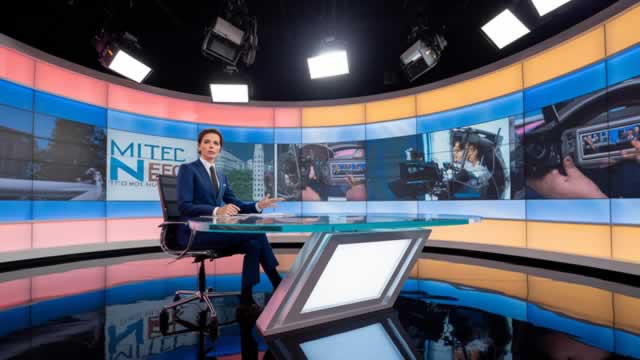
Eight states sue to block Nexstar's plan to acquire rival Tegna
Reuters· 2026-03-19 05:52
Core Viewpoint - A coalition of eight states has filed a lawsuit to prevent Nexstar Media Group's proposed $3.54 billion acquisition of Tegna, which would create the largest broadcast station group in the U.S. [1] Group 1: Legal and Regulatory Concerns - California Attorney General Rob Bonta stated that the merger is illegal and would likely result in increased pay-TV prices and job reductions [2] - Bonta emphasized that concentrated ownership in broadcast media leads to diminished competition and fewer diverse voices, undermining local journalism's role as a check on power [2] Group 2: Support for the Merger - Last month, the Federal Communications Commission Chair Brendan Carr expressed support for the merger, indicating that he would move forward with approval following backing from President Donald Trump [3]