Cannabis Real Estate

Search documents
Innovative Industrial: Why I Am Downgrading It (NYSE:IIPR)
Seeking Alpha· 2026-01-14 20:20
Group 1 - The 420 Investor service, focused on cannabis stocks, has transitioned to Seeking Alpha, continuing its mission to provide comprehensive coverage of the cannabis sector [1] - Innovative Industrial Properties, Inc. (IIPR) was previously rated as a Strong Buy but has been downgraded to Hold, indicating a shift in the investment outlook for this stock [1] - Alan Brochstein, a pioneer in cannabis investment analysis, has been managing the 420 Investor group since 2013, which includes tracking 19 cannabis stocks and providing various investment resources [1] Group 2 - The 420 Investor group offers a model portfolio, weekly video analyses, summary pieces, a monthly newsletter, and a chat feature for investor inquiries [1]



Income-Focused Ancillary Cannabis Stocks to Watch Heading Into 2026
Marijuana Stocks | Cannabis Investments And News. Roots Of A Budding Industry.™· 2025-12-30 15:00
Industry Overview - The U.S. cannabis industry is evolving with expanding legalization momentum, leading to growth in both medical and adult-use markets. Analysts predict long-term demand will continue to rise as more states approve regulated programs [1][3] - Ancillary stocks, which do not directly handle cannabis, are gaining investor interest due to regulatory hurdles and difficult banking conditions faced by plant-touching companies. These ancillary companies benefit from industry growth while reducing risk [1][2] Ancillary Stocks Characteristics - Ancillary stocks provide services or capital to licensed operators, including owning real estate for cultivation and retail operations, and offering financing that banks often avoid. This model allows investors to gain exposure to the cannabis sector without directly handling the plant [2] - Many ancillary companies operate as Real Estate Investment Trusts (REITs) or structured lenders, providing reliable income through dividends, making them attractive for long-term portfolios [2] Financial Stability and Future Outlook - As the cannabis market matures, financial strength and stability are increasingly important. Investors are looking for companies with steady revenue and disciplined management, especially those positioned to benefit from potential federal reforms [3] - The year 2026 is anticipated to be significant for ancillary growth, particularly if there are changes in federal regulations regarding cannabis [3] Leading Ancillary Stocks to Watch - **Innovative Industrial Properties (IIPR)**: Focuses on purchasing cultivation and processing facilities and leasing them back to licensed operators. It benefits from industry growth without handling cannabis directly and has shown steady performance with strong rental income [5][8] - **NewLake Capital Partners (NLCP)**: Operates as a REIT with a concentrated portfolio of dispensaries and cultivation facilities. It emphasizes careful tenant selection and has maintained conservative debt levels, appealing to cautious investors [9][11] - **Chicago Atlantic Real Estate Finance (REFI)**: Provides secured loans to licensed operators, focusing on senior secured credit. This model allows it to command attractive interest rates in a market underserved by traditional banks [12][14]


NewLake Capital Partners CEO Anthony Coniglio to Speak at IgniteIt Cannabis Capital and Policy Summit 2025 on November 17
Globenewswire· 2025-11-12 13:00
Core Insights - The discussion will focus on how federal rescheduling and banking reform may impact capital access, M&A activity, and growth strategies in the cannabis industry [1][2] Company Overview - NewLake Capital Partners, Inc. is a real estate investment trust that provides capital to state-licensed cannabis operators through sale-leaseback transactions and funding for build-to-suit projects [4] - The company owns a portfolio of 34 properties, including 15 cultivation facilities and 19 dispensaries [4] Event Participation - CEO Anthony Coniglio will speak at the IgniteIt Cannabis Capital and Policy Summit 2025 in Washington, D.C. on November 17 [1] - Coniglio will participate in a panel discussing the influence of federal reform on cannabis capital and M&A [2]

Innovative Industrial Properties(IIPR) - 2025 Q3 - Earnings Call Transcript
2025-11-04 18:00
Financial Data and Key Metrics Changes - Total revenues for Q3 2025 were $64.7 million, a 3% increase compared to the prior quarter, primarily due to a $0.8 million payment from the Gold Flora receivership and annual rent escalations [14] - Adjusted funds from operations (AFFO) totaled $48.3 million, or $1.71 per share, representing no change from the second quarter results [14] - The company ended the quarter with nearly $80 million in liquidity, including cash on hand and availability under its credit facility [14][15] - The balance sheet remains strong, supported by $2.7 billion in primarily unencumbered gross assets and a low-leverage capital structure with a debt-to-gross assets ratio of 13% [14][16] Business Line Data and Key Metrics Changes - The company completed its initial investment of $105 million into IQHQ, a life science real estate platform, which is expected to enhance diversification and provide significant earnings accretion [4][5] - Year-to-date, the company executed leases totaling 281,000 sq ft across properties in California and Michigan [11] - The investment in IQHQ is expected to be highly accretive, with a blended interest rate exceeding 14% [16] Market Data and Key Metrics Changes - The cannabis industry is seeing a growing interest from operators, with demographic trends indicating that seniors are the fastest-growing consumer segment, with usage growing at a 9% five-year compounded annual growth rate [9] - Global spending on AI and pharma and biotech is projected to reach $3 billion in 2025 and $16.5 billion by 2034, reflecting a 27% CAGR [12] Company Strategy and Development Direction - The company is diversifying its portfolio beyond cannabis into the life science sector, which is expected to capture long-term secular growth [5][6] - The dual-track strategy aims to enhance shareholder value and position the company for sustained success across both industries [6] - The company is actively evaluating its capital structure and exploring strategic financing alternatives to align with long-term growth objectives [17] Management's Comments on Operating Environment and Future Outlook - Management expressed optimism regarding the cannabis industry's future, citing potential federal cannabis reform and the positive demographic trends among seniors [9][42] - The company remains cautious about the timing of federal rescheduling but believes it could unlock broader access to capital and accelerate institutional participation [9][42] - Management highlighted ongoing legal proceedings and receivership situations but expressed confidence in regaining control of properties and the potential for significant revenue from administrative claims [20][25] Other Important Information - The U.S. Court of Appeals for the Third Circuit affirmed the dismissal of a federal securities class action against the company, allowing it to focus on executing its strategy [10] - The company has taken back possession of four California properties previously securing a loan totaling $16.1 million, which was declared in default [8] Q&A Session Summary Question: Dividend expectations and timing of rent commencements - Management discussed the potential contributions from the IQHQ investment and backfill leases to the dividend policy, indicating a quick timeline for revenue from receivership assets [18][20] Question: Balance sheet and refinancing options - Management confirmed plans to refinance maturing unsecured bonds and expressed confidence in the strength of the balance sheet [31][32] Question: Impact of rescheduling on growth opportunities - Management noted that while rescheduling could improve operator credit and cash flow, the company is focused on supporting existing tenants and exploring new opportunities in both cannabis and life sciences [40][46] Question: Current status of ABR and tenant issues - Management reported that approximately 20% of ABR is currently not rent-paying, down from 27% previously, reflecting improvements in tenant health [56][58] Question: Future occupancy expectations at IQHQ - Management expects IQHQ's occupancy to reach 90% within the next 18 to 24 months, with ongoing interest in the facilities [52] Question: Balancing capital needs between cannabis and life sciences - Management emphasized a strong balance sheet and the importance of seeking unique investment opportunities while maintaining a focus on the cannabis industry [60][61]
NewLake Capital Partners: The Concerning Mystery Of Cannabis Real Estate
Seeking Alpha· 2025-08-11 07:14
Core Viewpoint - The article emphasizes a value investing approach with a focus on long-term horizons and an owner's mindset, avoiding short-selling recommendations [1]. Group 1 - The analysis is based on value investing principles, which prioritize the intrinsic value of securities over short-term market fluctuations [1]. - The author does not engage in short-selling or provide sell recommendations, indicating a commitment to long-term investment strategies [1]. - The article reflects the author's independent research and opinions, without any external compensation influencing the content [2]. Group 2 - There is a clear disclosure that the author holds no positions in the mentioned companies and has no plans to initiate any within a short timeframe [2]. - The article does not provide specific investment advice or recommendations, aligning with a broader perspective on investment suitability [3]. - The content is authored by an individual who may not be licensed or certified, highlighting the importance of independent analysis in investment decisions [3].
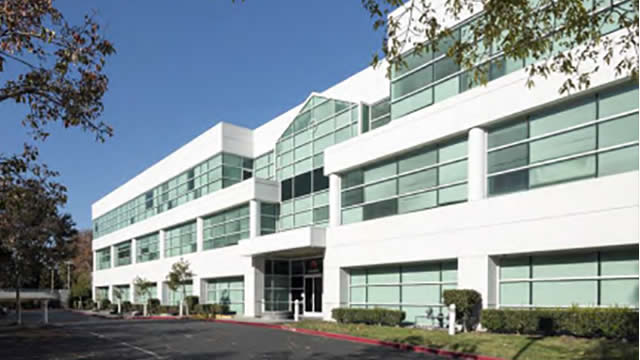
UC Asset's Public Offering to Be Based on Cannabis Property Investment Strategy with Proven Record
Prnewswire· 2025-07-21 13:00
Core Insights - UC Asset Limited Partnership has filed a second amendment to Form 1A with the SEC to offer a maximum of $5.0 million in preferred shares, which will carry an 8% annual dividend [1] - The company claims its cannabis property portfolio has achieved a Return on Investment (ROI) of 14.4%, significantly higher than the industry average and outperforming similar portfolios held by other public companies [2][3] Investment Strategy - The success of UC Asset in cannabis property investment is attributed to its unique investment strategy, which is detailed in its offering circular [4] - The company has published a white paper titled "Our Performance and Strategy in Cannabis Property Investment" on its Investor Relations page for further insights [5] - The investment strategy is based on five key principles: 1) Investing at periodic low points in cannabis property prices 2) Focusing on 'premium' properties with advanced technologies 3) Emphasizing long-term partnerships with selected tenants rather than diversification 4) Utilizing creative financial engineering and enhancing the sale-and-lease-back model 5) Investing in geographic areas where cannabis growers have competitive advantages in the nationwide market [6]