
Offshore Finance

Search documents
企稳回升至106.5点!这份中国离岸金融指数报告在沪发布
Guo Ji Jin Rong Bao· 2025-12-21 04:39
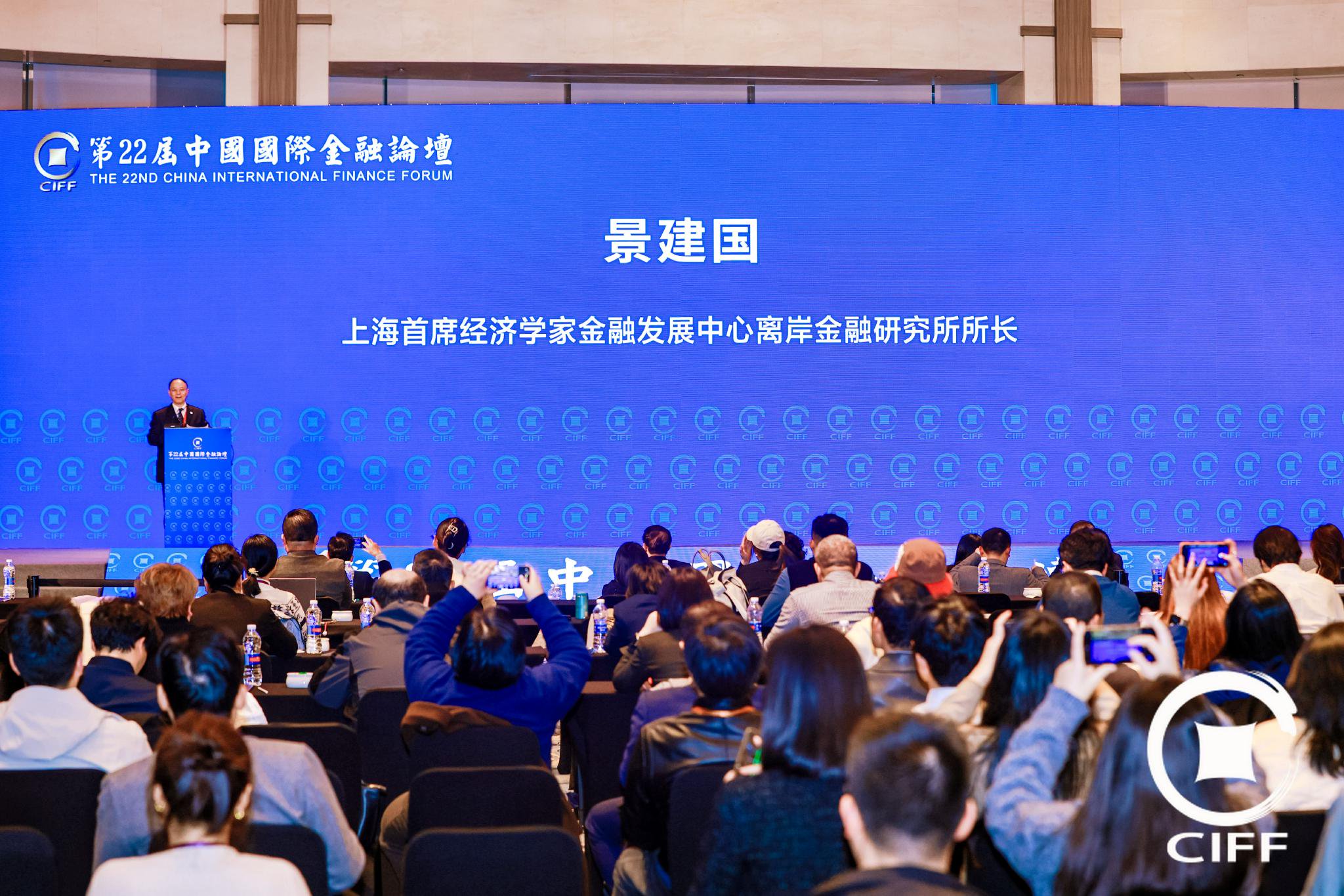
Core Insights - The "China Offshore Financial Index Report (2024-2025)" was released at the 22nd China International Financial Forum, highlighting the steady growth trajectory of China's offshore finance, with the index rising from a baseline of 100 in 2014 to 106.5 in 2024, reflecting a slight increase of 0.31% from 106.16 in 2023 [1][2] Challenges - Three major bottlenecks need to be addressed: 1. The continuous decline of traditional foreign currency business, with the loan-to-deposit ratio dropping to 0.60%, necessitating urgent optimization of the business structure [4] 2. The macroeconomic environment is facing short-term pressures, which restricts market demand and expansion opportunities for offshore financial services [4] 3. The risk control system requires improvement, as existing mechanisms have weaknesses that need to be strengthened for better risk identification, warning, and management in complex market conditions [4] Opportunities - Two key opportunities are identified: 1. Harnessing "momentum in breakthroughs" by focusing on development directions, with innovative businesses emerging and the ongoing internationalization of the Renminbi driving rapid growth in offshore financial services, acting as a new engine for business growth [4] 2. Continuous optimization of the institutional ecosystem, with policies like the Hainan Free Trade Port gradually releasing dividends, improving the policy environment and providing solid support for the stable operation of the offshore financial market [4] Strategic Recommendations - The report suggests promoting synergy between onshore and offshore markets through reform and innovation to address development challenges, thereby enhancing China's voice and influence in the international financial system and allowing Chinese offshore finance to shine on the global stage [5]


中国离岸金融指数企稳回升 业内专家建议构建现代化离岸金融生态体系
Zheng Quan Shi Bao Wang· 2025-12-21 04:36
Core Insights - The report on China's offshore financial index indicates a slight increase of 0.31% in 2024 compared to 2023, reflecting the resilience of the offshore financial market and laying a solid foundation for building a financial powerhouse [1] - The offshore financial index has entered a new phase of stabilization and recovery, characterized by a "four increases and one decrease" trend, indicating structural optimization and profound changes in the sector [2] Group 1 - The offshore bond issuance scale grew by 3.04%, and offshore trade settlement volume increased by 1.28%, while cross-border RMB payment and receipt exceeded 35 trillion yuan, marking a 14% year-on-year growth [2] - The comprehensive tax rate in free trade zones has decreased to 8.63%, while the proportion of traditional offshore deposit and loan business is gradually shrinking [2] - The report highlights the transition from extensive growth to intensive development in China's offshore finance [2] Group 2 - Four structural obstacles are hindering the growth of offshore finance, including the rapid decline of traditional businesses, insufficient growth of new businesses, lack of deep integration with onshore markets, and inadequate foreign investment attraction [3] - Recommendations include building an offshore RMB asset pool, innovating offshore RMB products, and establishing efficient interconnectivity mechanisms between offshore and onshore markets [3] - The report emphasizes the need for institutional opening, collaboration between Shanghai and Hong Kong, and the internationalization of the RMB as key drivers for the future of offshore finance [3][4] Group 3 - The report serves as a strong signal for the market, showcasing the resilience and potential of China's offshore financial market amid deepening institutional opening and RMB internationalization [3][4] - Experts believe that synchronized efforts in institutional opening, Shanghai-Hong Kong collaboration, and RMB internationalization will inject strong momentum into China's offshore finance, enhancing its role in building a financial powerhouse and contributing to global financial governance [4]
机构报告:中国离岸金融发展正从规模扩张向质量提升转型
Xin Lang Cai Jing· 2025-12-20 13:55
Core Insights - The latest "China Offshore Financial Index Report (2024-2025)" indicates a slight increase of 0.31% in the offshore financial index for China, reaching 106.16 points, marking a transition into a new phase of stabilization and recovery after experiencing "double V-shaped" fluctuations [1] - The report highlights a critical transformation in China's offshore financial development, shifting from scale expansion to quality enhancement, with offshore RMB trading being a significant driver for the internationalization of the RMB [1] - The increasing demand for offshore trade due to Chinese enterprises accelerating their global expansion necessitates the development of offshore financial markets to support this trade [1] Industry Perspectives - The development of a strong currency is crucial, and the rapid growth of the RMB in offshore markets is essential for its role in financial internationalization [2] - The three core values of offshore finance include attracting factor aggregation through institutional innovation, enhancing market depth through factor aggregation, and improving pricing power and discourse through market depth [2] - There is a need to align with international offshore financial regulations and advance the legal framework for offshore finance, emphasizing the importance of detailed implementation rules and regulatory enforcement [2] Risk Management Recommendations - A "macro-prudential + micro-regulation" risk prevention system is recommended to safeguard against systemic risks in offshore finance, ensuring innovation is protected [4]
以更高站位、更宽视野探索离岸金融的发展路径
Di Yi Cai Jing· 2025-05-21 12:38
Core Viewpoint - The development of offshore finance in China should be explored with a higher perspective and broader vision, focusing on domestic economic needs while deeply integrating into the international financial system to form a new pattern of coordinated development between domestic and foreign markets [1] Group 1: Role of Offshore Finance - Offshore finance enhances the international influence of financial markets, attracting global financial resources and increasing the trading activity and liquidity of financial markets [2] - The introduction of various offshore financial products enriches the financial market functions in international financial centers like Shanghai, meeting diverse investor needs and strengthening resource allocation capabilities [3] - Engaging in offshore finance requires familiarity with international rules and laws, prompting financial institutions to innovate products and improve risk management, thereby enhancing their international competitiveness [4] Group 2: Promotion of Offshore Trade and Economic Growth - Offshore finance promotes the development of offshore trade by providing essential services such as cross-border payments and trade financing, which helps businesses expand their market competitiveness [5] - Offshore finance supports the growth of offshore economies by offering services to domestic enterprises expanding into international markets, creating a mutually beneficial relationship that drives sustainable economic development [6] Group 3: Challenges in Offshore Finance Development - There is insufficient coordination between domestic and foreign offshore finance, leading to inconsistencies in standards and operations, which can result in regulatory and interest rate arbitrage [8] - Domestic offshore financial accounts still have functional deficiencies compared to international standards, hindering the support for RMB internationalization [9] - The range of offshore financial products in domestic free trade zones needs to be further diversified, as current explorations remain theoretical without substantial pilot testing [10] - The legislative progress for offshore finance needs to accelerate, particularly in areas like offshore banking and trade dispute resolution [11] Group 4: Pathways for Strengthening Offshore Finance - It is recommended to establish offshore banks in free trade zones, which would operate under international standards and primarily serve domestic enterprises' cross-border transactions [12] - Accelerating the pilot and innovation of offshore financial products is essential, with a focus on adapting international best practices to local conditions [13] - Coordinating the development of domestic and foreign offshore finance markets is crucial, including enhancing market connectivity and regulatory collaboration [14] - Tax optimization measures should be implemented to reduce operational costs for financial institutions and attract more international business [15] - Strengthening legal frameworks and international regulatory cooperation is necessary to ensure compliance and stability in offshore finance [16] - Legislative efforts should be made to support various offshore financial activities, promoting legal and compliant operations within the domestic market [17]