Anesthesia monitors

Search documents
Anesthesia Devices Industry Review 2021-2024 and Forecast to 2030, Featuring Analysis of 25+ Competitors
Globenewswire· 2025-03-21 09:21
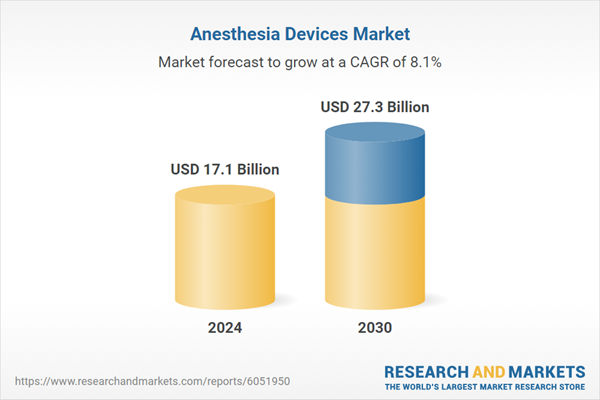
Market Overview - The global anesthesia devices market is estimated to be valued at US$17.1 billion in 2024 and projected to reach US$27.3 billion by 2030, registering a CAGR of 8.1% from 2024 to 2030 [1][14]. Market Drivers - The market is driven by the increasing number of surgical procedures, particularly in cardiology, neurology, and orthopedics, alongside the rising prevalence of chronic illnesses and age-related conditions in the geriatric population [2][4]. - High-impact injuries from accidents have led to a surge in orthopedic surgeries requiring anesthesia [2]. Technological Advancements - Innovations in anesthesia delivery systems, such as real-time monitoring and automated dosing, are enhancing patient safety and operational efficiency [4][10]. Regional Analysis - North America holds the largest share of the global anesthesia devices market at 40.8% in 2024, driven by a sophisticated healthcare system and high rates of surgical procedures [5]. - The Asia-Pacific region is experiencing the fastest growth, with a projected CAGR of over 10% during 2024-2030, supported by improvements in healthcare infrastructure and rising surgical numbers [6]. Product Segmentation - The market is segmented into anesthesia delivery machines, disposables & accessories, monitors, and anesthesia information management systems (AIMS), with anesthesia delivery machines accounting for 37.5% of the market share in 2024 [7]. - The anesthesia monitors segment is projected to grow the fastest with a CAGR of 9.4% from 2024 to 2030 [8]. Application Segmentation - The orthopedics segment leads the market with a 22.2% share in 2024, attributed to the rising incidence of orthopedic conditions [9]. - Cardiology is the most rapidly expanding segment within the anesthesia devices market, with a CAGR of 9.7% from 2024 to 2030, driven by the prevalence of cardiovascular illnesses and an increasing number of cardiac surgeries [10].