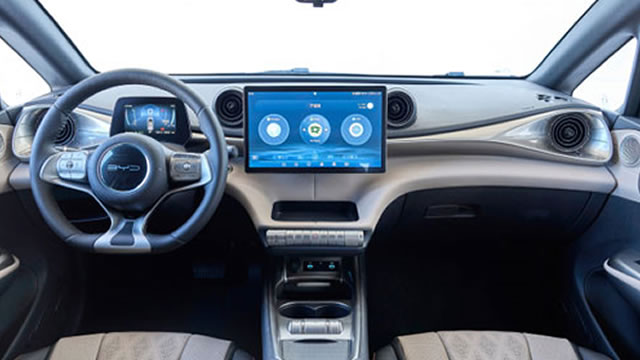
BYD e6

Search documents
Is BYD Stock a Millionaire Maker?
Yahoo Finance· 2025-11-18 13:15
Core Insights - BYD, China's largest automaker, has significantly increased wealth for investors since its IPO in 2002, with a $10,000 investment now valued at $1.07 million [1] - Despite a market cap of $122 billion, BYD remains less valuable than competitors like Tesla and Toyota, raising questions about its future growth potential [2] - BYD's transformation from a battery manufacturer to a leading NEV maker has been pivotal in its success [7] Company Evolution - Originally a battery manufacturer, BYD entered the automotive market in 2003 and launched its first gas-powered vehicles in 2005, followed by its first battery-powered vehicle in 2009 [2] - Sales stagnated from 2009 to 2020, with annual shipments around half a million vehicles, hindered by competition and market shifts [3] Strategic Initiatives - To overcome stagnation, BYD expanded its NEV business with new battery-powered electric vehicles using its lithium iron phosphate "Blade" batteries, which are safer and more cost-effective [4] - The company revamped vehicle designs, increased production capacity, reduced prices, and expanded internationally, while vertically integrating its supply chain [5] - BYD became the first major automaker to cease gas-powered vehicle sales in 2022, focusing entirely on NEVs [5] Performance Metrics - From 2020 to 2024, BYD's annual vehicle sales surged from 427,302 to 4,272,145 units, revenue increased over fivefold, and net income nearly increased tenfold [6] - BYD is projected to continue its growth, with expected annual vehicle sales rising 29% to 5.5 million units in 2025 and 18% to 6.5 million units in 2026 [8]
Is BYD the Smartest Investment You Can Make Today?
The Motley Fool· 2025-08-14 08:19
Core Viewpoint - BYD, China's largest automaker, has experienced significant stock growth and sales expansion, positioning itself as a leading player in the electric vehicle (EV) market despite various macroeconomic challenges [1][12]. Company History - BYD began as a battery manufacturer 30 years ago, launching its automotive division in 2003 and its first electric vehicle in 2009. Berkshire Hathaway acquired a stake in BYD in 2008, which it still holds today [3]. Sales Performance - From 2009 to 2020, BYD's auto sales stagnated at around half a million vehicles annually due to competition and a focus on gas-powered vehicles. However, from 2020 to 2024, annual vehicle sales surged from 427,302 to 4,272,145, with revenue increasing more than fivefold and net income nearly tenfold [4][5]. Growth Drivers - BYD's rapid growth is attributed to the sale of EVs powered by its lithium iron phosphate "Blade" batteries, vehicle design improvements, manufacturing expansion, aggressive pricing strategies, and international market penetration [6][7]. Future Outlook - BYD anticipates growth driven by increasing overseas sales, expansion of its fast charging network, introduction of advanced AI features, and enhanced production capacity. Analysts project annual vehicle sales to rise to 5.5 million in 2025 and 6.5 million in 2026 [8][9]. Financial Projections - From 2024 to 2027, BYD's revenue and net income are expected to grow at a compound annual growth rate (CAGR) of 19% and 25%, respectively, with current valuations trading at less than 1 times sales and 17 times earnings [10]. Valuation Concerns - BYD's valuations are under pressure due to its reliance on the Chinese market, competition in the fragmented EV sector, and the potential impact of overseas expansion and price cuts on long-term margins [11]. Investment Consideration - While BYD presents a favorable growth outlook compared to other Chinese EV makers, its valuation may not increase until market stability is achieved or favorable trade agreements are established between the U.S. and China [12][13].